When Wikidata was created, it was created with a purpose. It replaced the Wikipedia based interwiki links, it did a better job and, it still does the best job at that. Since then the data has been expanded enormously, no longer can Wikidata be defined by its links to Wikipedia as it is now only a subset.
There are many ongoing efforts to extract information from the Wikipedias. The best organised project is DBpedia, it continuously improves it algorithms to get more and higher grade data and it republishes the data in a format that is both flexible and scalable. Information is also extracted from the Wikipedias by the Wikidata community. Plenty of tools like petscan and the awarder and plenty of people working on single items one at a time.
Statistically on the scale of a Wikidata, individual efforts make little or no impression but in the subsets the effects may be massive. It is for instance Siobhan working on New Zealand butterflies and other critters. Siobhan writes Wikipedia articles as well strengthening the ties that bind Wikidata to Wikipedia. Her efforts have been noticed and Wikidata is becoming increasingly relevant to and used by entomologists.
There are many data sets, because of its wiki links every Wikipedia is one as well. The notion that one is bigger or better does not really matter. It is all in the interoperability, it is all in the usability of the data. Wikipedia wiki links are highly functional and not interoperable at all. More and more Wikipedias accept that cooperation will get them better quality information for its readers. Once the biggest accept data as a resource to curate the shared data the act of comparing data sets is improved quality for all.
Thanks,
GerardM
Showing posts with label collaboration. Show all posts
Sunday, September 22, 2019
Tuesday, January 01, 2019
The #decline of #Wikipedia (as we know it)
Regularly, we are told about misgivings about Wikipedia. It can not stay as it is, it is in decline; it is all doom and gloom. NB the use of the phrase "doom and gloom" increased in the 1950s.
So Wikipedia will not remain as we know it? GOOD, it forces us to think how we can improve what we have. When things are to change, what will have a healthy impact? How will we get something that serves us better in "sharing the sum of all knowledge". How will we get more people use what we have to offer and how will we entice more people to contribute to the data collection that is included in all the Wikimedia Foundation projects.
First thing; our projects need to be less US-American. For me, a POV situation I was in, was "obviously"decided in favour of only considering the USA point of view; I let it slide but went to pastures green. The money we raise is for: "keeping the servers going". An objective a bit too limited to my taste but it raises the cash. Money is mainly raised in the USA but in order to be truly global, it is better to raise more equally in every country at least for the amount it cost to serve it. Gapminder is where you may be reminded that money is everywhere. As to the servers, why have all crucial eggs in one USA basket? Given its current politics, there is indeed a potential doom and gloom scenario possible. Having them more dispersed will bring our data closer to our audience, our editors as well. Benefiting them with better performance; that is the easy win. A more complicated solution is in the implementation of the Vrije Universiteit research of a peer to peer MediaWiki.
When our projects are to be less US-American, it is important for spending to be more global too.
When today's Wikipedia practices are no longer considered to be set in stone, we can finally implement features that enable, ensure and enhance its future. First, we should be less self centric; after all there is only one sum of all knowledge and we define only a part of it. Magnus showed how to maintain lists in an efficient way and Amir added recently a "task" to Phabricator to implement proper disambiguation of "red links". We are increasingly aware, not only of the references of all Wikipedias but also of publications by scientists that enable their work to be found. Complement this with the scientific papers we publish and we improve the public relevance of scientists by making them findable, by pointing to their science.
With a changed approach at Wikipedia, we may be bold and change the outlook on what Wikipedia is there for as well. Why not make Wikipedia the gateway to information held elsewhere? Why not show a Scholia page for every scientist we know, why not offer the books at OpenLibrary or inform on the availability of books at the local library? Why not partner with other organisation we have a shared objective in. But most importantly let us be aware that an African professor teaches in Africa and that we allow for and enable the context of our partners and volunteers.
For me there is no reason for doom and gloom as there are so many opportunities to become even more effective. With a whole new year in front of us; let us do well.
Thanks,
GerardM
Saturday, June 16, 2018
#AfricaGap - OkayAfrica's 100 Women
When you visit the OkayAfrica website, you are kindly invited to learn about the 100 women celebrated in 2018. Having a list of 100 fine ladies is nice but what makes them really inspirational are their stories. All of them have been added as references for your pleasure in Wikidata.
We do not have the same pleasure for the fine women celebrated in 2017. Most likely those stories existed once upon a time but as the Internet Archive only knows 100women.okayafrica.com in 2018 the 2017 stories are lost at this time. We only know about them through a secondary source.
Kelly Foster added most of the 2017 ladies and we are now adding the remaining ladies to Wikidata. We would be very much obliged when the back stories as they were published in the past are added a reference.. Fine journalism deserves a place as a reference.
Thanks,
GerardM
Tuesday, May 23, 2017
#Wikidata - Chuck Davis and #VIAF
Mr Chuck Davis used to dance, and make people dance. He came first to our attention because he was awarded the Capezio Dance Award and consequently a Wikidata item was created on March 26. His Wikipedia article was linked on 22 May 2017 seven minutes after the article first appeared.
The most fabulous thing is that when I checked on May 23, VIAF already had a link to his Wikidata item. It is proof positive that librarians are actively including Wikidata to VIAF. This is the perfect argument to intensify the collaboration with librarians to give readers of Wikipedia and readers of library books the best of our shared sum of all knowledge.
Thanks,
GerardM
NB Mr Davis died on May 14, 2017.
Sunday, May 29, 2016
#Facebook - Nataliya Kobrynska
For whatever reason a fellow Wikimedian elected to give attention to Mrs Kobrynska. He posted about her on Facebook and when I have the time I may add some statements in Wikidata. It was easy enough to improve the quality of the data and I read in the article that she was the daughter of a parliamentarian a Mr Ivan Ozarkevych.
I could not add him as her father because there was no label for him in English. I mentioned on Facebook that I could not find him and, a label and the relation was added. The father had an article on the Polish Wikipedia, it referred to him as a member of the Galician parliament and it was easy and obvious to add the fact that he was a parliamentarian and a politician. Not only for him but also for his fellow parliamentarians.
Thanks,
GerardM
Thursday, April 21, 2016
#Wikidata - #YLE, the #Goldman environmental Prize and the #ArticlePlaceHolder
#YLE is a Finnish public broadcaster that announced that it will use Wikidata to label its articles and news items. This is really cool because it means that they have an interest to supply missing labels in Finnish and as a consequence we actually benefit from them.
So let us consider what we can do to make both their and our life more pleasant.
When something happens that is "notable", for instance the latest announcement of the Goldman environmental Prize awardees, we can add the winners. One of the winners is from Cambodia, It can trigger a request for Mr Leng Ouch's article to be written in Cambodian. We can update lists of award winners of the award. We can link to articles in the Finnish press for each and all of them.
Once more newsagents use Wikidata, new use of labels indicates breaking news or renewed interest. This may help journalists worldwide to stay on top of what is current. This may all happen but the most important benefit is that it ensures that Wikidata remains up to date.
Thanks,
GerardM
Wednesday, November 20, 2013
#Wikidata & #Freebase - an #interview with Denny Vrandečić
When Denny signalled the availability of data that links Wikidata to Freebase, there was a lot of follow up and several questions were left unanswered. So I asked my questions and, I am happy with the answers I received. So enjoy this interview about the Wikidata and Freebase connection.
Thanks,
GerardM
By moving to California you embrace yet another culture, language.What does it do to you, your family
Thanks,
GerardM
By moving to California you embrace yet another culture, language.What does it do to you, your family
My wife is from Uzbekistan, I am from Croatia. We met in Israel. She has lived the last few years in Estonia, I in Germany. We have moved to California, and we are very excited about this move. Finally to live in a country where we both speak the language! And also, we have high hopes with regards to the weather.
The US in general, and San Francisco in particular, is a real melting pot - or rather fruit salad, as they say these days - of people from all over the world. This seems to be a good match to our own background, so we are looking forward to see what this will mean for us.
What is your job description and title at Google (and what is it you actually do)
My job title is "Ontologist". I am working on Google's Knowledge Graph. The Knowledge Graph for Google is basically what Wikidata is for the Wikimedia projects: a repository of structured knowledge about the world, that is used in many different ways in various different applications. I am working, together with a great team, on the schema and ontology of the Knowledge Graph: its data model, schema, and the way it captures and represents knowledge.
What is Freebase and how does it compare with Wikidata
Freebase is the publicly available and editable part of the Knowledge Graph. Freebase and Wikidata are very similar. At the same time, there are quite a few differences: the user communities, the incentive architecture, the license, the way sources and knowledge diversity are handled, to name the big differences. There are also minor differences in the data model, the way classes, properties, types interact with each other, the UI, the workflows, the prominence of internationalization, currently also the size and scope of the knowledge bases, etc. Wikidata currently has 22 Million statements, Freebase has 2 Billion facts. Now one should always be careful with such simple metrics, and especially these numbers are not comparable, but it hints at some differences in the knowledge base.
Do you work on FB or is this only an outward facing project
Freebase is a part of the Knowledge Graph, and I work on the Knowledge Graph, so yeah, I also work on Freebase.
With a link between FB and WD it will be possible data can flow from WD because of its license. How is it for a flow from the other direction
I am not a lawyer, but unfortunately it seems that the licenses used by Freebase and Wikidata would not allow for that direction. We are aware that this is not good, and we are working on ways to fix this.
But even without actually letting data flow from Freebase to Wikidata, such an alignment can be valuable for the Wikidata editors: bots could compare the data, and flag inconsistencies. Bots could do simple comparisons, like, go through all the countries, compare the capitals, and report on the differences. And this can be done not only with Freebase, but with any other structured or semi-structured base that Wikidata connects to. One example is the work that Maximilian Klein did, comparing the sex/gender of authors connected through the VIAF ID.
The data for the FB<->WD connection is based on a WD dump, How will it be maintained in the future
This is not decided yet. In principle, we could create this dump regularly, but I am unsure if this will be needed. We will have to see how things develop before deciding on what to do next.
When info exist in both WD and FB and it differs, what would you like to see done
The difference to be fixed, obviously! Both knowledge bases may and do contain errors, and the ability to compare them can lead to an increased quality level in both. It is obvious that the respective communities should take care of such errors in their knowledge bases. By providing links between the knowledge bases, this should get easier to automate.
Would that be a model for collaboration with other sources like VIAF
Yes, in many cases that should work. It is clear that some sources and their communities are more open to corrections than others. Wikidata can become a central hub for identity on the Web, collecting and reconciling IDs from many different sources. What makes Wikidata so interesting in itself is its commitment to let everyone share in the sum of all knowledge - both in participating in creating it as well as in accessing it. The barriers are so much lower than almost anywhere else. In which other knowledge base can you easily fix an error?
Does FB have sources for its statements
Yes, but this is quite a different notion from what Wikidata does with sources. When a dataset is being uploaded to Freebase, the source for this upload is usually recorded. It is closer to what is usually called "provenance", whereas Wikidata's notion of a source is closer to what is called a "reference", an external authority that makes the given claim. A strength of Wikidata is the diversity of the sources, and that they can be refined later by the community. A statement in Wikidata can have several sources (which makes sense if you think of them as references supporting the statement), but in Freebase every statement only has one source (which again makes sense if you think about it being the provenance of that statement, from where this statement came from).
(I don't understand the question, and rephrase it to: do you prefer an unsourced statement over no statement?)
In most cases, yes, I'd rather have an unsourced statement than no statement at all. In a perfect world, all statements in Wikidata would have great, authoritative sources. But for now, I really think that Wikidata should be lenient with regards to unsourced statements in most cases. There are obvious cases where this is not true: data about living persons has to be more carefully sourced, especially when it has the opportunity to hurt the person. Also, we have to remember, that a Wikipedia community can decide to use a statement from Wikidata only if it is sourced, and to drop it otherwise. Once Wikidata has matured a bit, I expect it to move towards a more stricter policy, and to see tools develop that help with getting there. That will be a quite exciting time.
What FB feature would you LOVE to have in Wikidata
The expressive query features of Freebase. The Wikidata team is hard on working towards enabling this, and I am very much looking forward to see it happen: this will open a whole new world of possibilities for everyone using Wikidata's data, and it will lead to much more visibility of the data and help to refine the Wikidata properties.
Thursday, October 03, 2013
How to connect to #Islam
#UNESCO supports #online access to library content on the Arab, Egyptian and Islamic civilisations. As it is, it contains some 155,000 volumes. Even better, a module that will be available on the Internet is being developed for any researcher who could enrich the catalogue by data of contextualization.
When you consider the information on both Wikipedia and Wikidata about these subjects are not of the same standard, not as informative. Consider for instance the article on the Mahdian Crusade, only the Europeans are mentioned as "notable participants" while elsewhere in the article Islamic notables are mentioned by name.
Similarly subjects and people relevant to the Arabic, Egyptian and Islamic civilisations are not as well presented in external databases like VIAF. It would be cool when libraries like the IDEO library in Cairo or the library of Alexandria were connected as well. If it cannot be in VIAF, how can we enable more of the relevant literature and information they hold in Wikidata?
Thanks,
GerardM
Friday, September 24, 2010
#Wikimedia #India Community Newsletter
When the first issue of a newsletter starts with 36 pages, when the editor says that it could have been even bigger. When you read it and find it written in small letters, chock a block with statistics, DYK's and updates on the lively communities of many of the Indian Wiki communities you can only be amazed.
What makes this newsletter so interesting are the many facts and factoids. There is a foreword by Jimmy and Bishakha, there is information about the chapter .. They dotted the i and crossed the t. A lot of excitement came out early because of a happy Jimmy telling the world about it.
The map showing where the 20 languages that have a Wikipedia are spoken is wonderful; it was made for the newsletter and these are only the current Wikipedias. When you include the large number of languages preparing their way in the Incubator, you are talking about 40 languages in total..
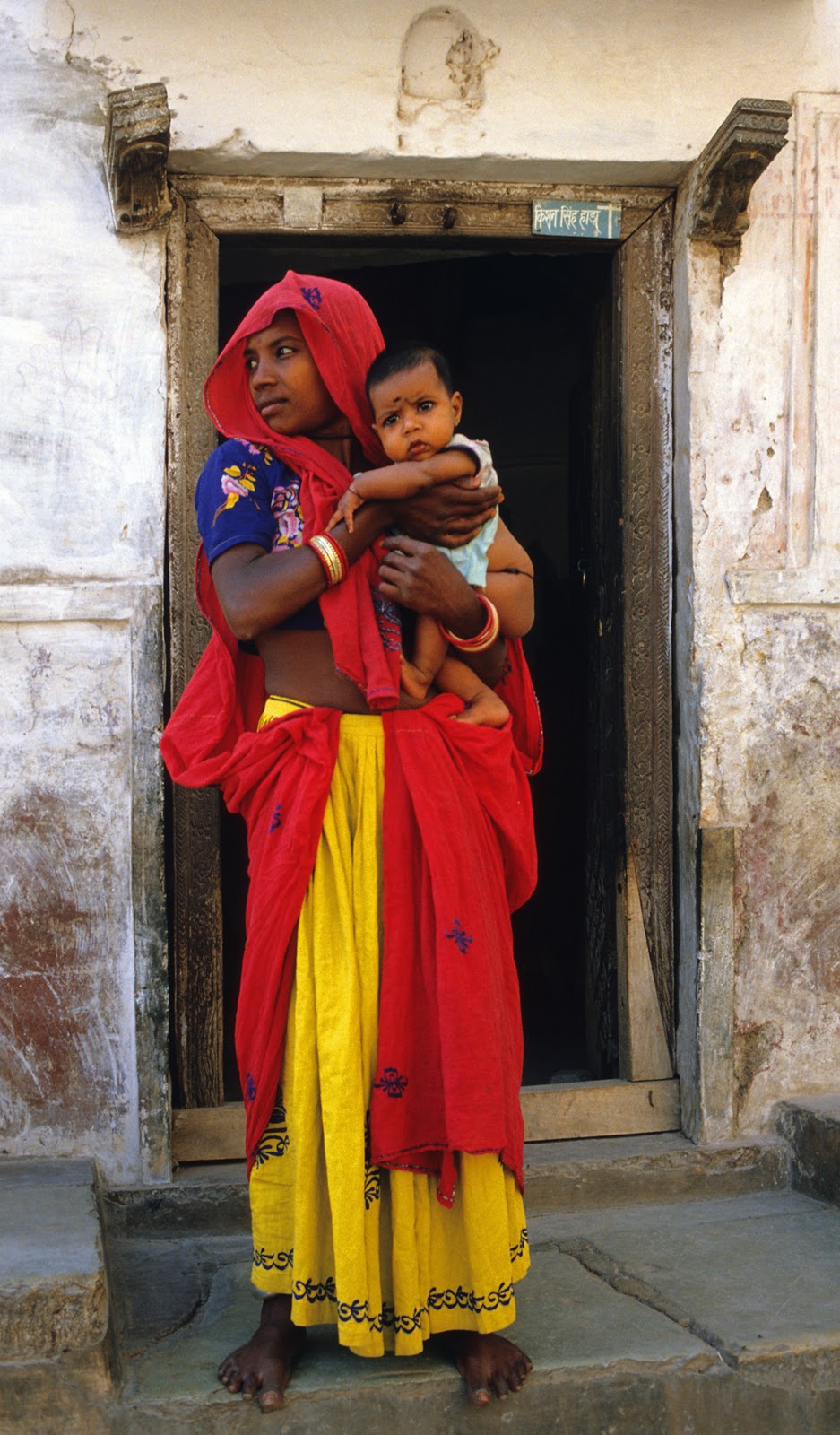
If there is one quibble I have, it is that there are no pictures that show how stunningly beautiful India can be. For instance this picture that attempts to become a featured picture at Commons. Then again, it is always great to have room for improvement :)
DYK
GerardM
What makes this newsletter so interesting are the many facts and factoids. There is a foreword by Jimmy and Bishakha, there is information about the chapter .. They dotted the i and crossed the t. A lot of excitement came out early because of a happy Jimmy telling the world about it.
The map showing where the 20 languages that have a Wikipedia are spoken is wonderful; it was made for the newsletter and these are only the current Wikipedias. When you include the large number of languages preparing their way in the Incubator, you are talking about 40 languages in total..
| Mother and child in Bundi, Rajastan |
DYK
- the newsletter is this big because of the many communities
- 1300 articles about India featured as DYK on the English Wikipedia
- on Twitter, @DKYIndia can provide you with a daily DYK
- articles from the Malayalam Wikipedia are available on CD
- 3000 institutions were involved in a Tamil writing competition
- Bishnupriya Manipuri is spoken by "only" 4,50,000 people
- that Sanskrit has mother tongue speakers
GerardM
Wednesday, August 18, 2010
Software sucks .. sometimes nicely
Uploading pictures to #Blogger and #Commons is broken for me. I uploaded a poster about our collaboration with the Dutch National Archive and Spaarnestad photo and it looks awful on the Dutch Wikipedia.
Blogger is still broken and it does not allow me to link to images either. I feel very frustrated BUT I now have the impression that they are trying to fix things.
It is quite obvious that people at Google and at the Wikimedia Foundation are frustrated as well. They can do well without such hassles. However, problems with software that is used by many people is bound to break every now and again.
I will happily post a picture of a Buddha when the techies have stopped suffering.
Thanks,
GerardM
Wednesday, April 14, 2010
#mw2010 you provide provenance, #wikimedia provides traffic
Many #Wikipedia illustrations are of material that is clearly in the public domain due to age. The material that we have in our Commons repository can be a scan from a book, it can be a picture taken in a museum.
The current practice is that the source of an object does not need to be more then "painting by Rubens". Typically the original of many of our illustrations can be found in a GLAM and to appreciate the illustration for its validity, it is important to know where the original can be found.
The provenance provided in this way, allows people to learn about the original. In this way they can visit the GLAM and study the original. When a GLAM shares its collection with us, we ask for annotations and for a way to refer back to the website of the GLAM where the object can be found.
In this way we provide provenance to the readers of Wikimedia information, we also find that people learn to appreciate the GLAM for preserving our heritage. For some organisations like the Library of Congress, we have no direct connections but they have become relevant to us and our best practices have us refer to their website.
It is in both our interest when the objects that are preserved by a GLAM refer to that GLAM. I do not see any problem with appropriate templates that inform about the location of originals and provide the provenance that we expect of our sources.
Thanks,
GerardM
The current practice is that the source of an object does not need to be more then "painting by Rubens". Typically the original of many of our illustrations can be found in a GLAM and to appreciate the illustration for its validity, it is important to know where the original can be found.
The provenance provided in this way, allows people to learn about the original. In this way they can visit the GLAM and study the original. When a GLAM shares its collection with us, we ask for annotations and for a way to refer back to the website of the GLAM where the object can be found.
In this way we provide provenance to the readers of Wikimedia information, we also find that people learn to appreciate the GLAM for preserving our heritage. For some organisations like the Library of Congress, we have no direct connections but they have become relevant to us and our best practices have us refer to their website.
| the Library of Congress template |
Thanks,
GerardM
Wednesday, November 11, 2009
Geograph
Geograph.org.uk has a cool million images about the British countryside. Some of them are dull, some of them are not so dull but what do you expect the panorama is not everywhere like this..All these images are available under a free license and it makes sense for us to have them. These pictures have added value because all of them come with geo tagging. With the integration of the maps of OpenStreetMap, it will be great to integrate our services in there as well and show the beauty of Britain.
We can and we may take all these pictures. The reasons in favour to take them all are really strong; we do not want to make a selection..But even when we can and may take those pictures, it makes sense to reach out to the people at Geograph because together we are likely to do an even greater job.
Thanks,
GerardM
Thursday, July 16, 2009
Eating my own dogfood
I am talking often about the restoration of images. It is however not something that I do. The digital restoration of images we do has multiple aims:
This is a picture titled "Isle of Graia Gulf of Akabah Arabia Petraea" it is a drawings made on the spot by David Roberts and the lithographed was made by Louis Haghe. It is exactly right for me; it is a beautiful well preserved picture with some damage at the bottom and a few minor stains and the colour has faded over time. It has a subject and a quality that might even make it a featured picture. All in all, it is the ideal object to motivate a beginner like me.
When I was done, I had it checked by Durova and she sprinkled some additional magic on my work and now I think we have this gobsmacking beautiful picture.
I have learned some basic skills in GIMP, I learned that indeed you can be skyping and work on specs at the same time. All in all, restoring images seems like knitting; you are productive and you can jabber at the same time..
Try it out as well, I am sure Durova has many more images that need some work. If not we have to extend her range of material she can pick from :)
Thanks,
GerardM
- remove stains, specs
- remove tears and folds
- adjust the colours to make it look like it used to
- make it ready to illustrate our content
This is a picture titled "Isle of Graia Gulf of Akabah Arabia Petraea" it is a drawings made on the spot by David Roberts and the lithographed was made by Louis Haghe. It is exactly right for me; it is a beautiful well preserved picture with some damage at the bottom and a few minor stains and the colour has faded over time. It has a subject and a quality that might even make it a featured picture. All in all, it is the ideal object to motivate a beginner like me.
When I was done, I had it checked by Durova and she sprinkled some additional magic on my work and now I think we have this gobsmacking beautiful picture.
I have learned some basic skills in GIMP, I learned that indeed you can be skyping and work on specs at the same time. All in all, restoring images seems like knitting; you are productive and you can jabber at the same time..
Try it out as well, I am sure Durova has many more images that need some work. If not we have to extend her range of material she can pick from :)
Thanks,
GerardM
Sunday, June 28, 2009
More thoughts on book sprints
This is my second day that I have been working on a "book sprint". The one thing that I have learned about the process is, that the success is defined by the quality of the people involved. When you combine people like Adam Hyde and Allen Gunn in the mix, there will be something usable at the end.
Having worked for two days with the software used by FLOSS manuals, I am sure that a book sprint can also be done using MediaWiki. The key thing to consider is not so much can you do this, but what is the added value. Writing FLOSS manuals is what FLOSS manuals does and a community has formed around it. Replicating this effort only makes sense when it grows the creation beyond the autonomous growth of FLOSS manuals.
However, when an application is found for writing outside this domain, there might be a point to experiment with MediaWiki.
Thanks,
GerardM
Wednesday, April 15, 2009
An exploratory meeting at the Zuiderzee museum
Yesterday I went to the Zuiderzee museum, it has a rich collection about the area where my family comes from. It shows how people lived and worked in days gone by. The museum is named after the Zuiderzee, a body of water that became fresh water after the building of the afsluitdijk in 1932 and it has a collection that is particularly focused on the people who lived near it.
The Zuiderzee museum is in the process of digitising its collection and quite a bit can be already found on the Internet on the "geheugen van Nederland" which is called in translation, the memory of the Netherlands. Many Dutch archives and museums collaborate in this initiative that aims to digitise much of the Dutch cultural heritage.
After a number of telephone calls, we had a first meeting in Enkhuizen; it was very much a "getting to know you". We talked about what is important, licenses, meta data and how to make the heritage that has both our interest interesting to our public. Having communicated a lot lately with people like Mathias Schindler, Witty lama and Durova helped prepare me for this meeting.
Given that the Zuiderzee museum is in the process of digitising its collection and is already looking at how collaboration can further its objectives, a possible relation will be much more collaborative. We did talk about our digital restoration efforts, the importance of having information with historic material, the different types of material in the collection...
One of the restorations done by Durov is this photochrom showing two girls from Marken. I had brought this nicely printed at a high resolution as a present. It is pictures like this that made Marken the tourist attraction it still is and as such I hoped that it would be of interest.
Currently there is an exhibition at the museum that aims to give a modern interpretation of modern fashion designers of the Dutch traditional clothing. The colours were added later in the picture but the question what colours they should be will probably always be a mistery.
In a couple of weeks we will be in contact again and explore further where collaboration / partnership may bring us.
Thanks,
GerardM
The Zuiderzee museum is in the process of digitising its collection and quite a bit can be already found on the Internet on the "geheugen van Nederland" which is called in translation, the memory of the Netherlands. Many Dutch archives and museums collaborate in this initiative that aims to digitise much of the Dutch cultural heritage.
After a number of telephone calls, we had a first meeting in Enkhuizen; it was very much a "getting to know you". We talked about what is important, licenses, meta data and how to make the heritage that has both our interest interesting to our public. Having communicated a lot lately with people like Mathias Schindler, Witty lama and Durova helped prepare me for this meeting.
Given that the Zuiderzee museum is in the process of digitising its collection and is already looking at how collaboration can further its objectives, a possible relation will be much more collaborative. We did talk about our digital restoration efforts, the importance of having information with historic material, the different types of material in the collection...One of the restorations done by Durov is this photochrom showing two girls from Marken. I had brought this nicely printed at a high resolution as a present. It is pictures like this that made Marken the tourist attraction it still is and as such I hoped that it would be of interest.
Currently there is an exhibition at the museum that aims to give a modern interpretation of modern fashion designers of the Dutch traditional clothing. The colours were added later in the picture but the question what colours they should be will probably always be a mistery.
In a couple of weeks we will be in contact again and explore further where collaboration / partnership may bring us.
Thanks,
GerardM
Wednesday, January 07, 2009
A tale of two cities
There are two photographers that I know. One let us call him David and the other let us call him Mardetanha. Both have a camera, both use Internet and both make important contributions to the Wikimedia Foundation. David lives in the USA and Mardetanha in Iran. There are many differences, broad band vs dial up, great pictures of all USA landmarks versus not that much. An income that allows for some travelling versus not very much at all.
Mardetanha has some 5 Gb of digital images that he wants to upload. This would take forever on his connection Given the cost, he prefers to wait until a CD is filled with some 10 Gb and send it to someone in the USA to upload it for him
David has a fine reputation as a photographer, Mardetanha has to work much harder for other people to be even aware that his work exists. Wikipedia needs his work; more illustrations will provide better information about Iran. Not only for people in Iran but for people in the whole world.
Thanks,
GerardM
Monday, August 18, 2008
Captcha with a twist
In the Wikimedia Foundation we use captchas. They are a tool against spam bots and vandals. They do their job and they can be annoying as hell when you do not get it right the first time. As they serve an important purpose I am happy that we use them anyway.
The BBC news webiste reported on a captcha scheme that is different. The idea is so compelling, that I want to seriously argue for the adoption of this scheme in the WMF
.
The idea is that people recognise words that have been scanned but cannot be recognised by optical character recognition software. As we have projects in so many languages, we can provide an even better service, our people can do this same work for other languages then English. I am sure when our Wikipedias become part of such an effort, it would help the digitisation effort for many languages..
The good news is that according to the Recaptcha website, there is already a "plugin" for MediaWiki. So for me it is clear why we should join this great endeavour. It makes filling out captchas useful in more ways then one :) .. PS why not have in the user preferences a place where you can recognise words.. just because you can ??
Thanks,
GerardM
Tuesday, April 15, 2008
Beeld en Geluid
Beeld en Geluid is a Dutch organisation tasked with the maintenance, the safe guarding and the exploitation and exploration of the audiovisual heritage of Dutch radio and television. In Hilversum the centre of Dutch radio and television, they have a magnificent building that allows the public to experience this history, a big archive with room for people who want to research and an office with people tasked with opening up their data as much as possible.
Preservation of so much material is a big task, much effort is put into the digitisation of material. Not only the really old material but also much of the digital age needs care in order to preserve it for the future. As Beeld en Geluid is paid by the Dutch taxpayers, one of its tasks is to give this material a wider availability. They provide specialised tools for the broadcasting organisations, the researchers. Much of the material cannot be made available to the public because of copyright issues. It is reassuring to know that this material will still be there when it becomes public domain..
Beeld en Geluid is exploring MediaWiki functionality. Their need is quite different; much of the material that they want to include exists in all kinds of databases and it is a lot of hard work to make it into a Wiki. We discussed MediaWiki and its uses, we talked about technology, extensions like Semantic MediaWiki, the OmegaWiki mark II project..
As happens so often, we found that there are many organisations that use MediaWiki and with more collaboration MediaWiki would gain more utility. We discussed how such a thing could be done. One thing was clear before we can cooperate, we need to know our shared needs.
Thanks,
GerardM
Monday, March 17, 2008
Linguistlist update
On the mailing list of the Linguistlist I read the following....
Dear readers,
This letter is a progress report on LINGUIST's Wikipedia Update Project. You may remember that Fund Drive 2007 donors voted to earmark some funds for a LINGUIST team to look into filling some of the gaps in linguistics and language articles that appear in Wikipedia. Our goal was to make Wikipedia an even better resource for our field and the general public by asking the linguistics community itself to help improve the reliability of information in the "encyclopedia that anyone can edit." Our mandate was to get the word out about which articles needed revision or completion and to issue periodic calls for volunteers to edit such entries and/or add new entries. Our role was to serve as a hub for facilitating such updates and to report back to you on the results of our efforts.
We began our project in earnest in the summer of 2007. LINGUIST's Wikipedia team logged itself in as a user Linguistlist and merged its project with the existing WikiProject Linguistics page. We found that Wikipedia administrators and editors had already identified some 700 articles as "linguistic stubs," flagged as being incomplete or lacking in some respect-needing fuller content, having content that was "contested" by some, lacking proper references or citations, or having missing or empty links. We put these stubs on a "watchlist" to keep track of what got updated and when. From this large list of stubs, we then
created smaller lists by linguistic subfield-these included biographic entries of linguists and specific articles in phonetics, phonology, morphology, syntax, and sociolinguistics.
We then issued calls for volunteers, one per month for a total of six through the end of December 2007. Each call included a report on subscribers who had responded to our calls. Some reported having edited or created new articles while others promised to edit specific entries in the future. Our respondents came from all over, as close to home as Chicago and New York and as far away as Serbia and the West Indies. All LINGUIST activities on the update project, including the full text of each call for action, are logged on our user page.
We are pleased to report the following activities concerning linguistics articles:
The Wikipedia team is extremely grateful to all of you for your collective interest in the project and especially to those of you who made specific contributions to Wikipedia entries. Overall, we are pleased that we were able to perform a public service by calling attention to the quality of linguistics articles in Wikipedia and inviting you to join in as active Wikipedians for the greater good of our discipline.
In closing, we thank you, as always, for being there for us: we depended crucially on you for this particular project and could not have done it without you! We hope we were able to a small difference with this project. Please remember that when you donate to this year's Fund Drive, you are contributing to similar projects aimed at providing you with the broadest range of resources in the field of linguistics.
With best wishes,
The Wikipedia Update Team
Roxana Ma Newman
Hannah Morales
Luiza Newlin Lukowicz
Dear readers,
This letter is a progress report on LINGUIST's Wikipedia Update Project. You may remember that Fund Drive 2007 donors voted to earmark some funds for a LINGUIST team to look into filling some of the gaps in linguistics and language articles that appear in Wikipedia. Our goal was to make Wikipedia an even better resource for our field and the general public by asking the linguistics community itself to help improve the reliability of information in the "encyclopedia that anyone can edit." Our mandate was to get the word out about which articles needed revision or completion and to issue periodic calls for volunteers to edit such entries and/or add new entries. Our role was to serve as a hub for facilitating such updates and to report back to you on the results of our efforts.
We began our project in earnest in the summer of 2007. LINGUIST's Wikipedia team logged itself in as a user Linguistlist and merged its project with the existing WikiProject Linguistics page. We found that Wikipedia administrators and editors had already identified some 700 articles as "linguistic stubs," flagged as being incomplete or lacking in some respect-needing fuller content, having content that was "contested" by some, lacking proper references or citations, or having missing or empty links. We put these stubs on a "watchlist" to keep track of what got updated and when. From this large list of stubs, we then
created smaller lists by linguistic subfield-these included biographic entries of linguists and specific articles in phonetics, phonology, morphology, syntax, and sociolinguistics.
We then issued calls for volunteers, one per month for a total of six through the end of December 2007. Each call included a report on subscribers who had responded to our calls. Some reported having edited or created new articles while others promised to edit specific entries in the future. Our respondents came from all over, as close to home as Chicago and New York and as far away as Serbia and the West Indies. All LINGUIST activities on the update project, including the full text of each call for action, are logged on our user page.
We are pleased to report the following activities concerning linguistics articles:
- 13 articles were completed or newly created by subscribers
- 12 articles had references added
- 33 links were added to existing articles
- 28 articles were de-stubbed by virtue of being judged self-sufficient
The Wikipedia team is extremely grateful to all of you for your collective interest in the project and especially to those of you who made specific contributions to Wikipedia entries. Overall, we are pleased that we were able to perform a public service by calling attention to the quality of linguistics articles in Wikipedia and inviting you to join in as active Wikipedians for the greater good of our discipline.
In closing, we thank you, as always, for being there for us: we depended crucially on you for this particular project and could not have done it without you! We hope we were able to a small difference with this project. Please remember that when you donate to this year's Fund Drive, you are contributing to similar projects aimed at providing you with the broadest range of resources in the field of linguistics.
With best wishes,
The Wikipedia Update Team
Roxana Ma Newman
Hannah Morales
Luiza Newlin Lukowicz
Tuesday, March 11, 2008
Just a comparison
There are two projects that have their origin in the Wikimedia Foundation. Both are associated by people who have a claim to fame. Danny Wool used to work for the WMF and he seriously contributed to projects. Gerard Meijssen never worked for the WMF but he seriously contributed to projects. Danny's project is called Veropedia, Gerard's project is called OmegaWiki, one is a .com the other a .org. The first is based on Wikipedia the other has its origin on Wiktionary.
Danny used to be involved in fund raising for the WMF. Now his vitriolic contributions have a direct negative effect on the ability of the WMF both to function and to raise money.. if only because of all the time wasted to react to his allegations but also because people may find the reputation of the WMF tarnished.
Gerard is raising funds for his projects but these funds have a direct positive effect for the Wikimedia Foundation and its projects. Funding for localising MediaWiki and for improving the development infrastructure of MediaWiki. Funding for localising Commons.
Typically people are not interested in the positive approach; when Gerard urges people to localise at Betawiki because it has so much more impact, he gets told that he is not interested in the WMF projects. When people read Danny's negative comments, they react like "where there is smoke there must be fire".
Both organisations are outside of the WMF. One gets media attention, the other does not. One demostrably hurts the functioning of the WMF, the other does not.
I wish that people look at the bottom line. What is achieved by the actions of people. When the only justification is a right to the freedom of speech, then by all means let Danny have his say. But as what he has to say is about things that may have happened over a year ago, there is a limit to the credibility of the platform he has. As he does not want to see the positive things that are happening now, he effectively makes himself part of the problem and not a part of the solution.
The WMF has a budget outlining what it wants/needs to spend. The ability to get funding from the public is limited.
When a venture fund wants to donate serious money to the WMF, it is important to know if it comes with strings attached. The WMF currently has people with a serious ability to understand contracts and lawyerese. This is a major departure from the past. There are seriously rich people and organisations who appreciate WMF for what it is and what it aims to do. Many of them can easily help the WMF with its finances. The WMF, as an organisation, has its house in order and increasingly has the ability to make use of the rich network that has been build by Jimmy Wales.
Making use of the network Jimmy build can only be done with a positive attitude and appreciation of his accomplishments. It should be obvious but let me spell it out; when connecting to the people and organisations that know and appreciate Jimmy, dissing Jimmy is for the WMF effectively the same as shooting ourselves in the foot.
Thanks,
GerardM
Subscribe to:
Posts (Atom)