Showing posts with label UNESCO. Show all posts

Thursday, October 03, 2013

How to connect to #Islam


#UNESCO supports #online access to library content on the Arab, Egyptian and Islamic civilisations. As it is, it contains some 155,000 volumes. Even better, a module that will be available on the Internet is being developed for any researcher who could enrich the catalogue by data of contextualization.

When you consider the information on both Wikipedia and Wikidata about these subjects are not of the same standard, not as informative. Consider for instance the article on the Mahdian Crusade, only the Europeans are mentioned as "notable participants" while elsewhere in the article Islamic notables are mentioned by name.

Similarly subjects and people relevant to the Arabic, Egyptian and Islamic civilisations are not as well presented in external databases like VIAF. It would be cool when libraries like the IDEO library in Cairo or the library of Alexandria were connected as well. If it cannot be in VIAF, how can we enable more of the relevant literature and information they hold in Wikidata?
Thanks,
      GerardM

Saturday, February 26, 2011

Women Make the News 2011

The relevance for #Wikipedia of this #UNESCO project becomes evident when you read more about it. Initially the impression is that it is about women in conventional news organisations, but when you read further it becomes apparent that it is about "media and information systems".

What we do in our projects is exactly that.

This years aim is to "highlight good practices in this area and emphasize the importance of fostering media and information literate societies as a way to improve the understanding of women and men about gender perspectives in media and information systems".

To do this they are seeking best practices for addressing gender related issues. Contributions can be submitted until 30 March 2011.
Thanks,
       GerardM

Saturday, February 19, 2011

International Mother Language Day 2011

The program of this years event, is interesting. I am sure that interesting things will be said and, it is absolutely vital that they are said again. To have a vital language it is essential for them to make optimal use of the infrastructure that the Internet provides.

Understanding the technical components needed for a language to exist and do well is different from what it takes to get a lot of content in a language on the Internet. The two are however loosely connected.

Technically:
  • is the script supported in Unicode
  • does Unicode support all the characters for the language
  • is the language recognised in the standards
  • is information about the language available in the CLDR
  • do applications know the language and register its use
Content:
  • are Unicode fonts, complete for the language, readily available
  • is support for the script mature
  • have people access to computers, the Internet
  • do applications that produce documents and pdf support the script
  • is there OCR support for the script
  • can you effectively google for that language
  • is there a Wikipedia for that language
The International Mother Language Day is a great initiative as it expresses the wish to bring languages into the modern age and with it the people and the culture they represent. It does take not that much effort or money to ensure that the technical bits and bobs are provided for. If there is a problem, it is a lack of coordination and ownership of the problem. As it is it has to be organised for a language, a script at a time.
Thanks,
      GerardM

Thursday, December 23, 2010

#IYC2011 - International Year of #Chemistry

As 2011 is the International Year of Chemistry, it can be a stimulus for our Wikipedia communities to share in the fun. On the official website there are many objectives mentioned that make Wikipedia a great platform for many activities.

The stated objectives are very much congruent with Wikimedia goals:
  • increase appreciation and understanding of chemistry
  • increase the interest of young people
  • generate enthusiasm for the future of chemistry
  • celebrate the role of women and major events in chemistry

As one of the Public Policy Initiative  objectives is to forge collaboration with academia, the IYC2011 makes the worldwide chemistry departments an obvious target for more collaboration.


There are also technical opportunities where MediaWiki and the Wikimedia Foundation can shine. It would be so cool when we finally enable the JMOL functionality in our projects. Another opportunity will present itself when what many call "Wikidata" functionality. There is a plan for a conference on this subject and, there is a wealth of data available for use in our projects.

IYC2011 may make 2011 the year when chemistry gets to the next level of great information in many languages for an important subject.
Thanks,
      GerardM

Wednesday, September 01, 2010

Sad news from #UNESCO

UNESCO's Communication and Information Sector's news service often brings the news of journalists that were killed for doing their job. Today I received two such mails in my in-box; the killings of Magomedvagif Sultanmagomedov and Israel Zelaya Diaz were condemned by Irina Bokova.


When I receive such mails it strikes me how lucky I am that there are reasonable journalism practices in my country. At the same time I realise that the death of journalists results in a lack of understanding of what happens elsewhere. The journalists die because their stories may not be heard. Stories that often provide an unwelcome view on our world, stories that are inconvenient, stories that disturb the notions of a propaganda.

With the death of journalists the points of view they represented are endangered. The terror instilled in their colleagues prevents many of presenting  the news out.  In effect these killers, these terrorists endanger our potential to write encyclopedically in a neutral point of view.
Thanks,
        GerardM

Monday, March 08, 2010

Measuring linguistic diversity on the Internet

Analysing linguistic diversity on the Internet is like and unlike measuring Wikipedia traffic. It is like Wikipedia because its "big" languages have an overwhelming presence and it is unlike Wikipedia in that the smaller languages are hardly noticeable because they are not clearly marked.

A language like Picard is recognised as a language however, software that is in common use, be it proprietary or open source is not configured to establish a document as being in that language. The language recognition software of a Google is not yet able to recognise it by its characteristics. And as a bug keeps the Picard Wikipedia out of the Wikipedia traffic statistics, it can be argued that Picard does not exist on the Internet at all.

Evolution of percentages of
English speaking Internet users and web pages
When research is done about linguistic diversity on the Internet for an organisation like UNESCO, the question is what such research is to achieve. UNESCO aims to preserve and promote linguistic diversity and, the technical ability of languages to manifest itself on the Internet is a key enabler.

The UNESCO research documents the issues measuring linguistic diversity from a traffic perspective on the Internet for a few languages but it does not look into what enables such traffic. It does not explain why it is so hard to extend the research to the long tail of the Internet traffic.

Part of the meta-data of document on the Internet or elsewhere, is an indication what language a document is in. Typically software only knows about a subset of the recognised languages. So one valid metric is, what languages do software allow you to write in. For OpenOffice for instance it is essential that the locale data is known in the CLDR. The CLDR data is public and, statistics can be created from its development. As you can imagine, there is no data for the Picard language ...

When UNESCO includes such statistics in its linguistic diversity report, it will become clear how much needs to be done in order to make support for linguistic diversity a reality.
Thanks,
GerardM

Thursday, March 04, 2010

UNESCO document on measuring linguistic diversity

The UNESCO publication "Twelve years of measuring linguistic diversity in the Internet: balance and perspectives" is an update to a previous UNESCO study on this subject that was issued for the World Summit on the Information Society in 2005. It is based on research done from 1996 to 2008.

I browsed this document and I do not like it. It does include some parts that I could use but it seems to me to be a regurgitation of things that others have done. The percentage of languages used on the Internet is based on Google statistics. The problem is that Google only recognises a limited number of languages.

I would expect this report to include information on the things that prevent languages from getting a presence on the Internet; words like Unicode, CLDR even locale are not found. Information on a percentage of documents that accurately flag its language, another relevant statistic are missing.

I do applaud UNESCO for having an interest in linguistic diversity, I am not convinced that the methodology used for this document helps languages find their way to the Internet.
Thanks,
GerardM

Tuesday, October 27, 2009

World Day for Audiovisual Heritage

Today, the 25th of October is the "World day for Audiovisual Heritage". This UNESCO event is about the material generated by radio, television and movies. They have dominated much of the communication in the previous century. and will continue to do so.

On a daylike this, it is appropriate to reflect on what our role has been in the previous year and, what is likely to happen in the next.

In the last year the Wikimedia Foundation invested a lot of effort in making our MediaWiki platform ready for video. The result will be that next year many articles will gain videos. In the last year the upload limit was increased to 100Mb, hopefully this limit will be raised again.

I reported on the availability of the Polygoon newreels in a previous blog. The first examples are now in Commons and they will certainly find their way on the Dutch Wikipedia. They may become relevant for other Wikipedias when we support subtitling.

In a weeks time there will be a meeting in Paris, where we will define what issues we want to address to improve our support for audiovisual content. Given that Commons is intended to be a repository for such material and given our interest in historic material, I hope that next year we will report on the things we have achieved.
Thanks,
GerardM

Wednesday, April 22, 2009

The World Digital Library

Under the auspices of UNESCO, the World Digital Library has made its début. This project aims to bring the cultural heritage of our world to the Internet. Many great institutions collaborate in this effort.


This resource is likely to become of immense importance to us because it aims to provide unrestricted public access, free access to this material. What I like best about the World Digital Library is that it aims to cover the whole world, all continents, all countries and all cultures. I hope that the WDL will help us to counter the current bias we have in Commons with Western oriented material.

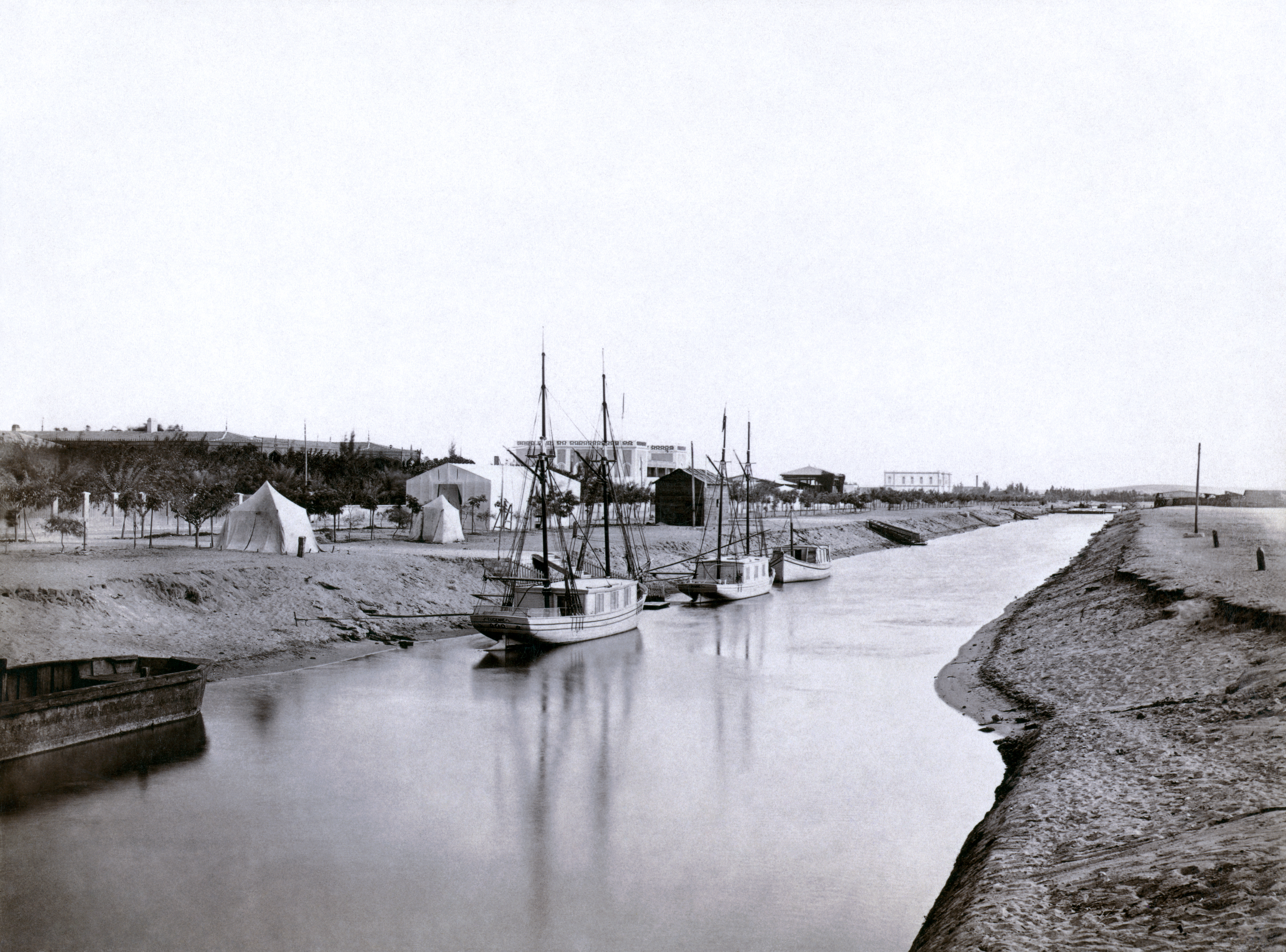
As a present to the World Digital Library at its opening, Durova has restored this picture from Egypt. We hope for a great collaboration with this great new initiative.
Thanks,
GerardM

Thursday, February 07, 2008

Wikiversity on UNESCO's CI News

Wikiversity has a course called "Composing free and open online educational resources" that targets teachers and teacher-students without prior knowledge about free and open educational resources. This course will start on March 3rd 2008 and a registration for participation is needed.

The course will be given in English but resources in other languages can be created as part of the course work for this nine week course.

I think it is absolutely splendid that Wikiversity is able to get UNESCO's attention and have it included on the CI News. Getting attention with cool projects makes a difference; in this way Wikiversity creates its own space and relevance.

The students will start creating educational material in many languages as part of the course. It is exactly the MediaWiki environment that is well suited for this. Currently there are projects in over 250 languages and the quality of the localisation of MediaWiki is improving continuously; in Januari alone localisation was done in over 130 languages on Betawiki.

So good news from Wikiversity and I hope that the course will go really well :)
Thanks,
GerardM

Thursday, January 31, 2008

When the obvious ain't obvious, state the obvious

I was talking with someone about localisation. I do that a lot. It was asked to expand a bit about why localisation is necessary and not just nice. So for all of you that do not get it yet, localisation is to help our readers understand what the fuck we are talking about and what we want them to do.

When people do not understand "edit", they are not invited to edit. When people do not understand "Log in / create account" what do you expect them to do? Without localisation we are lucky when people find an article and will read it. This not all that we want; we want people to expand on stubs, correct mistakes get involved. For this localisation is the most essential requirement. For all languages but English localisation is the enabling factor.

Betawiki is the most relevant MediaWiki localisation effort. It is not just for one project, it is not just for the MediaWiki software, it is not just for MediaWiki and the extensions as used by the Wikimedia Foundation. It is for MediaWiki and all its extensions.

BetaWiki is an extension itself; this allows other people to use the software if they choose. The friendly developers of BetaWiki help people implement localisation in their software. This is essential because localisation is an architecture, it is not something that you bolt on as an after thought.

I consider Betawiki a success, and I am happy that Unesco agrees with me. The statistics show clearly how much still needs to be done. We have not even started to reach out to our readers of most of the languages we publish in. Betawiki is a means to an end. In the end we will have people maintaining the localisation for all the languages we support.

To make it really obvious, we need you to help with the localisation of your language.

Thanks,
GerardM

Wednesday, March 21, 2007

Supporting the visually impaired

The content that is created in many Wikis is really relevant. Wikipedia for instance provides you with unsurpassed encyclopaedic type of information. This popularity can be deduced by Alexa's current ranking for today .. number 9. For us users and editors of Wikipedia it is like a roller-coaster; it is exhilarating :)

For people who are visually impaired, several of the Wikipedias have projects where people record the articles .. Really nice, really relevant.

Today I learned about new software promoted by UNESCO called Sakrament Libreader, it allows for text to speech conversion for English, Russian and Belarussian. Just consider, the English Wikipedia takes, according to Alexa, 53% of our traffic. There is a certain percentage people that are visually compared to the unimpaired.

Consider what would happen if the Wikimedia Foundation would support and promote this kind of functionality. Not only would many people be helped by this, it would also give an impetus to make this functionality available for other languages..

Thanks,
GerardM