Friday, June 19, 2009

Wikiblame is now supported by translatewiki.net

Wikiblame is now supported by translatewiki.net. This is cool, when you check out the project page you find that languages that have localised the software, are not supported in the software yet.

This is quite something because this may be the first project where the localisation may drive what languages are available for this project.
Thanks,
GerardM

Tuesday, June 16, 2009

Pointing forwards

I have been playing with the software that is used on the usability prototypes.. I love it. The vector skin is clean and a lot easier on people new to MediaWiki. When you look at the EditToolbar, you find that it can replace the current CharInsert mess.


I hope this new stuff will be available soon. It will make Wikipedia a much nicer environment.
Thanks,
GerardM

Tuesday, June 09, 2009

First Vista then Ubuntu

My old laptop died. The bottom of the screen was black. It died some time ago when I was in New York. That was fortunate because laptops are much cheaper in the US. So I bought a cheap new laptop and was still under the legal limit of what I could import.
The system I bought, a compac presario CQ60 came with Vista. So I started using Vista. After working with it for a few weeks, I found that I had a steep learning curve behind me and came to the conclusion that it did not really work for me. So I decided to give Ubuntu a spin as well.

Now after two weeks of Ubuntu, I have learned that Ubuntu provides me with superior functionality. The version of Vista was "home edition"; when you compare this you find that in a comparison with Ubuntu, it is cripple ware. The things that make Vista professional useful are the same things that are to justify the much higher price.

Given that I do a lot of things on MediaWiki installations, having the same operating system makes it easier. My networking is more stable, the editing of scripts is superior. I think I am going to stick with Ubuntu.
Thanks,
GerardM

Thursday, June 04, 2009

Thank you Miya

Thank you Miya for fixing the Picture of the Year results. I hope that this effort will translate in improvements in other languages as well.
Thanks,
      GerardM

The POTY results are flawed, and I can not do anything about it

Every year there is a POTY or picture of the year on Commons. This years results has been published and the winner is a picture with Horses on Bianditz mountain.

Many people were involved in the process, the result page is available in many languages and it is wrong. It is wrong because you would expect that Commons would credit the people who created the pictures and who made the pictures of a featured picture quality.

When you talk about digital photos, there is already a problem because how do I know that these horses looked like they do on the picture? In a way it does not matter because the picture is intended to be beautiful and it is. The story is different for the picture by Jack Delano and the picture by Dorothy Lange. These are historic pictures and it is important that their authenticity is validated. These pictures have been restored by Durova.

The two pictures have been restored with care, the work done has been documented, there is a reference to the origin of the file she worked on. There are versions made during the restoration process. All in all these pictures deserve to be in the final.

Restorations are not appreciated. People care more about another moth or panorama. The point is that while these winning horses make a pretty picture, they do not carry the same weight as an illustration on our projects. Restorations are important because of their relevance. Restoring images takes a lot of effort and this work is at least as important as the images by the people who know how to open and shut the diaphragm of their camera.

That was the first part of this rant, the second part is about adding the missing information, I cannot. It is too complicated for me. They are templates within templates within templates and to top it off, they are in the form of a table. This is MediaWiki usability at its worst

At the Wikimania in Buenos Aires, there will be a presentation about these pictures and our own restorers may not be credited. That is a travesty.
Thanks,
      GerardM

Saturday, May 30, 2009

More Waves

Essential to me and many of my friends is the license for Wave. The patent license has already been posted. It is short and it is sweet.

"Subject to the terms and conditions of this License, Google and its affiliates hereby grant to you a perpetual, worldwide, non-exclusive, no-charge, royalty-free, irrevocable (except as stated in this License) patent license for patents necessarily infringed by implementation of this specification. If you institute patent litigation against any entity (including a cross-claim or counterclaim in a lawsuit) alleging that the implementation of the specification constitutes direct or contributory patent infringement, then any patent licenses for the specification granted to you under this License shall terminate as of the date such litigation is filed."

In addition to the license, a contributor to the protocol has to provide either an individual or an organisational contributor license agreement AND in order to get a patch to the protocol accepted, a production-quality patch for the reference implementation has to be provided.

For Wave technology to succeed, is must be easily adopted and be adopted as widely as possible. Given that Wave is based on peer to peer technology, only by making client or server applications available cooperation can be ensured. By restricting the use of software cooperation in a Wave is prevented and the usefulness of the functionality is reduced
Thanks,
      GerardM.

Friday, May 29, 2009

Google wave

I just watched yesterday's developer presentation of Google Wave. It stole the thunder of bing and deservedly so. It is the difference between a completely proprietary search system and an open source system that integrates many of the paradigms of the modern Internet. It is the difference between a "me too" system and something "new".

I think wave has the potential to make a big difference. The one thing that struck me was how much those aspects that make a Wiki are integrated already. The usability of this still very early product is awesome. When you see this demonstration and you think Wikipedia, you may find like me that much of the functionality is already there.. Sure I have not seen the "flagged revisions" or the "citations" but both will be the kind of functionality that so many people / organisations will need that I am sure that that will happen.

What do you think, is this the kind of open source functionality that would fit Wikipedia?
Thanks,
GerardM


Thursday, May 28, 2009

Encoding the Pahawh Hmong script

 Pahawh Hmong is a script. It is used to write the Hmong language(s). Different scripts are quite the norm in Asian languages and it is for this reason that the Hmong take pride in the existence of "their" script. Pahawh Hmong was developed in 1959 and it has evolved in to three variants and this complicates things a lot.

At this time there is the opportunity for this script to be included in Unicode. It is a good time to do this; there is still someone alive who knew Mr Shong Lue Yang, and it takes some plane tickets and salary for the person researching and encoding the script into Unicode.

It is not just Wikipedia that requires Unicode for a script most applications do. Without it, you may write it with a fountain pen but effectively the language is not part of this modern world.

As it is, there is no money for the encoding of the Pahawh Hmong script...
Thanks,
       GerardM

Requests to implement the Babel extension

The Babel extension is one of my favourites. There are several reasons why:
  • it is implemented and supported at translatedwiki.net
  • there are many localisations for the messages involved
  • when you install it, all the localisations are instantly available
  • it is an extension 
  • it is not based on templates
The good news is that many people appreciate Babel for what it is. There are several Wikipedias who have requested for this extension to be implemented.  They are even considering to put this extension to the vote for the German Wikipedia..

There is one problem; the code needs to be assessed. It already has the endorsement of all the developers at translatewiki.net...
Thanks,
      GerardM

Tuesday, May 26, 2009

Free localisation support for five Wikis

When you install the 1.15 stable version of MediaWiki on your system, you will only get the localisation available at the time of the release. After that you do not get any more regular updates. This is not because no more localisation work is done at translatewiki.net for the many relevant messages, it is just because there is no mechanism to get them to you in a timely manner.

The LocalisationUpdate extension will be a game changer; it will bring you all the latest localisations from Wikimedia Foundation's SVN. It will bring them based on the definition of the English message in SVN being EXACTLY the same as the local message on your wiki. So when you have a MediaWiki Wiki in a language that is in need of improved localisation support, you can choose to become part of the beta testing of LocalisationUpdate.

TheDevilOnLine is willing to support five Wikis in five different languages who want to test out this new functionality. To be eligible you will have to upgrade to release 1.15.
Thanks,
       GerardM

Friday, May 22, 2009

Update on LocalisationUpdate

When you are testing something nice like the LocalisationUpdate extension like I do at the moment, you have the priviledge to follow its development. A lot of changes happened since it first materialised in Subversion; so much in fact that it may be cheaper to rewrite the code with the lessons learned in mind. It is not much code..

So what happened already;
  • currently there is an internationalisation file
  • the performance has improved a lot
  • it just works.
While there is still a need for code clean-up, it also works quite sweetly. The latest test run just reported that it had updated 2296 messages. For comparison the MediaWiki core currently has some 2275 messages..
Our expectation is that with a timely update of the localisation more people will help out with this necessary work. There are some bets going about what its impact will be. I have heard numbers as different as 5% and 40% more messages half a year after the implementation on the MediaWiki projects.
Thanks,
      GerardM

Wednesday, May 20, 2009

Approaches to mass digitisation in the Netherlands

I found this presentation on SlideShare by Paul Keller about mass digitisation in the Netherlands.  I want us  to cooperate with museums, libraries and archives, I want much of their material to be available on Commons. I love the idea that the cultural heritage of the Netherlands is digitised; it is one of the best ways of insuring that something is left when a disaster strikes.
 
My problem with the project presented by Paul is that it does not state what license will be used for the material that is digitised. This may be on purpose and I expect that it is, but the consequence is that nobody outside a narrow band of people can safely use it as a result. It may be that the CC-by-nc-sa is to be used, but as it does not say so explicitly it would be not safe for use by anyone. Wikipedia would not touch it because of the restriction imposed for the "non commercial" part.
Thanks,
       GerardM

PS it would make sense for all this digitised material to be stored somewhere high and dry ... above sea level :)


Tuesday, May 19, 2009

Waiting for your localisations to materialise

One of the more frustrating things for the localisers at translatewiki.net is the waiting. The waiting for the localisations to go life.

The work flow for internationalisation and localisation is as follows:
  • Messages are importen from SVN into translatewiki.net
  • The messages are checked and possibly improved
  • The messages are made available for localisation
  • The localised message are checked by the translationwiki.net developers
  • The messages are submitted to SVN
  • The messages go into production when MediaWiki is updated
The last bit is a bit of a bottleneck; updates happen when they do and the current 48811 revision has been in production for a few weeks now. This is not good for the motivation of the people that localise. So a mechanism is needed to make sure that the messages become available in a timely manner.

A new extension; "LocalisationUpdate" is being created that will make a difference. In its current incarnation it can be run either from a command line or it can be run a "cron job". This is going to make it possible to move the messages to production sooner. For the technical people, only those localised messages will be updated where the English message in both SVN and in the target MediaWiki installation are exactly the same.

The LocalisationUpdate will be first available for release 1.15 and the 1.16alpha. We hope to make it available for older releases at a later date.

A big thank you to TheDevilOnLine; he is realising this dream..
Thanks,
      GerardM

Wednesday, May 13, 2009

Djatoka with Open Layers

Some of the pictures at Commons are huge. They take forever to load and they start loading at the top, typically not the most exciting part of a picture. It makes more sense to initially load a low resolution picture and download the higher resolution bits as and when required. This gives the average user a much more responsive experience. In this demonstration of the Djatoka software, you will find many pictures by Ansel Adams of the Japanese-American internment at Manzanar. The scaling of the pictures is done by Djatoka in combination with OpenLayers..
Thanks,
GerardM

Monday, May 11, 2009

Usability improvements for translatewiki.net

The Special:Translate page on translatewiki.net has been revamped. When there is an hierarchy like the one for MediaWiki messages, it will show this in a much improved way.
A relatively small change in the presentation makes it easier to understand what is going on, what the relevance is of particular messages. Not only does it look better, it makes it easier to navigate all the messages and projects that are supported in translatewiki.net.
Thanks,
      GerardM

Sunday, May 10, 2009

OpenLayers is now supported in translatewiki.net

OpenLayers is software used by Open StreetMap. The functionality and content of Open StreetMap is going to be used by Wikipedia. One of the MediaWiki Google Summer of Code projects is the "Semantic Layers" extension it will provide an integration layer between OpenLayers and Semantic MediaWiki.

All these facts make for the inescapable conclusion that OpenLayers is relevant or will be relevant for the projects of the Wikimedia Foundation. A big thank you is due to RobertL who wrote the functionality that makes it possible to internationalise and localise in translatewiki.net. Consequently, the whole stack for the support of maps can now be in your language.

Please help us localise OpenLayers in translatewiki.net
Thanks,
GerardM

Saturday, May 09, 2009

Inaugural meeting of the Concept Web Alliance

The Concept Web Alliance (CWA) is a new organisation that aims to bring the best science has to offer together and make better science and be more informative about science.

The key to the activities of the CWA is the realisation that there is an overwhelming amount of data around, data that is available in many formats. Data that could be of use in many environments and data that would be of use when there are commonalities for the data between these different environments.

Semantic web, triples, disambiguation, authentication, death switches, multi linguality, community involvement, Wikipedia were just a few of the subjects that had my interest among the many, many subjects that were mentioned / discussed.

What made this meeting so powerful was the presence of so many influential people representing from so many countries, organisations, domains.

I had the pleasure to present a demonstration project that demonstrated how XML data can be imported in an integrated text-data environment with Semantic MediaWiki and how the data can then be exported as triples..

Thursday, May 07, 2009

Referata in anything but English

I am in New York and I am meeting Yaron Koren. Yaron is one of the Semantic MediaWiki greats and he is the man behind the referata.com websites. I consider the referata websites "best of breed" and I am a fan of the Food finds wiki. Food finds is about finding restaurants all over the world.

When you are getting information from all over the world, it makes sense to use a "universal language" and as such it can be argued that English qualifies. This does not mean that there is no room for Semantic MediaWikis in other languages. Yaron told me that he was impressed by the large amount of localisations that came his way when all his extensions became supported at translatewiki.net.

My challenge is to have a best of breed Semantic MediaWiki in another language, any other language. But would it not be great when this language was something "exotic" like Arabic, Tagalog or Gujarati. I am not suggesting that Semantic MediaWiki is completely localised in those languages, but they can be.

Would this not be cool ?
Thanks,
       GerardM

Friday, May 01, 2009

Everything can be compared. It still represents 'the known universe'

It is the month of May again and the new "group statistics in time" of translatewiki.net are available again. The numbers do not lie they say. When you compare these current numbers, you will find progress when compared to last year. The progress that impresses me most you will find in the "Extensions 65%"; they grew from 17 to 30 and consequently Siebrand's goal for 2009 has been reached.

These numbers demonstrate that when people get into their localisation, it becomes a habit to come back to do some work. It demonstrates that slowly but surely the extensions that are not used by the WMF are being localised. When you notice that there are only 35 languages that have 90% of the extensions localised that are used by the WMF you may appreciate why I appreciate this dedication that makes MediaWiki such a wonderful platform.
Thanks,
GerardM

Thursday, April 30, 2009

Je maintiendrai

Today was "Koninginnedag". It is a national holiday in the Netherlands. Today a crazy guy tried to drive his car through a crowd to crash into the open bus that drove our royal family. Four people died.

Our Koninginnedag is a celebration, our queen goes out to meet people in their cities and villages. People celebrate this day everywhere.

What happened today is horrible. But what would be worse is when this kind of crazyness makes it impossible to celebrate Koninginnedag in our traditional way.

Queen Beatrix is loved by the Dutch population, this sad affair makes it almost an act of bravery for her to go out in the future. What I hope for is that we will decide that we cannot be held hostage to this kind of terror. We should not allow terror to dictate our ways. I hope that Koninginnedag will be the traditional Koninginnedag we cherish.
Thanks,
GerardM

Tuesday, April 28, 2009

Serbian localisation

This is information cropped from the group statistics at translatewiki.net. Recently a lot of great work has been done for Serbian in  the Cyrrilic script. Hundreds of messages have been localised and this will make a big impact once these messages become available on all the WMF projects.

Serbian is one of the languages where the content is transliterated in either Cyrillic or the Latin script. For all kinds of reasons this does not work for the Mediawiki messages. The technology to do this transliteration exists so I am wondering if it would be possible to have this implemented on translatewiki.net.
Thanks,
      GerardM

Sunday, April 26, 2009

New functionality on translatewiki.net

When people take the time to help out with the localisation at translatewiki.net, it is really important for us that this time is spend has a high impact. The other day Siebrand was happy to tell me that when you are localising a message, you can go to the messages for a particular extension. I did not get it. Now I do.

When you start from the language stats for a language like in this example for Welsh, you can select the "MediaWiki extensions used by Wikimedia". This gives you a list of messages that are not sorted in any way and consequently the localisations do not have the impact they could have.

The novelty is that once a message is selected, it is now possible to continue with the other messages for the same extension. Localising messages for the same extension has a much higher impact because a user is likely to find them together.
Thanks,
GerardM

Thursday, April 23, 2009

Task Tracking with Semantic MediaWiki

I blogged about the first day of an extension new to WMV Subversion that was localised at translationwiki.net. I found a presentation about Semantic Tasks from a year ago. It is staggering to find all these gems that make MediaWiki an insanely great platform.
Thanks,
GerardM

Wednesday, April 22, 2009

The World Digital Library

Under the auspices of UNESCO, the World Digital Library has made its début. This project aims to bring the cultural heritage of our world to the Internet. Many great institutions collaborate in this effort.


This resource is likely to become of immense importance to us because it aims to provide unrestricted public access, free access to this material. What I like best about the World Digital Library is that it aims to cover the whole world, all continents, all countries and all cultures. I hope that the WDL will help us to counter the current bias we have in Commons with Western oriented material.

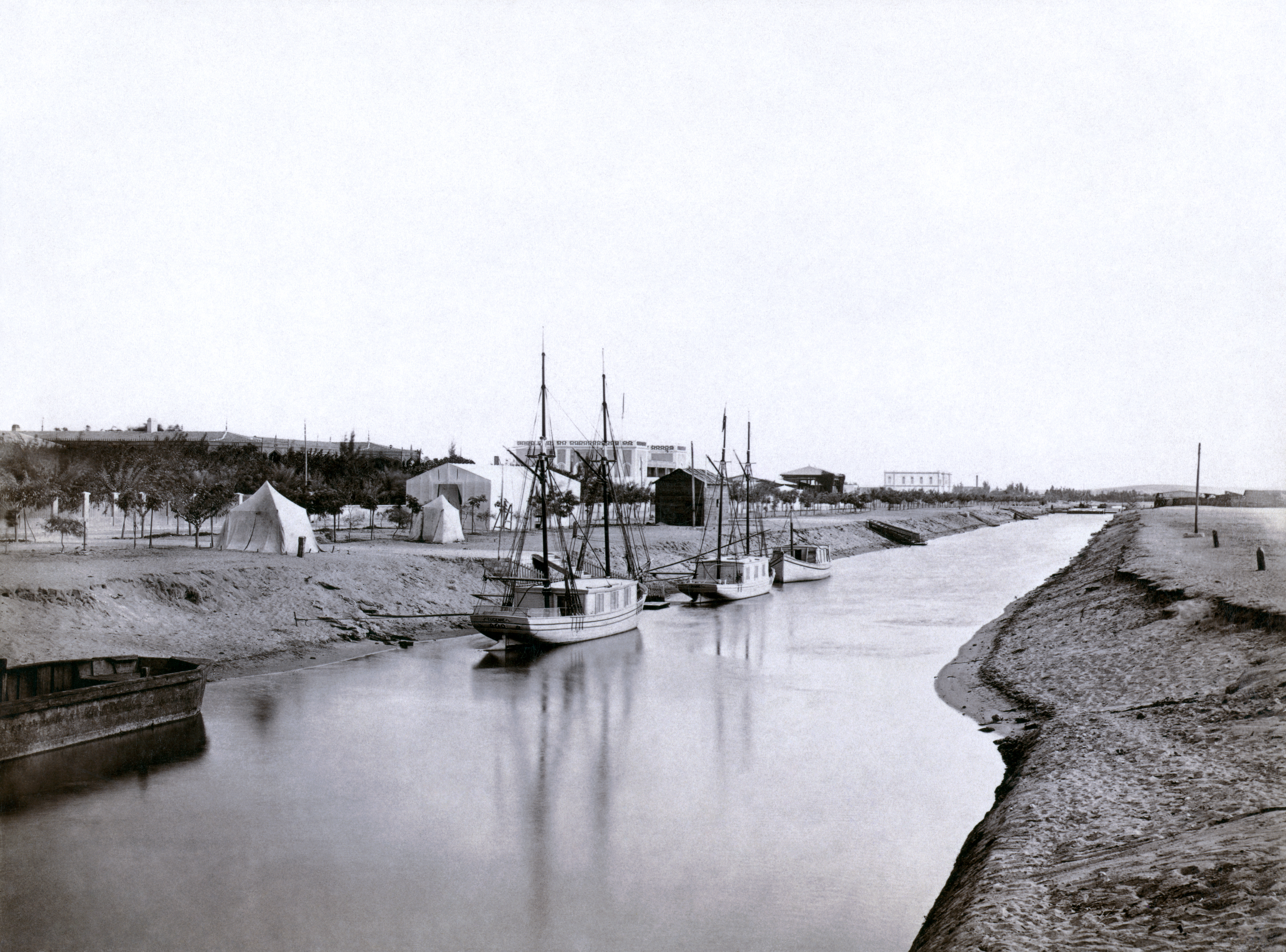
As a present to the World Digital Library at its opening, Durova has restored this picture from Egypt. We hope for a great collaboration with this great new initiative.
Thanks,
GerardM

Tuesday, April 21, 2009

Google Summer Of Code

Four MediaWiki projects have been accepted in the Google Summer Of Code. Congratulations to the four students and their mentors.
Thanks,
       GerardM

Bleeding edge

Translatewiki.net is MediaWiki on the bleeding edge. When Brion brings out the latest and greatest functionality in MediaWiki, the software has already been localised in many languages. This is because translatewiki.net is running the absolutely very latest software.

Sometimes this goes wrong and it has an impact on  translatewiki.net itself. It clearly demonstrates the need for testing and the need for a critical eye before software goes life.
Thanks,
      GerardM

Monday, April 20, 2009

When you query geo data, you want a geo data result

I have been asked to review proposed talks at Wikimania. One talk was about Semantic MediaWiki and the other about Open Street Map. Both are great subjects for a MediaWiki conference because both add important functionality to MediaWiki.

When you think about it, it would be really cool when the results of a SMW query that results in geo data is presented in a map. At the moment there are two extensions to SMW that do just that; Semantic Layers and Google Geocoder.

Given that much of the primary functionality can be found in either extension, it should be possible to come up with something that would work for Open Street Map. Having support for both SMW and OSM would present a paradigm shift; it would make it easy to mesh Wikipedia in the big data world.
Thanks,
      GerardM

Sunday, April 19, 2009

Payment where payment is due

I was looking for a picture that illustrates "payment" and I found a picture of Judas being paid for his betrayal as one of the top results. It can be argued that this event was essential because without it Jesus would not have died on the cross.

Many people believe that payment is anathema to the Wiki spirit. Payment is believed to be incompatible with a Neutral Point Of View and consequently many people are ready to fight whenever there is even a suggestion of payment.

For me it is obvious that payments are not only made with money. The Wiki coinage is very much acknowledgment, attention, time and reputation. Our best people have a vision on what our world is or should be. They realise their vision because of an intrinisc motivation. This is why an Incubator, a Wiktionary and a translatewiki.net independently develop their own policies even software. People invest in these projects much of themselves and their return is first and foremost the growth and the quality of their project.

Sue Gartner shares what she considers relevant in her reader. This post she shared had me thinking about the subject of payment. I think that the WMF is making a great move by opening up the possibility for people to propose projects that may get funding. The financial aspect is important but in reality the most important coin the WMF has is attention, motivation and encouragement. WMF people like Brion are often in a position where they make the difference between something happening or not happening. Their time is a precious commodity because it is so highly valued and in short supply.

As the the time of the WMF staff is considered to be this valuable, improving the effectiveness of their time is the best investment the WMF can make.
Thanks,
      GerardM

Saturday, April 18, 2009

ar, de, dsb, fr, gl, gsw, hsb, ia, ja, ksh, lb, nl, oc, pl

A new extension "Semantic Tasks" became available. Now twenty four hours later, the localisation for fourteen languages has already been completed. In my opinion that is quite special.

Another thing I appreciate is that Semantic Tasks installs nicely in the Wikiation Extension Testing Environment. This is special for me because it is the first Semantic MediaWiki extension that just installs.

Semantic Tasks was developed for the CcTeamSpace is the internal task and project tracking system used at Creative Commons. All these things I learned today and in my opinion all this really demonstrates the relevance and the quality of the MediaWiki ecosystem.
Thanks,
       GerardM

Provenance

When you write a Wikipedia article, you are expected to provide sources that prove the assertions made in the article. There are good reasons to do this, for articles it is not only considered "best practice" but even essential. Current practice on many Wikipedias is that articles that do not provide reliable sources may be put forward for deletion.

A picture proverbially paints a thousand words and when a thousand words in Wikipedia exists without any citations the least you can expect is a template indicating that citation is needed.

The illustration can be seen as an advertisement for what to wear to prevent troll troubles. It is however a picture that comes with excellent provenance; the original picture is referred to and urges American ladies to save their country like Joan of Arc did for France.

Both the original picture and the derivation are properly sourced and consequently you have the information you need to appreciate these pictures for what they are. This can be exceedingly important because it is the provenance that allow pictures to express their thousand words.

Falsifications are not new, and they exist for a purpose typically profit and propaganda. When you look up the word provenance, you find two aspects that are of relevance; the origin of something and the history of the ownership of something. Both are relevant to the illustrations that we use. Practically it would be wonderful when we always refer to where the original material can be found. It is then for the museums, archives and libraries to provide the complete provenance of the material we use as illustrations.

In my opinion, we should always indicate where the originals of our illustrations can be found. This has nothing to do with copyright or licensing and everything to do with us providing information that can be trusted.
Thanks,
      GerardM

PS we take orders for troll apparel..

Friday, April 17, 2009

Kurdish Wikipedia & Sorani

Kurdish is a macro language. This means that there are multiple languages who are Kurdish. When you read the Wikipedia article "Kurdish language", you find all the classic arguments about language and dialects. The Wikipedia article assumes that Kurdish is one language while it provides all the arguments why a differing opinion is sound.

The language policy of the Wikimedia Foundation requires for new languages that they are recognised as a  language in the ISO 639-3. The request for the Sorani language was quite special; the localisation for ku-arab we were told was actually Sorani but what topped even this was the request we received from one of the Kurdish admins to consider the 500 articles in the Arabic scripts in the Kurdish Wikipedia because they are in fact in Sorani.

Given that the Kurdish community itself supports the request for Sorani and given that all the requirements are in place when you allow for such special circumstance I consider the Sorani proposal to be extraordinary and ready for showtime when the other members of the language committee concur.
Thanks,
        GerardM

Wednesday, April 15, 2009

Africa helping itself on the Internet


In December I blogged about the Afrigen project. In this project people are asked to add CLDR information for their language. Now after some months there are results and, I am impressed. Many languages have made a start and the first languages have completed all the information that is looked for in this standard.

In my opinion having quality information in the "Common Locale Data Repository" is a litmus test for readiness of a language for the Internet. The Afrigen project makes completed data available in their subversion.

The CLDR itself distinguishes levels of CLDR support; this includes how lists are sorted, how numbers are written and how a few languages are called. For this project to insist on a complete set of data takes courage but is in my opinion the right thing to do.

There are people who say that a language is on the map when it has its own Wikipedia, in my opinion a complete set of CLDR data has a much wider application.
Thanks,
GerardM

An exploratory meeting at the Zuiderzee museum

Yesterday I went to the Zuiderzee museum, it has a rich collection about the area where my family comes from. It shows how people lived and worked in days gone by. The museum is named after the Zuiderzee, a body of water that became fresh water after the building of the afsluitdijk in 1932 and it has a collection that is particularly focused on the people who lived near it.

The Zuiderzee museum is in the process of digitising its collection and quite a bit can be already found on the Internet on the "geheugen van Nederland" which is called in translation, the memory of the Netherlands. Many Dutch archives and museums collaborate in this initiative that aims to digitise much of the Dutch cultural heritage.

After a number of telephone calls, we had a first meeting in Enkhuizen; it was very much a "getting to know you". We talked about what is important, licenses, meta data and how to make the heritage that has both our interest interesting to our public. Having communicated a lot lately with people like Mathias Schindler, Witty lama and Durova helped prepare me for this meeting.

Given that the Zuiderzee museum is in the process of digitising its collection and is already looking at how collaboration can further its objectives, a possible relation will be much more collaborative. We did talk about our digital restoration efforts, the importance of having information with historic material, the different types of material in the collection...

One of the restorations done by Durov is this photochrom showing two girls from Marken. I had brought this nicely printed at a high resolution as a present. It is pictures like this that made Marken the tourist attraction it still is and as such I hoped that it would be of interest.

Currently there is an exhibition at the museum that aims to give a modern interpretation of modern fashion designers of the Dutch traditional clothing. The colours were added later in the picture but the question what colours they should be will probably always be a mistery.

In a couple of weeks we will be in contact again and explore further where collaboration / partnership may bring us.
Thanks,
      GerardM

Tuesday, April 07, 2009

ş and ţ or ș and ț

Bugzilla bug 17428 informs us that the Romanian language used to be written with the cedille. This was wrong and there have been improvements in Unicode and it is possible to write Romanian properly.

You have to use Windows Vista for this.. I wonder how Linux supports Romanian.

As many people use legacy Windows systems, a straight conversion to the proper characters is not an option at this time for the Romanian Wikipedia. The bug report talks about a conversion similar to what is done for Chinese or Serbian. A problem is that this kind of software is not part of what the Internationalisation people at translatewiki.net do.

So what to do, who to turn to?
Thanks,
GerardM

A sense of perspective and the monthly statistics

I had the priviledge to be at the developer meeting in Berlin. I enjoyed it, it was a great meeting and many of the subjects that are dear to me moved forward. The best news was Open Street Maps, this will become part of Wikipedia. I am quite happy with the reception of the Wikiation Extension Testing Environment, this is a framework for installing and testing MediaWiki and its extensions.There is a sandbox environment available to MediaWiki developers, they just have to ask ...

I had several great conversations, one of them was with Trevor Parscal of the Usability project. One of the things we discussed was the MediaWiki localisation. I was happy with Trevor's appreciation of the work done at translatewiki.net. It is indeed quite amazing to submit code in the evening to find in the morning that you have to sync your code because of the work done overnight. When new code gets to translatewiki.net, Siebrand, Raymond or Nikerabbit have a look at it and work on the internationalisation and then make it available for localisation. Typically there are people ready for any new messages and it is indeed impressive to find something completely localised in a couple of languages the next day.

My perspective is different. For me translatewiki.net is 310 languages, only 58 languages have all the most used messages localised and when you look at the group statistics in time you find that our localisation only goes up slowly. I know the hard work that goes into getting ready for a new project and while I welcome improved usability and functionality it comes at a price.

The good news is the numbers are still improving and Brion is quite happy to consider options that will make localisations available sooner. The good news is that Nikerabbit may work on the Translate functionality in a GSOC project. The good news is in little things like the Babel extension being available in Gujarati.

With apprehension I am looking at the many messages that will be created as a result of the usability project.It is not that the Internationalisation will not be done, I fear that many languages will spend their time localising the new messages, messages that will be of necessity be volatile. I would prefer it when these new messages are done when the localisation is ready for the production messages.

What will happen is that we will leave things as they are; people can work on what they like. It will be interesting what the fall out will be. When the new usability is the hit that I hope it will be, it may mean that we gain more localisers and our statistics continue to slowly but surely improve and that my fears prove to be unfounded.
Thanks,
      GerardM

Finnish Wikiversity

I am happy that the Finnish Wikiversity has been created :) Let the editing begin :)
Thanks,
GerardM

Sunday, March 29, 2009

Quality pictures

Historical subjects need illustrations just like any other subjects. I was looking at the word "front" and I learned that for the Russian military it has a specific meaning. I looked up the corresponding article and found this picture.

It shows soldiers marching, a bridge and a tower in the background. It is probably the best picture that we have and it will be replaced once we have a better version of this photo or when we have an alternative.

The question is where do we get a better alternative. Who has access to the original picture and can create a quality scan. There are likely enough alternatives to this picture.Who can help us improve our illustrations of this article ?
Thanks,
      GerardM

User interface

Recently I have been using the PuTTY software a lot. My computer came with Windows XP and I have been using this ever since PuTTY however provides me with a Window onto a Linux server and what I have been thinking about is what do I expect of the software.

It is obvious that the command I type in are to be interpreted remotely. I do a mv when I copy, and I rm a file when I delete it. Copying and pasting is less obvious. What tripped me is how to copy text. I highlight a text and then I press CNTRL C This gets me at least a carriage return and in Windows I can paste the text.

What is nasty is that it also kills the program I am in... Now I have learned that highlighting the text is what allows me to paste it. CNTRL C is there to provide me with a KeyboardInterrupt so everything works as designed, the only problem left is knowing what the design is.

Thursday, March 26, 2009

The localisation of Veps and Estonian

Veps is a language spoken in Russia and it is related to Estonian and maybe Finnish. Now that Veps has been added as a language in translatewiki.net, there is a discussion what to use as its fall back language.
  • People do speak Russian but Russian is not related to Veps, it uses a different script, it does not help the localisers.
  • Estonian is closest but the localisation of Estonian is far from complete
  • Finnish is quite different and this brings its own problems
Veps has a project in the incubator, it is a language that is struggling and this makes it extra important to help people with a user interface in their own language. One of the big problems is the lack of computer terminology in Veps. It is really important for the localisers to agree on what words to use.

It will be really interesting to watch how the localisation of Veps will work out and what fall back language will be implemented when the project goes life.
Thanks,
     GerardM

Wednesday, March 25, 2009

Commons or Flickr

There have been several collections of museums and archives that found their way to Flickr. The latest I know off was a collection of medical images. There was a discussion about this and I have been thinking about this for some time. I would like to see more collections going into Commons. So what do we have to offer to the archives and museums when they collaborate with us (as well).
  • The images are actually used, Commons is not like a stamp collection
  • Researching things like copyright is something that we do
  • Providing updates to the meta data was important to the Bundesarchiv
  • The material is used in projects in many languages
Many archives have collections that reflect the history of multiple countries. When the paintings, the gravures, etches and photos that are part of such collections are digitally available in Commons, it will be shared and this gives the collection even more relevance.

The arguments why Commons should be an obvious partner are easy to make. The benefits to Commons and our projects are equally obvious. We have to figure out how to be inclusive and how to reach out to the archives and museums of countries where we are thin on the ground. This is important because this is how we prevent systemic bias.
Thanks,
        GerardM

Thursday, March 19, 2009

Things that make me happy

Today a new person came to translatewiki.net. He came to us to localise a language that has been consistently dormant. We did not even support his language in our Babel extension. Now we do.

Peter Suber wrote on his blog about the Library of Congress, they have scanned over 25.000 public domain books. The Sloan Foundation, the Internet Archive are all involved. They do a marvelous job.

Today I received an e-mail from a Dutch museum that they want to talk with us to share their material with us. I am going to meet them in April.

A few days ago, I read that when you share your hapiness, you make other people happy.
Thanks,
GerardM

Wednesday, March 18, 2009

The usability project has it wrong

The Wikipedia Usability Initiative has posted on its website criteria for WYSWYG and markup editors. I take it that the criteria posted are the alpha version of what the criteria will be because they are fundamentally flawed.

They say "Compatibility with current 1.15alpha is required to pass". I do not understand this. The point of this phase of the project is to evaluate functionality that improved on the usability of MediaWiki. When this usability is better that the one on offer in the 1.15alpha and when testing proves it to be best of breed, this is the functionality that is to pass.

The Stanton project has given a grant of $890.000,-- to bring improved usability to the English Wikipedia. I know that the project team consists of capable people, what I expect them to do is look at the functionality, learn what it is that makes it tick, compare what is on offer and make a best of breed implementation based on what they have learned. They can and should upgrade software to run on 1.15alpha when needed but the real trick is to make it good enough to get Brion's approval.

One other aspect is that these WYSWYG and markup editors are developed by organisations for their own need. When you look at the list, you realise that there are quite a number of them.What I am hoping for is that the WMF will collaborate with these organisations, that they work together so that the new usability will fit them all.

Collaboration will help the $890.000,-- achieve that much more because it is not only this money but also the money spend on usability by these organisations.
Thanks,
       GerardM

Tuesday, March 17, 2009

Update on the Uniwiki extensions

It has been some time since I posted last about the Uniwiki extensions. Things have changed. There is much better information about the Uniwiki project available on the UNICEF innovation website. The focus of UNICEF has been to make MediaWiki usable for the youth online. They mention that the extensions are localised on translatewiki and while this has been a success, it is sad that the African languages have so far not attracted the people to localise their language.

Technically a lot of work has been done. Kennisnet has a programmer working on the software. I received a report from him about it.
  • the software now uses classes
  • several exceptions are now handled in the correct way
  • all the originally reported bugs have been fixed and have been verified as fixed
  • testing uncovered more bugs
  • there are still nine bug open
As I mentioned before, the Uniwiki extensions are based on genuine user tests done in English in Tanzania. The tapes are available to the people of the WMF usability project, there is continued development and testing to make the software Brion ready. Our aim is to make the funding from the Stanton foundation go as far as it can get because we really need better usability for our MediaWiki software.
Thanks,
GerardM

Sunday, March 15, 2009

Appreciating Semantic MediaWiki

I am spending a considerable amount of time working on the "Wikiation Extension Testing Environment" (WETE). This is software that is designed to test MediaWiki and its extensions in many configurations. Wikiation is a Dutch company that provides hosting and value added services in the Dutch language and with MediaWik as its platform. It is of extreme importance for Wikiation that the software just works. The customers of Wikiation rely on a quality service, they expect that the systems are running.

One of the customers of Wikiation is interested in Semantic MediaWiki. Installing SMW is complicated, there are many extensions, these extensions have their prerequisites and it is easy to get it wrong. All of SMW is under constant development and consequently the latest is not necessarily the greatest.

As I am working together with Wikiation to develop WETE, SMW is an obvious target to test. I blogged about the lessons learned and several people got into contact with me. I learned that SMW is used for a wide variety of topics, it is used for genomics and for chicks, it is used for contact information and for a science fiction MMO... There is even a hosting company who specialises in SMW.

What SMW helped me to appreciate even more is the great number of people and organisations that have their MediaWiki installation. SMW is great software and it deserves the best support. I am happy that WETE is starting to play a part in this.
Thanks,
      GerardM

Saturday, March 14, 2009

Tim Berners-Lee at TED

I love TED. Their presentations are awesome. They make them available on the web for everybody to see. I use Google Reader to learn when something new appears and today I was given the treat of Tim Berners-Lee.

Sir Tim talked about Linked Data, in it he mentioned Wikipedia; but it was not Wikipedia that was relevant but DBpedia, the project that extracts data from the info boxes of Wikipedia articles. In the vision of Sir Tim, it is data that is of importance, Wikipedia is connected throught DBpedia and this is how Wikipedia gets much added value.

DBpedia is not the only project that links to Wikipedia. When you look at the Wikipedia article on malaria in this way, you find another.

From a data point of view, Wikipedia is very much an end-point. You refer to it, you data mine it and it is really fortunate that this has always been allowed. Wikipedia currently does not produce data, that is apparantly something that is reserved for its future.
Thanks,
GerardM

Wednesday, March 11, 2009

Nikerabbit's thinkpad

At Fosdem Nikerabbit's laptop was stolen. To Nikerabbit and to translatewiki.net, this was quite a blow.

We did ask on translatewiki.net and on this blog for a way to help. It is with gratitude that I can post this photo of Nikerabbit reading the fine manual of his new thinkpad.

Thank you Wikimedia Foundation for helping out. This was most welcome :)
Thanks,
      GerardM

The Cologne archive

Cologne had an important archive. Its material was not digitised. Because of a mishap during the building of a new underground route, the archive was destroyed.

The archive of Cologne was important. Several scientist are now stuck. The collection is deemed to be destroyed beyond repair.

PLEASE DIGITISE OUR HERITAGE.
Thanks,
      GerardM

No more libraries of Alexandria

Monday, March 09, 2009

About dykes

I have been reading the articles relating to dykes on the English Wikipedia. For me it is an amazing article because so many things in this article are problematic. I live in a polder, effectively below the sea level and understanding how dykes works is important in the Netherlands.

When I read that willows are used to strengthen a dyke, I am utterly amazed, my grandfather had his sheep on a dyke because they ensured that there would not be any willows as trees undermine the very structure of a dyke. It is suggested that in Dutch the ditch on the inside of a dyke is part of the dyke. This ditch is to drain away the water seeping from under a dyke and aims to prevent saturation of the ground because this is a precursor to a breach. But it is not at all considered to be part of the dyke.

There is also an argument in the article that an authority that enforces the maintenance of a dyke is not needed. The problem is that the lack of enforcement is quite deadly. When a dyke breaks everybody may drown, not just the people who are living next to where there is a breach. It would be folly to rely on people's individual responsibility; it is a shared responsibility and there is little room for error. Pre dynastic Egypt may have been less centrally organised, but there is in my mind no doubt that (local) enforceable arrangements existed.

The Dutch dykes have to be effective because half our country depends on them. As we do expect the sea level to rise, we are working on improving out dykes and the ability to drain the Rhine and the Meuse to prevent a catastrophe.

My problem with writing on the English Wikipedia is that I am acutely aware of the existence of all kinds of rules. The articles about the dyke is merged with levee because it is considered the same. There is a Wikipedia project involved... I find I have to invest serious time in order to argue why I think the article is wrong. Time that I do not have spare.
Thanks,
       GerardM

Simple Wikipedia

The Simple Wikipedia is a Wikipedia in the English language. It uses easy words and simple sentences. This will help people who are learning English.

When a request for a "simple" Wikipedia in another language is made, it will be denied. The current language policy does not allow for "simple" projects. This has its own problems. Regularly people request the closure of this project because the current policy does not allow for it.

Pathoschild wrote that there are two ways in which new simple Wikipedias might come about:
  • formulate criteria so that the policy can be changed
  • convince the WMF board to accept new "simple" projects
In my opinion the hardest thing to do is convince; convince people either to accept changes to the policy or to convince the board to accept new "simple" projects.  The best way to convince me would be to show how the simple English language Wikipedia makes a difference, how it is used. When it becomes obvious what good the "simple" Wikipedia does, it will also be more obvious how to formulate the criteria that allow for "simple" projects in other languages.

Aphaia mentioned that she successfully "simple" promoted in Japan. David Gerard wondered why "simple" is not better known. David Goodman argued that a "simple" may help people who speak English only, to learn other languages. I say, get all the testimonies and research about "simple" in one place and the least it will do is help stop the unending stream of requests for the closure of the English language "simple" Wikipedia.
Thanks,
      GerardM

Friday, March 06, 2009

Pontic Wikipedia

I am really happy with the creation of the Pontic Wikipedia. I wish the Pontic community a great future with their Wikipedia.
Thanks,
     GerardM

Monday, March 02, 2009

On the monthly translatewiki.net information

Translatewiki.net had a good month. When you look at the group statistics in time, you will find that the MediaWiki core messages, the messages of the WMF used extensions and of all the extensions have gone up. The "most used" messages made a tumble from 113 to 82 languages covering 98% of the messages, but when you compare it with the number of languages on February fifth, you will find that only 45 languages had this status. So it is actually not at all bad.

Februari was the first month that we could add "gender" to messages. As I do not hear much of it, I can only assume that its implementation is happening quietly.

This month the 1.14 release of MediaWiki was planned and Siebrand asked our localisers for a final rally. According toTim Starling: "MediaWiki 1.14.0 now has 311,000 localised interface text fragments spread across 298 languages, that's 17% more than in 1.13.0".
Thanks,
GerardM

Wouter Hamel for Amsterdam 2010

Rob, a friend of mine celebrated his birthday by inviting friends for a concert. I had the pleasure to enjoy Wouter Hamel and his band.
 
It was a great concert, the guy can sing, his band can play and it sounded suberb. I could wish for nothing better then having a class act like this for Amsterdam 2010. I am however afraid that Wouter will be world famous outside the Netherlands as well by then.
Thanks,
       GerardM

Sunday, March 01, 2009

Predation in the Oostvaardersplassen

The Oostvaardersplassen is a nature reserve near my home. It is a nature reserve that happened by accident. It was in a low laying area and water aggregated there, it became a marsh area loved by water fowl and in a relatively short period it became one of the more important nature reserves in Northern Europe.

As geese were rare in the Netherlands, people were really happy to find that geese could actually breed in the Netherlands. A large area was reserved and it was optimised so that geese would have a home. Geese need short grass, so Heck cattle, koniks, and deer  were introduced to keep the grasslands open.

There are only so many animals that can live in a certain area and the deer, horse and cattle population has reached its upper limit. Consequently when winter comes early, animals die. It is particularly the young and the old that do. The Netherlands do not have predators that could regulate these animals. So it is for the forrester to fulfill the role of predator.

When an animal starts to isolate itself, when it no longer flees, the animal gets shot. Depending on the law, the law in this is an arse, the cadaver is removed or left in place. Dead dear may be left in place but there is one problem. Scavengers price a skull with antlers and consequently these people tresspass in this closed wildlife sanctuary.

So in order to maintain peace and quiet, the dead deer are decapitated, and it is left to nature to do away with corpses. This is an opportunity for eagles, raven, crows and foxes. They are doing really well. The only thing is, there could be many more in the Oostvaardersplassen.
Thanks,
       GerardM