Friday, July 17, 2009
Pulmonary embolism
The husband of a friend of mine has been taken into hospital with a pulmonary embolism. A pulmonary embolism is a life threatening condition and it manifested itself after a long distance race.
It is quite shocking to be asked if you want to be re-animated when things go wrong. It is quite shocking when you are considered to be REALLY healthy.
One reason we can come up with are the pills used to boost body mass and the oxygen capacity.. Pills bought from the Internet... My friend brought all the pills to the hospital and they are looking into this.
I hope earnestly that it will work out well.
Thanks,
GerardM
Thursday, July 16, 2009
Eating my own dogfood
I am talking often about the restoration of images. It is however not something that I do. The digital restoration of images we do has multiple aims:
This is a picture titled "Isle of Graia Gulf of Akabah Arabia Petraea" it is a drawings made on the spot by David Roberts and the lithographed was made by Louis Haghe. It is exactly right for me; it is a beautiful well preserved picture with some damage at the bottom and a few minor stains and the colour has faded over time. It has a subject and a quality that might even make it a featured picture. All in all, it is the ideal object to motivate a beginner like me.
When I was done, I had it checked by Durova and she sprinkled some additional magic on my work and now I think we have this gobsmacking beautiful picture.
I have learned some basic skills in GIMP, I learned that indeed you can be skyping and work on specs at the same time. All in all, restoring images seems like knitting; you are productive and you can jabber at the same time..
Try it out as well, I am sure Durova has many more images that need some work. If not we have to extend her range of material she can pick from :)
Thanks,
GerardM
- remove stains, specs
- remove tears and folds
- adjust the colours to make it look like it used to
- make it ready to illustrate our content
This is a picture titled "Isle of Graia Gulf of Akabah Arabia Petraea" it is a drawings made on the spot by David Roberts and the lithographed was made by Louis Haghe. It is exactly right for me; it is a beautiful well preserved picture with some damage at the bottom and a few minor stains and the colour has faded over time. It has a subject and a quality that might even make it a featured picture. All in all, it is the ideal object to motivate a beginner like me.
When I was done, I had it checked by Durova and she sprinkled some additional magic on my work and now I think we have this gobsmacking beautiful picture.
I have learned some basic skills in GIMP, I learned that indeed you can be skyping and work on specs at the same time. All in all, restoring images seems like knitting; you are productive and you can jabber at the same time..
Try it out as well, I am sure Durova has many more images that need some work. If not we have to extend her range of material she can pick from :)
Thanks,
GerardM
Wednesday, July 15, 2009
Hacking and security
When people think about security and hacking, they often think that hackers have to do incredible things to get access to systems and data. The truth is typically much more mundane. Many people and organisations do use software that is not secure. Many systems do not have all the latest patches. for all the "industry standard software" there are exploits. Typically hacking is using an exploit.When software makes it hard to gain access to something, some people would call this a "security feature". But to make something truly secure, the software has to be written in such a way that it is designed to make it hard to get at the something.
The producer of "zoomify" explicitly says that their software should not be considered a security feature. That may make sense on several levels
- the software was not designed with security in mind
- the producer does not want to be liable for any exploits of the software
Thanks,
GerardM
Gearing up
The Tropenmuseum is preparing for the upload of a selection of their collection to Commons. The aim is to upload images that relate to Indonesia. This is a huge collection estimated to be some 100.000 images.
This is a huge undertaking with many issues, to get a feel for the issues, the Tropenmuseum has decided to start with a much smaller collection, a collection about Suriname and slavery. There are several thousand images in this collection and, it coincides with a presentation on the subject.
A new issue is one of language; the annotations that go with this material is in Dutch. Some of the annotations have been translated into English and while the Tropenmuseum will welcome more translations, it does not have the capacity to provide these. The problem for Commons is that there are many museums in the world and it cannot expect them to provide all the categories in English.
Thanks,
GerardM
This is a huge undertaking with many issues, to get a feel for the issues, the Tropenmuseum has decided to start with a much smaller collection, a collection about Suriname and slavery. There are several thousand images in this collection and, it coincides with a presentation on the subject.A new issue is one of language; the annotations that go with this material is in Dutch. Some of the annotations have been translated into English and while the Tropenmuseum will welcome more translations, it does not have the capacity to provide these. The problem for Commons is that there are many museums in the world and it cannot expect them to provide all the categories in English.
Thanks,
GerardM
Tuesday, July 14, 2009
Copyright and licenses are a detraction when building a relation between the WMF and GLAM
A whole lot of bad publicity is the result of the controversy between some in the WMF projects and the London based National Portrait Gallery. Bad publicity because the crowds have been aroused to storm the ivory towers of the NPG with pitchforks, bad publicity because what should be natural partners are forced into opposing entrenched positions.
When you compare the WMF projects on the one hand and GLAM or galleries, libraries, archives and museums on the other they are starkly different. The WMF is first and foremost about providing and preserving digital information while GLAM are about providing and preserving physical objects. Both gain their social relevance by making information as widely as possible to the public.
The average GLAM has such a huge collection of material that they are always fighting to preserve and conserve their collection while at the same time registering, annotating and digitising their collection. The financial demands of such an endeavour are great and every revenue stream is needed to just maintain the status quo.
The information provided by the WMF is based on the work of GLAM. Most Wikipedias require citations and they are from publications that can be found in libraries. The originals of digital illustrations can be found in museums and archives and it is only when there are sufficiently annotated when we can trust them to paint the right thousand words.
The two communities are not far apart. It only takes a little effort and the “Wiki loves art”, Wikimedians are invited into museums and may make pictures, they are given special guided tours and lectures. When you ask politely, GLAM like the Bundesarchiv, the Tropenmuseum are happy to provide much of their collection with annotations in a format that satisfies much of our needs.
The most important thing when you talk to a GLAM is a willingness to listen. What is their aim, what are their issues, how do they get their funding. It is easy to argue that an object that is in the public domain should be available in the highest resolution. It is equally easy to argue that it takes money to preserve the physical objects. The need for preservation is a perpetual one and thereby is the need for money. The need for access to the physical objects will also be a perpetual one because the annotations and the provenance of the digitised material makes the digitised material credible.
When we illustrate our articles, we can do without the distractions of discolouration, folds and tears and because we live in a digital world, we can make all these go away with tools like Gimp of Photoshop. We are lucky in our growing community of restorationists because their work is fantastic. The quality is of the highest standards and several GLAM expressed the wish that they had the time to do as good a job.
In this modern world many of the GLAM have a presence on the Internet but they find it hard to gain the same relevance they have in the physical world for themselves and their collections. When they partner with us both our publics have the same need for annotations, have the same need for quality information about the world they represent. There is a reciprocal need for what the other has to offer. GLAM and the WMF are natural partners in this. A great example of what a fine restoration can do is “Know all men by these presents” by Coles Philps. The original that is held at the Library of Congress had a stain in the right hand side. The restoration by Durova brought this picture back to its original splendour and became a featured picture on Commons. It is now again of a quality where it could be sold as a postcard or a poster.
Yes, there is this thing called copyright but much of what can be found in an archive or a museum is either in the public domain or an orphan. For much of what is nominally copyrighted the GLAM do not know who the current copyright holder is or how to contact them. Many of the collections were donated to a GLAM but it is only recent that copyright is specifically addressed in the papers of transfer of ownership. Several GLAM have indicated that copyright is a cost and not a benefit and at the same time many of GLAM need to sell high-end copies of the material they preserve in order to survive.
Thanks,
GerardM
When you compare the WMF projects on the one hand and GLAM or galleries, libraries, archives and museums on the other they are starkly different. The WMF is first and foremost about providing and preserving digital information while GLAM are about providing and preserving physical objects. Both gain their social relevance by making information as widely as possible to the public.
The average GLAM has such a huge collection of material that they are always fighting to preserve and conserve their collection while at the same time registering, annotating and digitising their collection. The financial demands of such an endeavour are great and every revenue stream is needed to just maintain the status quo.
The information provided by the WMF is based on the work of GLAM. Most Wikipedias require citations and they are from publications that can be found in libraries. The originals of digital illustrations can be found in museums and archives and it is only when there are sufficiently annotated when we can trust them to paint the right thousand words.
The two communities are not far apart. It only takes a little effort and the “Wiki loves art”, Wikimedians are invited into museums and may make pictures, they are given special guided tours and lectures. When you ask politely, GLAM like the Bundesarchiv, the Tropenmuseum are happy to provide much of their collection with annotations in a format that satisfies much of our needs.
The most important thing when you talk to a GLAM is a willingness to listen. What is their aim, what are their issues, how do they get their funding. It is easy to argue that an object that is in the public domain should be available in the highest resolution. It is equally easy to argue that it takes money to preserve the physical objects. The need for preservation is a perpetual one and thereby is the need for money. The need for access to the physical objects will also be a perpetual one because the annotations and the provenance of the digitised material makes the digitised material credible.
When we illustrate our articles, we can do without the distractions of discolouration, folds and tears and because we live in a digital world, we can make all these go away with tools like Gimp of Photoshop. We are lucky in our growing community of restorationists because their work is fantastic. The quality is of the highest standards and several GLAM expressed the wish that they had the time to do as good a job.
In this modern world many of the GLAM have a presence on the Internet but they find it hard to gain the same relevance they have in the physical world for themselves and their collections. When they partner with us both our publics have the same need for annotations, have the same need for quality information about the world they represent. There is a reciprocal need for what the other has to offer. GLAM and the WMF are natural partners in this. A great example of what a fine restoration can do is “Know all men by these presents” by Coles Philps. The original that is held at the Library of Congress had a stain in the right hand side. The restoration by Durova brought this picture back to its original splendour and became a featured picture on Commons. It is now again of a quality where it could be sold as a postcard or a poster.
Yes, there is this thing called copyright but much of what can be found in an archive or a museum is either in the public domain or an orphan. For much of what is nominally copyrighted the GLAM do not know who the current copyright holder is or how to contact them. Many of the collections were donated to a GLAM but it is only recent that copyright is specifically addressed in the papers of transfer of ownership. Several GLAM have indicated that copyright is a cost and not a benefit and at the same time many of GLAM need to sell high-end copies of the material they preserve in order to survive.
Thanks,
GerardM
Thursday, July 09, 2009
A case of Haitian voodoo ?
Yesterday I was at the Tropenmuseum, I talked with one of its IT people about uploading material to Commons. We talked about all the usual subjects, size of the image, WMF chapters, pywikipedia, restorations...
We also talked about how to keep people interested in the GLAM that cooperate with the Wikimedia Foundation. (GLAM = galleries libraries archives museums) and one of the initiatives of the Tropenmuseum would fit that bill. Every month they select an object that has something of a mystery about it and they ask the public to comment.
This months object was left by a member of the public at an exhibition about Haitian voodoo. This object has a most prominent place at the entrance to the museum and, the hope is that a member of the public can help out and help with the provenance of the object.
Maybe you can help by identifying it as either a hoax or the real thing... It looks spooky enough either way.
Thanks,
GerardM
We also talked about how to keep people interested in the GLAM that cooperate with the Wikimedia Foundation. (GLAM = galleries libraries archives museums) and one of the initiatives of the Tropenmuseum would fit that bill. Every month they select an object that has something of a mystery about it and they ask the public to comment.This months object was left by a member of the public at an exhibition about Haitian voodoo. This object has a most prominent place at the entrance to the museum and, the hope is that a member of the public can help out and help with the provenance of the object.
Maybe you can help by identifying it as either a hoax or the real thing... It looks spooky enough either way.
Thanks,
GerardM
Thursday, July 02, 2009
You can see the future
There has been a lot of talk in the last year about the usability of the MediaWiki software. Today, the new functionality created by the Usability Initiative has been rolled out. Have a look at today's English Wikipedia main page..
It not only looks good, it also makes it easier to understand what you can do. Given the large percentage of people who just do not appreciate that they can edit a page, it is a big improvement.
When you want to be part of the future of Wikipedia today, you have to change to the "vector" skin. Another neat feature is the "enhanced editing toolbar" that you can enable on the "editing" tab of the user preferences.
At this stage the usability improvements are available for all the "left to right" languages. Because of incompatibilities in IE-6, some more work is needed before it will become available for languages like Arabic and Hebrewl.
All in all, it is a happy day because you can see the shape of things to come for all of us and you can experience it now. When you find any issues, this is where they are happy to leaarn about it.
Thanks,
GerardM
It not only looks good, it also makes it easier to understand what you can do. Given the large percentage of people who just do not appreciate that they can edit a page, it is a big improvement.
When you want to be part of the future of Wikipedia today, you have to change to the "vector" skin. Another neat feature is the "enhanced editing toolbar" that you can enable on the "editing" tab of the user preferences.
At this stage the usability improvements are available for all the "left to right" languages. Because of incompatibilities in IE-6, some more work is needed before it will become available for languages like Arabic and Hebrewl.
All in all, it is a happy day because you can see the shape of things to come for all of us and you can experience it now. When you find any issues, this is where they are happy to leaarn about it.
Thanks,
GerardM
Tuesday, June 30, 2009
Firefox 3.5
Firefox 3.5 has become a reality. I have been looking forward to it. I want to use it. I even went for a monment back to Vista just to install it...
As I am running Ubuntu, Firefox is the default browser but the update manager/ does not have the new Firefox available for me. I expected that Firefox would work the same but so far it has not. I would love to see the same usability on Ubuntu.
Thanks,
GerardM
As I am running Ubuntu, Firefox is the default browser but the update manager/ does not have the new Firefox available for me. I expected that Firefox would work the same but so far it has not. I would love to see the same usability on Ubuntu.
Thanks,
GerardM
Sunday, June 28, 2009
More thoughts on book sprints
This is my second day that I have been working on a "book sprint". The one thing that I have learned about the process is, that the success is defined by the quality of the people involved. When you combine people like Adam Hyde and Allen Gunn in the mix, there will be something usable at the end.
Having worked for two days with the software used by FLOSS manuals, I am sure that a book sprint can also be done using MediaWiki. The key thing to consider is not so much can you do this, but what is the added value. Writing FLOSS manuals is what FLOSS manuals does and a community has formed around it. Replicating this effort only makes sense when it grows the creation beyond the autonomous growth of FLOSS manuals.
However, when an application is found for writing outside this domain, there might be a point to experiment with MediaWiki.
Thanks,
GerardM
Having worked for two days with the software used by FLOSS manuals, I am sure that a book sprint can also be done using MediaWiki. The key thing to consider is not so much can you do this, but what is the added value. Writing FLOSS manuals is what FLOSS manuals does and a community has formed around it. Replicating this effort only makes sense when it grows the creation beyond the autonomous growth of FLOSS manuals.
However, when an application is found for writing outside this domain, there might be a point to experiment with MediaWiki.
Thanks,
GerardM
Saturday, June 27, 2009
OTT09 book sprint
When you assemble people for a conference, you bring together all the people clued in on a subject. The Open Translation Tool '09 conference brought together many of the people who are involved in translation, localisation, content and technology.
Floss manuals has this brilliant notion of a "book sprint". In a book sprint a group of people write a book in a short period of time like up to a week. At the end of the week the resulting document is published and available either as a PDF or in a printed form.
Thanks,
GerardM
Floss manuals has this brilliant notion of a "book sprint". In a book sprint a group of people write a book in a short period of time like up to a week. At the end of the week the resulting document is published and available either as a PDF or in a printed form.
Thanks,
GerardM
Thursday, June 25, 2009
Wikimedia messages to reflect our licensing
The "Wikimedia messages" contain messages that are of specific relevance to the Wikimedia Foundation and its projects.
Yesterday new messages were added that will reflect the new reality about the licensing of the WMF. As these messages apply to all Wikipedias, Wiktionaries, Wikibooks, Wikinews, Commons and Wikispecies, it is really important to get this message out.
Please help us translate these messages at translatewiki.net in all our languages.
Thanks,
GerardM
Yesterday new messages were added that will reflect the new reality about the licensing of the WMF. As these messages apply to all Wikipedias, Wiktionaries, Wikibooks, Wikinews, Commons and Wikispecies, it is really important to get this message out.
Please help us translate these messages at translatewiki.net in all our languages.
Thanks,
GerardM
Wednesday, June 24, 2009
dotSUB
With the news that Wikipedia is going to provide support for video, I am sure that a wealth of information will become available in this way. As video is created everywhere, much of it will not be understood because of it being in this language that you do not understand.At the OTT'09, the open translation tools conference, I met Ed Zad of dotSUB. DotSUB is a project where people add subtitles to video. The functionality of dotSUB is quite important and I wonder how we will do this for the content for Wikimedia projects. The cool thing is that at dotSUB they are considering making their cool functionality open source.
Ed was an inspiration at this conference; he has a long career in translation and he brought the perspective of the translation industry to this conference. For me it gave this conference the depth that makes this a wonderful conference.
Thanks,
GerardM
African localisation
The last three days I have been to OTT'09, the open translation tools 2009. It has been interesting so far. Given that it is about OPEN translation tools, the public is quite amazing. You have people who are about content, people who professionally translate, people who localise software and people who write tools to support all that.One of the people I am always happy to meet is Dwayne Bailey of translate.org.za. Dwayne was leading a session on translation and localisation in Africa and for me it confirmed many of the things I think I know but it brought also a new opportunity. I learned about ANLOC, the African network for localisation, one of the things I find awesome is that they have defined requirements for a minimal support for African languages.
The requirements can be on many levels and the cool thing is that with these requirements a website can be assessed. I would really welcome Wikipedia or better even MediaWiki to be assessed.
Thanks,
GerardM
Friday, June 19, 2009
A first meeting at the Tropenmuseum
Yesterday I had the priviledge of presenting Commons as a project to the Tropenmuseum in Amsterdam. The Tropenmuseum or museum of the Tropics has not only a beautiful collection but also an important collection.
I am really thrilled with the potential the Tropenmuseum has for us. Their collection is of specific importance to the Indonesian language Wikipedias and to the Dutch and Srenang Tongo Wikipedia. It will also help us to offset some of the bias that is currently in Commons.
In the discussion we explored all kinds of subjects, copyright and licensing, photos and objects, original material and digitally restored material... It was quite exciting. The big reason for the Tropenmuseum to consider making their material available to us is because it will make our cultural heritage available to the world. The existence of the Indonesian and Srenang Wikipedias is really important in this. Another factor was that our community has proved to help with checking out and providing additional information on the images that we have.
One really fun fact; one of the curators of the Tropenmuseum is contributing a lot of information on his speciality :) This was something the Tropenmuseum learned only recently.
I did have time to enjoy the exhibition areas of the museum. They are fun, impressive and engaging.
Thanks,
GerardM
I am really thrilled with the potential the Tropenmuseum has for us. Their collection is of specific importance to the Indonesian language Wikipedias and to the Dutch and Srenang Tongo Wikipedia. It will also help us to offset some of the bias that is currently in Commons.
In the discussion we explored all kinds of subjects, copyright and licensing, photos and objects, original material and digitally restored material... It was quite exciting. The big reason for the Tropenmuseum to consider making their material available to us is because it will make our cultural heritage available to the world. The existence of the Indonesian and Srenang Wikipedias is really important in this. Another factor was that our community has proved to help with checking out and providing additional information on the images that we have.
One really fun fact; one of the curators of the Tropenmuseum is contributing a lot of information on his speciality :) This was something the Tropenmuseum learned only recently.
I did have time to enjoy the exhibition areas of the museum. They are fun, impressive and engaging.
Thanks,
GerardM
Wikiblame is now supported by translatewiki.net
Wikiblame is now supported by translatewiki.net. This is cool, when you check out the project page you find that languages that have localised the software, are not supported in the software yet.This is quite something because this may be the first project where the localisation may drive what languages are available for this project.
Thanks,
GerardM
Tuesday, June 16, 2009
Pointing forwards
I have been playing with the software that is used on the usability prototypes.. I love it. The vector skin is clean and a lot easier on people new to MediaWiki. When you look at the EditToolbar, you find that it can replace the current CharInsert mess.
I hope this new stuff will be available soon. It will make Wikipedia a much nicer environment.
Thanks,
GerardM
I hope this new stuff will be available soon. It will make Wikipedia a much nicer environment.
Thanks,
GerardM
Tuesday, June 09, 2009
First Vista then Ubuntu
My old laptop died. The bottom of the screen was black. It died some time ago when I was in New York. That was fortunate because laptops are much cheaper in the US. So I bought a cheap new laptop and was still under the legal limit of what I could import.
The system I bought, a compac presario CQ60 came with Vista. So I started using Vista. After working with it for a few weeks, I found that I had a steep learning curve behind me and came to the conclusion that it did not really work for me. So I decided to give Ubuntu a spin as well.
Now after two weeks of Ubuntu, I have learned that Ubuntu provides me with superior functionality. The version of Vista was "home edition"; when you compare this you find that in a comparison with Ubuntu, it is cripple ware. The things that make Vista professional useful are the same things that are to justify the much higher price.
Given that I do a lot of things on MediaWiki installations, having the same operating system makes it easier. My networking is more stable, the editing of scripts is superior. I think I am going to stick with Ubuntu.
Thanks,
GerardM
Thursday, June 04, 2009
Thank you Miya
Thank you Miya for fixing the Picture of the Year results. I hope that this effort will translate in improvements in other languages as well.
Thanks,
GerardM
Thanks,
GerardM
The POTY results are flawed, and I can not do anything about it
Every year there is a POTY or picture of the year on Commons. This years results has been published and the winner is a picture with Horses on Bianditz mountain. Many people were involved in the process, the result page is available in many languages and it is wrong. It is wrong because you would expect that Commons would credit the people who created the pictures and who made the pictures of a featured picture quality.
When you talk about digital photos, there is already a problem because how do I know that these horses looked like they do on the picture? In a way it does not matter because the picture is intended to be beautiful and it is. The story is different for the picture by Jack Delano and the picture by Dorothy Lange. These are historic pictures and it is important that their authenticity is validated. These pictures have been restored by Durova.
The two pictures have been restored with care, the work done has been documented, there is a reference to the origin of the file she worked on. There are versions made during the restoration process. All in all these pictures deserve to be in the final.
Restorations are not appreciated. People care more about another moth or panorama. The point is that while these winning horses make a pretty picture, they do not carry the same weight as an illustration on our projects. Restorations are important because of their relevance. Restoring images takes a lot of effort and this work is at least as important as the images by the people who know how to open and shut the diaphragm of their camera.
That was the first part of this rant, the second part is about adding the missing information, I cannot. It is too complicated for me. They are templates within templates within templates and to top it off, they are in the form of a table. This is MediaWiki usability at its worst
At the Wikimania in Buenos Aires, there will be a presentation about these pictures and our own restorers may not be credited. That is a travesty.
Thanks,
GerardM
Saturday, May 30, 2009
More Waves
Essential to me and many of my friends is the license for Wave. The patent license has already been posted. It is short and it is sweet."Subject to the terms and conditions of this License, Google and its affiliates hereby grant to you a perpetual, worldwide, non-exclusive, no-charge, royalty-free, irrevocable (except as stated in this License) patent license for patents necessarily infringed by implementation of this specification. If you institute patent litigation against any entity (including a cross-claim or counterclaim in a lawsuit) alleging that the implementation of the specification constitutes direct or contributory patent infringement, then any patent licenses for the specification granted to you under this License shall terminate as of the date such litigation is filed."
In addition to the license, a contributor to the protocol has to provide either an individual or an organisational contributor license agreement AND in order to get a patch to the protocol accepted, a production-quality patch for the reference implementation has to be provided.
For Wave technology to succeed, is must be easily adopted and be adopted as widely as possible. Given that Wave is based on peer to peer technology, only by making client or server applications available cooperation can be ensured. By restricting the use of software cooperation in a Wave is prevented and the usefulness of the functionality is reduced
Thanks,
GerardM.
Friday, May 29, 2009
Google wave
I just watched yesterday's developer presentation of Google Wave. It stole the thunder of bing and deservedly so. It is the difference between a completely proprietary search system and an open source system that integrates many of the paradigms of the modern Internet. It is the difference between a "me too" system and something "new".
I think wave has the potential to make a big difference. The one thing that struck me was how much those aspects that make a Wiki are integrated already. The usability of this still very early product is awesome. When you see this demonstration and you think Wikipedia, you may find like me that much of the functionality is already there.. Sure I have not seen the "flagged revisions" or the "citations" but both will be the kind of functionality that so many people / organisations will need that I am sure that that will happen.
What do you think, is this the kind of open source functionality that would fit Wikipedia?
Thanks,
GerardM
I think wave has the potential to make a big difference. The one thing that struck me was how much those aspects that make a Wiki are integrated already. The usability of this still very early product is awesome. When you see this demonstration and you think Wikipedia, you may find like me that much of the functionality is already there.. Sure I have not seen the "flagged revisions" or the "citations" but both will be the kind of functionality that so many people / organisations will need that I am sure that that will happen.
What do you think, is this the kind of open source functionality that would fit Wikipedia?
Thanks,
GerardM
Thursday, May 28, 2009
Encoding the Pahawh Hmong script
Pahawh Hmong is a script. It is used to write the Hmong language(s). Different scripts are quite the norm in Asian languages and it is for this reason that the Hmong take pride in the existence of "their" script. Pahawh Hmong was developed in 1959 and it has evolved in to three variants and this complicates things a lot.
At this time there is the opportunity for this script to be included in Unicode. It is a good time to do this; there is still someone alive who knew Mr Shong Lue Yang, and it takes some plane tickets and salary for the person researching and encoding the script into Unicode.
It is not just Wikipedia that requires Unicode for a script most applications do. Without it, you may write it with a fountain pen but effectively the language is not part of this modern world.
As it is, there is no money for the encoding of the Pahawh Hmong script...
Thanks,
GerardM
At this time there is the opportunity for this script to be included in Unicode. It is a good time to do this; there is still someone alive who knew Mr Shong Lue Yang, and it takes some plane tickets and salary for the person researching and encoding the script into Unicode.
It is not just Wikipedia that requires Unicode for a script most applications do. Without it, you may write it with a fountain pen but effectively the language is not part of this modern world.
As it is, there is no money for the encoding of the Pahawh Hmong script...
Thanks,
GerardM
Requests to implement the Babel extension
The Babel extension is one of my favourites. There are several reasons why:
There is one problem; the code needs to be assessed. It already has the endorsement of all the developers at translatewiki.net...
Thanks,
GerardM
- it is implemented and supported at translatedwiki.net
- there are many localisations for the messages involved
- when you install it, all the localisations are instantly available
- it is an extension
- it is not based on templates
There is one problem; the code needs to be assessed. It already has the endorsement of all the developers at translatewiki.net...
Thanks,
GerardM
Tuesday, May 26, 2009
Free localisation support for five Wikis
When you install the 1.15 stable version of MediaWiki on your system, you will only get the localisation available at the time of the release. After that you do not get any more regular updates. This is not because no more localisation work is done at translatewiki.net for the many relevant messages, it is just because there is no mechanism to get them to you in a timely manner.The LocalisationUpdate extension will be a game changer; it will bring you all the latest localisations from Wikimedia Foundation's SVN. It will bring them based on the definition of the English message in SVN being EXACTLY the same as the local message on your wiki. So when you have a MediaWiki Wiki in a language that is in need of improved localisation support, you can choose to become part of the beta testing of LocalisationUpdate.
TheDevilOnLine is willing to support five Wikis in five different languages who want to test out this new functionality. To be eligible you will have to upgrade to release 1.15.
Thanks,
GerardM
Friday, May 22, 2009
Update on LocalisationUpdate
When you are testing something nice like the LocalisationUpdate extension like I do at the moment, you have the priviledge to follow its development. A lot of changes happened since it first materialised in Subversion; so much in fact that it may be cheaper to rewrite the code with the lessons learned in mind. It is not much code..
So what happened already;
Our expectation is that with a timely update of the localisation more people will help out with this necessary work. There are some bets going about what its impact will be. I have heard numbers as different as 5% and 40% more messages half a year after the implementation on the MediaWiki projects.
Thanks,
GerardM
So what happened already;
- currently there is an internationalisation file
- the performance has improved a lot
- it just works.
Our expectation is that with a timely update of the localisation more people will help out with this necessary work. There are some bets going about what its impact will be. I have heard numbers as different as 5% and 40% more messages half a year after the implementation on the MediaWiki projects.
Thanks,
GerardM
Wednesday, May 20, 2009
Approaches to mass digitisation in the Netherlands
I found this presentation on SlideShare by Paul Keller about mass digitisation in the Netherlands. I want us to cooperate with museums, libraries and archives, I want much of their material to be available on Commons. I love the idea that the cultural heritage of the Netherlands is digitised; it is one of the best ways of insuring that something is left when a disaster strikes.
My problem with the project presented by Paul is that it does not state what license will be used for the material that is digitised. This may be on purpose and I expect that it is, but the consequence is that nobody outside a narrow band of people can safely use it as a result. It may be that the CC-by-nc-sa is to be used, but as it does not say so explicitly it would be not safe for use by anyone. Wikipedia would not touch it because of the restriction imposed for the "non commercial" part.
Thanks,
GerardM
PS it would make sense for all this digitised material to be stored somewhere high and dry ... above sea level :)
My problem with the project presented by Paul is that it does not state what license will be used for the material that is digitised. This may be on purpose and I expect that it is, but the consequence is that nobody outside a narrow band of people can safely use it as a result. It may be that the CC-by-nc-sa is to be used, but as it does not say so explicitly it would be not safe for use by anyone. Wikipedia would not touch it because of the restriction imposed for the "non commercial" part.
Thanks,
GerardM
PS it would make sense for all this digitised material to be stored somewhere high and dry ... above sea level :)
Tuesday, May 19, 2009
Waiting for your localisations to materialise
One of the more frustrating things for the localisers at translatewiki.net is the waiting. The waiting for the localisations to go life.The work flow for internationalisation and localisation is as follows:
- Messages are importen from SVN into translatewiki.net
- The messages are checked and possibly improved
- The messages are made available for localisation
- The localised message are checked by the translationwiki.net developers
- The messages are submitted to SVN
- The messages go into production when MediaWiki is updated
A new extension; "LocalisationUpdate" is being created that will make a difference. In its current incarnation it can be run either from a command line or it can be run a "cron job". This is going to make it possible to move the messages to production sooner. For the technical people, only those localised messages will be updated where the English message in both SVN and in the target MediaWiki installation are exactly the same.
The LocalisationUpdate will be first available for release 1.15 and the 1.16alpha. We hope to make it available for older releases at a later date.
A big thank you to TheDevilOnLine; he is realising this dream..
Thanks,
GerardM
Wednesday, May 13, 2009
Djatoka with Open Layers
Some of the pictures at Commons are huge. They take forever to load and they start loading at the top, typically not the most exciting part of a picture. It makes more sense to initially load a low resolution picture and download the higher resolution bits as and when required. This gives the average user a much more responsive experience. In this demonstration of the Djatoka software, you will find many pictures by Ansel Adams of the Japanese-American internment at Manzanar. The scaling of the pictures is done by Djatoka in combination with OpenLayers..
Thanks,
GerardM
Monday, May 11, 2009
Usability improvements for translatewiki.net
The Special:Translate page on translatewiki.net has been revamped. When there is an hierarchy like the one for MediaWiki messages, it will show this in a much improved way.A relatively small change in the presentation makes it easier to understand what is going on, what the relevance is of particular messages. Not only does it look better, it makes it easier to navigate all the messages and projects that are supported in translatewiki.net.
Thanks,
GerardM
Sunday, May 10, 2009
OpenLayers is now supported in translatewiki.net
OpenLayers is software used by Open StreetMap. The functionality and content of Open StreetMap is going to be used by Wikipedia. One of the MediaWiki Google Summer of Code projects is the "Semantic Layers" extension it will provide an integration layer between OpenLayers and Semantic MediaWiki.All these facts make for the inescapable conclusion that OpenLayers is relevant or will be relevant for the projects of the Wikimedia Foundation. A big thank you is due to RobertL who wrote the functionality that makes it possible to internationalise and localise in translatewiki.net. Consequently, the whole stack for the support of maps can now be in your language.
Please help us localise OpenLayers in translatewiki.net
Thanks,
GerardM
Saturday, May 09, 2009
Inaugural meeting of the Concept Web Alliance
The Concept Web Alliance (CWA) is a new organisation that aims to bring the best science has to offer together and make better science and be more informative about science.
The key to the activities of the CWA is the realisation that there is an overwhelming amount of data around, data that is available in many formats. Data that could be of use in many environments and data that would be of use when there are commonalities for the data between these different environments.
Semantic web, triples, disambiguation, authentication, death switches, multi linguality, community involvement, Wikipedia were just a few of the subjects that had my interest among the many, many subjects that were mentioned / discussed.
What made this meeting so powerful was the presence of so many influential people representing from so many countries, organisations, domains.
I had the pleasure to present a demonstration project that demonstrated how XML data can be imported in an integrated text-data environment with Semantic MediaWiki and how the data can then be exported as triples..
The key to the activities of the CWA is the realisation that there is an overwhelming amount of data around, data that is available in many formats. Data that could be of use in many environments and data that would be of use when there are commonalities for the data between these different environments.
Semantic web, triples, disambiguation, authentication, death switches, multi linguality, community involvement, Wikipedia were just a few of the subjects that had my interest among the many, many subjects that were mentioned / discussed.
What made this meeting so powerful was the presence of so many influential people representing from so many countries, organisations, domains.
I had the pleasure to present a demonstration project that demonstrated how XML data can be imported in an integrated text-data environment with Semantic MediaWiki and how the data can then be exported as triples..
Thursday, May 07, 2009
Referata in anything but English
I am in New York and I am meeting Yaron Koren. Yaron is one of the Semantic MediaWiki greats and he is the man behind the referata.com websites. I consider the referata websites "best of breed" and I am a fan of the Food finds wiki. Food finds is about finding restaurants all over the world.
When you are getting information from all over the world, it makes sense to use a "universal language" and as such it can be argued that English qualifies. This does not mean that there is no room for Semantic MediaWikis in other languages. Yaron told me that he was impressed by the large amount of localisations that came his way when all his extensions became supported at translatewiki.net.
My challenge is to have a best of breed Semantic MediaWiki in another language, any other language. But would it not be great when this language was something "exotic" like Arabic, Tagalog or Gujarati. I am not suggesting that Semantic MediaWiki is completely localised in those languages, but they can be.
Would this not be cool ?
Thanks,
GerardM
When you are getting information from all over the world, it makes sense to use a "universal language" and as such it can be argued that English qualifies. This does not mean that there is no room for Semantic MediaWikis in other languages. Yaron told me that he was impressed by the large amount of localisations that came his way when all his extensions became supported at translatewiki.net.
My challenge is to have a best of breed Semantic MediaWiki in another language, any other language. But would it not be great when this language was something "exotic" like Arabic, Tagalog or Gujarati. I am not suggesting that Semantic MediaWiki is completely localised in those languages, but they can be.
Would this not be cool ?
Thanks,
GerardM
Friday, May 01, 2009
Everything can be compared. It still represents 'the known universe'
It is the month of May again and the new "group statistics in time" of translatewiki.net are available again. The numbers do not lie they say. When you compare these current numbers, you will find progress when compared to last year. The progress that impresses me most you will find in the "Extensions 65%"; they grew from 17 to 30 and consequently Siebrand's goal for 2009 has been reached.
These numbers demonstrate that when people get into their localisation, it becomes a habit to come back to do some work. It demonstrates that slowly but surely the extensions that are not used by the WMF are being localised. When you notice that there are only 35 languages that have 90% of the extensions localised that are used by the WMF you may appreciate why I appreciate this dedication that makes MediaWiki such a wonderful platform.
Thanks,
GerardM
These numbers demonstrate that when people get into their localisation, it becomes a habit to come back to do some work. It demonstrates that slowly but surely the extensions that are not used by the WMF are being localised. When you notice that there are only 35 languages that have 90% of the extensions localised that are used by the WMF you may appreciate why I appreciate this dedication that makes MediaWiki such a wonderful platform.
Thanks,
GerardM
Thursday, April 30, 2009
Je maintiendrai
Today was "Koninginnedag". It is a national holiday in the Netherlands. Today a crazy guy tried to drive his car through a crowd to crash into the open bus that drove our royal family. Four people died.
Our Koninginnedag is a celebration, our queen goes out to meet people in their cities and villages. People celebrate this day everywhere.
What happened today is horrible. But what would be worse is when this kind of crazyness makes it impossible to celebrate Koninginnedag in our traditional way.
Queen Beatrix is loved by the Dutch population, this sad affair makes it almost an act of bravery for her to go out in the future. What I hope for is that we will decide that we cannot be held hostage to this kind of terror. We should not allow terror to dictate our ways. I hope that Koninginnedag will be the traditional Koninginnedag we cherish.
Thanks,
GerardM
Our Koninginnedag is a celebration, our queen goes out to meet people in their cities and villages. People celebrate this day everywhere.
What happened today is horrible. But what would be worse is when this kind of crazyness makes it impossible to celebrate Koninginnedag in our traditional way.
Queen Beatrix is loved by the Dutch population, this sad affair makes it almost an act of bravery for her to go out in the future. What I hope for is that we will decide that we cannot be held hostage to this kind of terror. We should not allow terror to dictate our ways. I hope that Koninginnedag will be the traditional Koninginnedag we cherish.
Thanks,
GerardM
Tuesday, April 28, 2009
Serbian localisation
This is information cropped from the group statistics at translatewiki.net. Recently a lot of great work has been done for Serbian in the Cyrrilic script. Hundreds of messages have been localised and this will make a big impact once these messages become available on all the WMF projects.
Serbian is one of the languages where the content is transliterated in either Cyrillic or the Latin script. For all kinds of reasons this does not work for the Mediawiki messages. The technology to do this transliteration exists so I am wondering if it would be possible to have this implemented on translatewiki.net.
Thanks,
GerardM
Serbian is one of the languages where the content is transliterated in either Cyrillic or the Latin script. For all kinds of reasons this does not work for the Mediawiki messages. The technology to do this transliteration exists so I am wondering if it would be possible to have this implemented on translatewiki.net.
Thanks,
GerardM
Sunday, April 26, 2009
New functionality on translatewiki.net
When people take the time to help out with the localisation at translatewiki.net, it is really important for us that this time is spend has a high impact. The other day Siebrand was happy to tell me that when you are localising a message, you can go to the messages for a particular extension. I did not get it. Now I do.When you start from the language stats for a language like in this example for Welsh, you can select the "MediaWiki extensions used by Wikimedia". This gives you a list of messages that are not sorted in any way and consequently the localisations do not have the impact they could have.
The novelty is that once a message is selected, it is now possible to continue with the other messages for the same extension. Localising messages for the same extension has a much higher impact because a user is likely to find them together.Thanks,
GerardM
Thursday, April 23, 2009
Task Tracking with Semantic MediaWiki
I blogged about the first day of an extension new to WMV Subversion that was localised at translationwiki.net. I found a presentation about Semantic Tasks from a year ago. It is staggering to find all these gems that make MediaWiki an insanely great platform.
Thanks,GerardM
Wednesday, April 22, 2009
The World Digital Library
Under the auspices of UNESCO, the World Digital Library has made its début. This project aims to bring the cultural heritage of our world to the Internet. Many great institutions collaborate in this effort.
This resource is likely to become of immense importance to us because it aims to provide unrestricted public access, free access to this material. What I like best about the World Digital Library is that it aims to cover the whole world, all continents, all countries and all cultures. I hope that the WDL will help us to counter the current bias we have in Commons with Western oriented material.
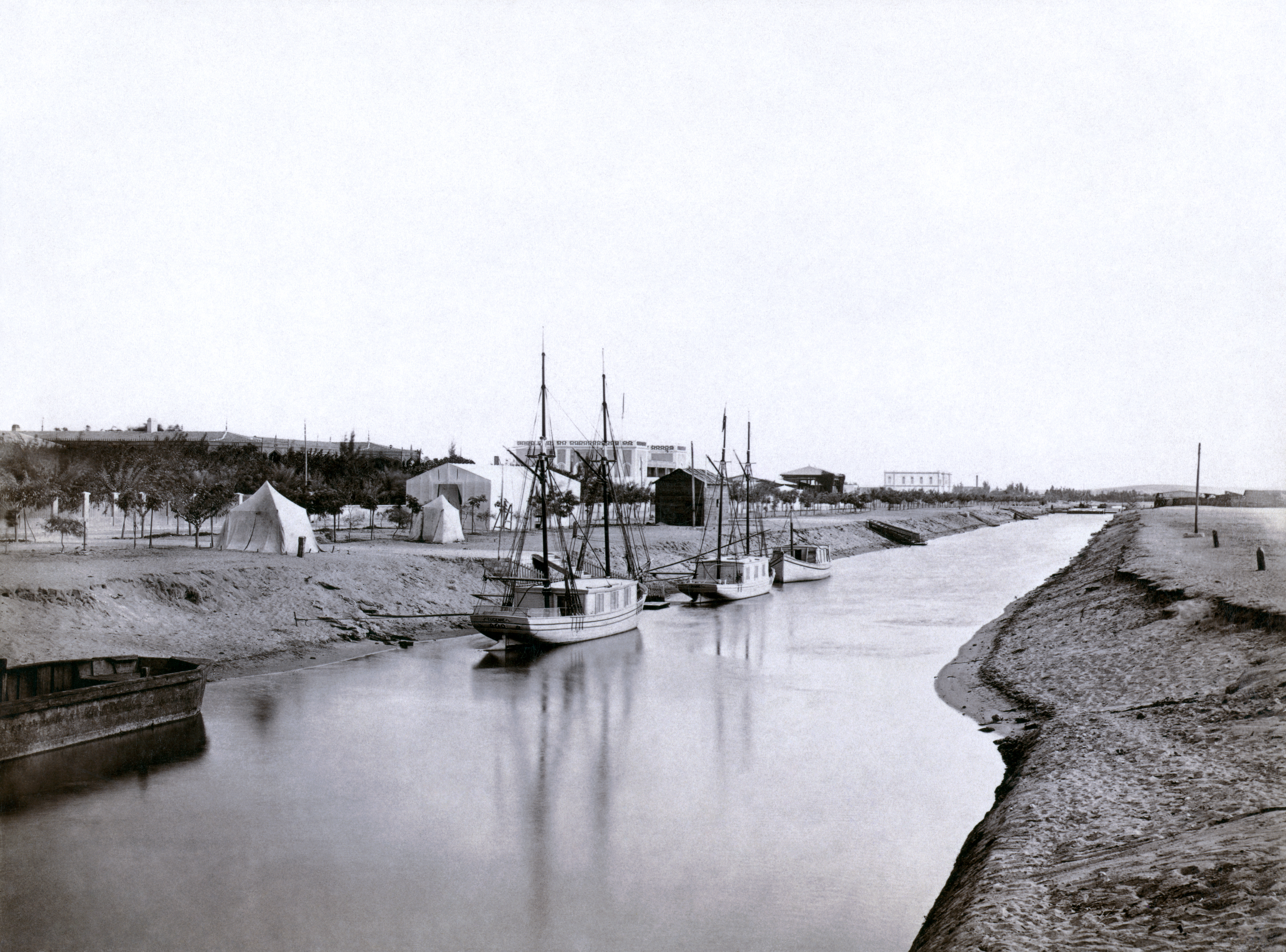
As a present to the World Digital Library at its opening, Durova has restored this picture from Egypt. We hope for a great collaboration with this great new initiative.
Thanks,
GerardM
This resource is likely to become of immense importance to us because it aims to provide unrestricted public access, free access to this material. What I like best about the World Digital Library is that it aims to cover the whole world, all continents, all countries and all cultures. I hope that the WDL will help us to counter the current bias we have in Commons with Western oriented material.
As a present to the World Digital Library at its opening, Durova has restored this picture from Egypt. We hope for a great collaboration with this great new initiative.
Thanks,
GerardM
Tuesday, April 21, 2009
Google Summer Of Code
Four MediaWiki projects have been accepted in the Google Summer Of Code. Congratulations to the four students and their mentors.
Thanks,
GerardM
Thanks,
GerardM
Bleeding edge
Translatewiki.net is MediaWiki on the bleeding edge. When Brion brings out the latest and greatest functionality in MediaWiki, the software has already been localised in many languages. This is because translatewiki.net is running the absolutely very latest software.
Sometimes this goes wrong and it has an impact on translatewiki.net itself. It clearly demonstrates the need for testing and the need for a critical eye before software goes life.
Thanks,
GerardM
Sometimes this goes wrong and it has an impact on translatewiki.net itself. It clearly demonstrates the need for testing and the need for a critical eye before software goes life.
Thanks,
GerardM
Monday, April 20, 2009
When you query geo data, you want a geo data result
I have been asked to review proposed talks at Wikimania. One talk was about Semantic MediaWiki and the other about Open Street Map. Both are great subjects for a MediaWiki conference because both add important functionality to MediaWiki.
When you think about it, it would be really cool when the results of a SMW query that results in geo data is presented in a map. At the moment there are two extensions to SMW that do just that; Semantic Layers and Google Geocoder.
Given that much of the primary functionality can be found in either extension, it should be possible to come up with something that would work for Open Street Map. Having support for both SMW and OSM would present a paradigm shift; it would make it easy to mesh Wikipedia in the big data world.
Thanks,
GerardM
When you think about it, it would be really cool when the results of a SMW query that results in geo data is presented in a map. At the moment there are two extensions to SMW that do just that; Semantic Layers and Google Geocoder.
Given that much of the primary functionality can be found in either extension, it should be possible to come up with something that would work for Open Street Map. Having support for both SMW and OSM would present a paradigm shift; it would make it easy to mesh Wikipedia in the big data world.
Thanks,
GerardM
Sunday, April 19, 2009
Payment where payment is due
I was looking for a picture that illustrates "payment" and I found a picture of Judas being paid for his betrayal as one of the top results. It can be argued that this event was essential because without it Jesus would not have died on the cross.
Many people believe that payment is anathema to the Wiki spirit. Payment is believed to be incompatible with a Neutral Point Of View and consequently many people are ready to fight whenever there is even a suggestion of payment.
For me it is obvious that payments are not only made with money. The Wiki coinage is very much acknowledgment, attention, time and reputation. Our best people have a vision on what our world is or should be. They realise their vision because of an intrinisc motivation. This is why an Incubator, a Wiktionary and a translatewiki.net independently develop their own policies even software. People invest in these projects much of themselves and their return is first and foremost the growth and the quality of their project.
Sue Gartner shares what she considers relevant in her reader. This post she shared had me thinking about the subject of payment. I think that the WMF is making a great move by opening up the possibility for people to propose projects that may get funding. The financial aspect is important but in reality the most important coin the WMF has is attention, motivation and encouragement. WMF people like Brion are often in a position where they make the difference between something happening or not happening. Their time is a precious commodity because it is so highly valued and in short supply.
As the the time of the WMF staff is considered to be this valuable, improving the effectiveness of their time is the best investment the WMF can make.
Thanks,
GerardM
Many people believe that payment is anathema to the Wiki spirit. Payment is believed to be incompatible with a Neutral Point Of View and consequently many people are ready to fight whenever there is even a suggestion of payment.
For me it is obvious that payments are not only made with money. The Wiki coinage is very much acknowledgment, attention, time and reputation. Our best people have a vision on what our world is or should be. They realise their vision because of an intrinisc motivation. This is why an Incubator, a Wiktionary and a translatewiki.net independently develop their own policies even software. People invest in these projects much of themselves and their return is first and foremost the growth and the quality of their project.
Sue Gartner shares what she considers relevant in her reader. This post she shared had me thinking about the subject of payment. I think that the WMF is making a great move by opening up the possibility for people to propose projects that may get funding. The financial aspect is important but in reality the most important coin the WMF has is attention, motivation and encouragement. WMF people like Brion are often in a position where they make the difference between something happening or not happening. Their time is a precious commodity because it is so highly valued and in short supply.
As the the time of the WMF staff is considered to be this valuable, improving the effectiveness of their time is the best investment the WMF can make.
Thanks,
GerardM
Saturday, April 18, 2009
ar, de, dsb, fr, gl, gsw, hsb, ia, ja, ksh, lb, nl, oc, pl
A new extension "Semantic Tasks" became available. Now twenty four hours later, the localisation for fourteen languages has already been completed. In my opinion that is quite special.
Another thing I appreciate is that Semantic Tasks installs nicely in the Wikiation Extension Testing Environment. This is special for me because it is the first Semantic MediaWiki extension that just installs.
Semantic Tasks was developed for the CcTeamSpace is the internal task and project tracking system used at Creative Commons. All these things I learned today and in my opinion all this really demonstrates the relevance and the quality of the MediaWiki ecosystem.
Thanks,
GerardM
Another thing I appreciate is that Semantic Tasks installs nicely in the Wikiation Extension Testing Environment. This is special for me because it is the first Semantic MediaWiki extension that just installs.
Semantic Tasks was developed for the CcTeamSpace is the internal task and project tracking system used at Creative Commons. All these things I learned today and in my opinion all this really demonstrates the relevance and the quality of the MediaWiki ecosystem.
Thanks,
GerardM
Provenance
When you write a Wikipedia article, you are expected to provide sources that prove the assertions made in the article. There are good reasons to do this, for articles it is not only considered "best practice" but even essential. Current practice on many Wikipedias is that articles that do not provide reliable sources may be put forward for deletion.
A picture proverbially paints a thousand words and when a thousand words in Wikipedia exists without any citations the least you can expect is a template indicating that citation is needed.
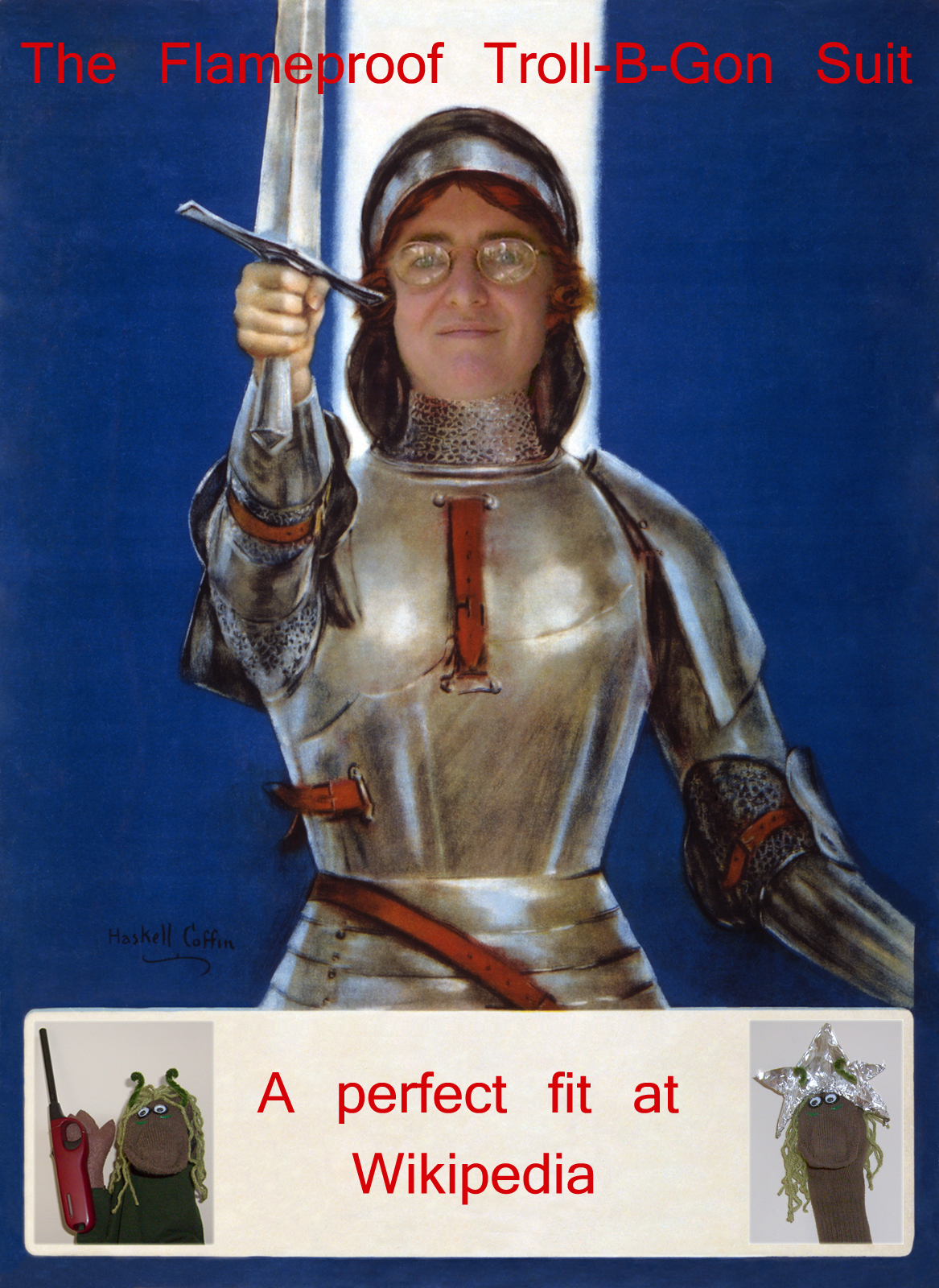
The illustration can be seen as an advertisement for what to wear to prevent troll troubles. It is however a picture that comes with excellent provenance; the original picture is referred to and urges American ladies to save their country like Joan of Arc did for France.
Both the original picture and the derivation are properly sourced and consequently you have the information you need to appreciate these pictures for what they are. This can be exceedingly important because it is the provenance that allow pictures to express their thousand words.
Falsifications are not new, and they exist for a purpose typically profit and propaganda. When you look up the word provenance, you find two aspects that are of relevance; the origin of something and the history of the ownership of something. Both are relevant to the illustrations that we use. Practically it would be wonderful when we always refer to where the original material can be found. It is then for the museums, archives and libraries to provide the complete provenance of the material we use as illustrations.
In my opinion, we should always indicate where the originals of our illustrations can be found. This has nothing to do with copyright or licensing and everything to do with us providing information that can be trusted.
Thanks,
GerardM
PS we take orders for troll apparel..
A picture proverbially paints a thousand words and when a thousand words in Wikipedia exists without any citations the least you can expect is a template indicating that citation is needed.
The illustration can be seen as an advertisement for what to wear to prevent troll troubles. It is however a picture that comes with excellent provenance; the original picture is referred to and urges American ladies to save their country like Joan of Arc did for France.
Both the original picture and the derivation are properly sourced and consequently you have the information you need to appreciate these pictures for what they are. This can be exceedingly important because it is the provenance that allow pictures to express their thousand words.
Falsifications are not new, and they exist for a purpose typically profit and propaganda. When you look up the word provenance, you find two aspects that are of relevance; the origin of something and the history of the ownership of something. Both are relevant to the illustrations that we use. Practically it would be wonderful when we always refer to where the original material can be found. It is then for the museums, archives and libraries to provide the complete provenance of the material we use as illustrations.
In my opinion, we should always indicate where the originals of our illustrations can be found. This has nothing to do with copyright or licensing and everything to do with us providing information that can be trusted.
Thanks,
GerardM
PS we take orders for troll apparel..
Friday, April 17, 2009
Kurdish Wikipedia & Sorani
Kurdish is a macro language. This means that there are multiple languages who are Kurdish. When you read the Wikipedia article "Kurdish language", you find all the classic arguments about language and dialects. The Wikipedia article assumes that Kurdish is one language while it provides all the arguments why a differing opinion is sound.
The language policy of the Wikimedia Foundation requires for new languages that they are recognised as a language in the ISO 639-3. The request for the Sorani language was quite special; the localisation for ku-arab we were told was actually Sorani but what topped even this was the request we received from one of the Kurdish admins to consider the 500 articles in the Arabic scripts in the Kurdish Wikipedia because they are in fact in Sorani.
Given that the Kurdish community itself supports the request for Sorani and given that all the requirements are in place when you allow for such special circumstance I consider the Sorani proposal to be extraordinary and ready for showtime when the other members of the language committee concur.
Thanks,
GerardM
The language policy of the Wikimedia Foundation requires for new languages that they are recognised as a language in the ISO 639-3. The request for the Sorani language was quite special; the localisation for ku-arab we were told was actually Sorani but what topped even this was the request we received from one of the Kurdish admins to consider the 500 articles in the Arabic scripts in the Kurdish Wikipedia because they are in fact in Sorani.
Given that the Kurdish community itself supports the request for Sorani and given that all the requirements are in place when you allow for such special circumstance I consider the Sorani proposal to be extraordinary and ready for showtime when the other members of the language committee concur.
Thanks,
GerardM
Wednesday, April 15, 2009
Africa helping itself on the Internet
In December I blogged about the Afrigen project. In this project people are asked to add CLDR information for their language. Now after some months there are results and, I am impressed. Many languages have made a start and the first languages have completed all the information that is looked for in this standard.
In my opinion having quality information in the "Common Locale Data Repository" is a litmus test for readiness of a language for the Internet. The Afrigen project makes completed data available in their subversion.
The CLDR itself distinguishes levels of CLDR support; this includes how lists are sorted, how numbers are written and how a few languages are called. For this project to insist on a complete set of data takes courage but is in my opinion the right thing to do.
There are people who say that a language is on the map when it has its own Wikipedia, in my opinion a complete set of CLDR data has a much wider application.
Thanks,
GerardM
An exploratory meeting at the Zuiderzee museum
Yesterday I went to the Zuiderzee museum, it has a rich collection about the area where my family comes from. It shows how people lived and worked in days gone by. The museum is named after the Zuiderzee, a body of water that became fresh water after the building of the afsluitdijk in 1932 and it has a collection that is particularly focused on the people who lived near it.
The Zuiderzee museum is in the process of digitising its collection and quite a bit can be already found on the Internet on the "geheugen van Nederland" which is called in translation, the memory of the Netherlands. Many Dutch archives and museums collaborate in this initiative that aims to digitise much of the Dutch cultural heritage.
After a number of telephone calls, we had a first meeting in Enkhuizen; it was very much a "getting to know you". We talked about what is important, licenses, meta data and how to make the heritage that has both our interest interesting to our public. Having communicated a lot lately with people like Mathias Schindler, Witty lama and Durova helped prepare me for this meeting.
Given that the Zuiderzee museum is in the process of digitising its collection and is already looking at how collaboration can further its objectives, a possible relation will be much more collaborative. We did talk about our digital restoration efforts, the importance of having information with historic material, the different types of material in the collection...
One of the restorations done by Durov is this photochrom showing two girls from Marken. I had brought this nicely printed at a high resolution as a present. It is pictures like this that made Marken the tourist attraction it still is and as such I hoped that it would be of interest.
Currently there is an exhibition at the museum that aims to give a modern interpretation of modern fashion designers of the Dutch traditional clothing. The colours were added later in the picture but the question what colours they should be will probably always be a mistery.
In a couple of weeks we will be in contact again and explore further where collaboration / partnership may bring us.
Thanks,
GerardM
The Zuiderzee museum is in the process of digitising its collection and quite a bit can be already found on the Internet on the "geheugen van Nederland" which is called in translation, the memory of the Netherlands. Many Dutch archives and museums collaborate in this initiative that aims to digitise much of the Dutch cultural heritage.
After a number of telephone calls, we had a first meeting in Enkhuizen; it was very much a "getting to know you". We talked about what is important, licenses, meta data and how to make the heritage that has both our interest interesting to our public. Having communicated a lot lately with people like Mathias Schindler, Witty lama and Durova helped prepare me for this meeting.
Given that the Zuiderzee museum is in the process of digitising its collection and is already looking at how collaboration can further its objectives, a possible relation will be much more collaborative. We did talk about our digital restoration efforts, the importance of having information with historic material, the different types of material in the collection...One of the restorations done by Durov is this photochrom showing two girls from Marken. I had brought this nicely printed at a high resolution as a present. It is pictures like this that made Marken the tourist attraction it still is and as such I hoped that it would be of interest.
Currently there is an exhibition at the museum that aims to give a modern interpretation of modern fashion designers of the Dutch traditional clothing. The colours were added later in the picture but the question what colours they should be will probably always be a mistery.
In a couple of weeks we will be in contact again and explore further where collaboration / partnership may bring us.
Thanks,
GerardM
Tuesday, April 07, 2009
ş and ţ or ș and ț
Bugzilla bug 17428 informs us that the Romanian language used to be written with the cedille. This was wrong and there have been improvements in Unicode and it is possible to write Romanian properly.You have to use Windows Vista for this.. I wonder how Linux supports Romanian.
As many people use legacy Windows systems, a straight conversion to the proper characters is not an option at this time for the Romanian Wikipedia. The bug report talks about a conversion similar to what is done for Chinese or Serbian. A problem is that this kind of software is not part of what the Internationalisation people at translatewiki.net do.
So what to do, who to turn to?
Thanks,
GerardM
A sense of perspective and the monthly statistics
I had the priviledge to be at the developer meeting in Berlin. I enjoyed it, it was a great meeting and many of the subjects that are dear to me moved forward. The best news was Open Street Maps, this will become part of Wikipedia. I am quite happy with the reception of the Wikiation Extension Testing Environment, this is a framework for installing and testing MediaWiki and its extensions.There is a sandbox environment available to MediaWiki developers, they just have to ask ...
I had several great conversations, one of them was with Trevor Parscal of the Usability project. One of the things we discussed was the MediaWiki localisation. I was happy with Trevor's appreciation of the work done at translatewiki.net. It is indeed quite amazing to submit code in the evening to find in the morning that you have to sync your code because of the work done overnight. When new code gets to translatewiki.net, Siebrand, Raymond or Nikerabbit have a look at it and work on the internationalisation and then make it available for localisation. Typically there are people ready for any new messages and it is indeed impressive to find something completely localised in a couple of languages the next day.
My perspective is different. For me translatewiki.net is 310 languages, only 58 languages have all the most used messages localised and when you look at the group statistics in time you find that our localisation only goes up slowly. I know the hard work that goes into getting ready for a new project and while I welcome improved usability and functionality it comes at a price.
The good news is the numbers are still improving and Brion is quite happy to consider options that will make localisations available sooner. The good news is that Nikerabbit may work on the Translate functionality in a GSOC project. The good news is in little things like the Babel extension being available in Gujarati.
With apprehension I am looking at the many messages that will be created as a result of the usability project.It is not that the Internationalisation will not be done, I fear that many languages will spend their time localising the new messages, messages that will be of necessity be volatile. I would prefer it when these new messages are done when the localisation is ready for the production messages.
What will happen is that we will leave things as they are; people can work on what they like. It will be interesting what the fall out will be. When the new usability is the hit that I hope it will be, it may mean that we gain more localisers and our statistics continue to slowly but surely improve and that my fears prove to be unfounded.
Thanks,
GerardM
I had several great conversations, one of them was with Trevor Parscal of the Usability project. One of the things we discussed was the MediaWiki localisation. I was happy with Trevor's appreciation of the work done at translatewiki.net. It is indeed quite amazing to submit code in the evening to find in the morning that you have to sync your code because of the work done overnight. When new code gets to translatewiki.net, Siebrand, Raymond or Nikerabbit have a look at it and work on the internationalisation and then make it available for localisation. Typically there are people ready for any new messages and it is indeed impressive to find something completely localised in a couple of languages the next day.
My perspective is different. For me translatewiki.net is 310 languages, only 58 languages have all the most used messages localised and when you look at the group statistics in time you find that our localisation only goes up slowly. I know the hard work that goes into getting ready for a new project and while I welcome improved usability and functionality it comes at a price.
The good news is the numbers are still improving and Brion is quite happy to consider options that will make localisations available sooner. The good news is that Nikerabbit may work on the Translate functionality in a GSOC project. The good news is in little things like the Babel extension being available in Gujarati.
With apprehension I am looking at the many messages that will be created as a result of the usability project.It is not that the Internationalisation will not be done, I fear that many languages will spend their time localising the new messages, messages that will be of necessity be volatile. I would prefer it when these new messages are done when the localisation is ready for the production messages.
What will happen is that we will leave things as they are; people can work on what they like. It will be interesting what the fall out will be. When the new usability is the hit that I hope it will be, it may mean that we gain more localisers and our statistics continue to slowly but surely improve and that my fears prove to be unfounded.
Thanks,
GerardM
Finnish Wikiversity
I am happy that the Finnish Wikiversity has been created :) Let the editing begin :)
Thanks,
GerardM
Thanks,
GerardM
Subscribe to:
Posts (Atom)