"Spiaggia" is the word of the day. I have been to the beach in Maiori, and as you may have learned from a blog entry from Sabine I am in Naples. As I was a day "early", I have been privy to one of the delights of Sabine's hometown, the beach. Sabine loves to excercise by swimming. As it was a really nice sunny day, I went with her, I had a nice swim and afterwards enjoyed the sun a little bit too much, making my upper right leg turn a nice shade of red. The lower right leg is fine because that is used to the sun because my running clothes gave it the exposure that prevented a sunburn.
When you read Sabine's blog entry, you can imagine that I spend considerable time waiting for her to arrive at the Naples airport. The worry if she was ok, was the worst bit. Eventually I decided to send her an e-mail that I would come to her by bus. The cost of Internet at the Naples airport is a rip off.
Travelling can be nice, I met nice people underway, a really helpful American lady who helped a stranded guy find the right bus at the Naples central station; it was going by train to Sorento, on the train I met a guy who was happy to excercise his English on me and once in Sorento I met two ladies who were with the Irish office in Spain.. The bus took me along some of the most beautiful stretches of the Italian coast and I was really happy to find Sabine waiting for me at the bus stop :)
When you work as intensively with someone like Sabine, it is really helpful when you occasionaly meet. We had to meet in Bamberg anyway and as Sabine was driving, she invited me to come and prepare the meeting together. Given that a train ticket to Germany is almost as expensive as the cost of plane ticket it makes great sense.
It drives home the fact how much my "office" is in being able to connect to the Internet and have my data available to me. It is only the personal and private stuff that I miss here ... like teaching someone to cycle and a dear friend.
Thanks,
GerardM
Monday, June 16, 2008


Thursday, June 12, 2008
A book to read
In the definition of stalking: "The crime of following or harassing another person, causing him or her to fear death or injury" it seems clear that we are talking about dangers in the physical world. Injury comes however in many forms; damage to a reputation is a form of injury that can have a lasting impact to a person.
In a mail thread, there was talk about being "streetwise", this may be good advise but what is streetwise, how do we still maintain our NPOV, how do we still prevent pov pushing, how do we deal with cranks? If streetwise means that we leave the rougher areas of our project, would our Wikipedia still be NPOV ?
A book by Daniel J Solove was recommended to me. This book, the future of reputation is recent, 2007, it's subtitle is: "gossip, rumor and privacy on the Internet" and is available under a CC-by-nc license.
With the recommendation came the comment: "The solution is going to have to involve auto-criticism, from all sides and accepting that hostility will always exist, so the problem becomes drawing proper boundries." The person who gave the recommendation wished me good luck, he indicated that he does not want to become a victim of cyber stalking.
Thanks,
GerardM
PS So now I need to find time to read a book :)
In a mail thread, there was talk about being "streetwise", this may be good advise but what is streetwise, how do we still maintain our NPOV, how do we still prevent pov pushing, how do we deal with cranks? If streetwise means that we leave the rougher areas of our project, would our Wikipedia still be NPOV ?
A book by Daniel J Solove was recommended to me. This book, the future of reputation is recent, 2007, it's subtitle is: "gossip, rumor and privacy on the Internet" and is available under a CC-by-nc license.
With the recommendation came the comment: "The solution is going to have to involve auto-criticism, from all sides and accepting that hostility will always exist, so the problem becomes drawing proper boundries." The person who gave the recommendation wished me good luck, he indicated that he does not want to become a victim of cyber stalking.
Thanks,
GerardM
PS So now I need to find time to read a book :)
Why not join "Durova and friends"
Yesterday I started a Facebook group called "Durova and friends". This group is to get more attention to the stalking phenomena and the victims of stalking. Stalking as a phenomena is quite something... Just look at the Wikipedia article; its neutrality is disputed, it is in need of an expert sociologist, an expert psychologist, it needs additional citations and it even may not represent a worldwide view of the subject.
I am happy to find currently 36 members of this group. Two people have written on the group wall about Wiki related stalking. I informed a person on another project about the group, I was pointed to this website and was told in the strongest terms that he would stay away from Wikipedia and its phenomena after past experiences. Names of other victims and stalkers were given... There is a self help group of Wikistalking victims... People are still rubishing the idea, people are suggesting that you should be street wise ...
I have not been stalked. The closest I come is by being asked to reconsider friendship because of me being outed as a friend of Durova. I am angry and I use my anger to get attention for this phenomena. Anger however is not how to help, it needs cool expertise, it needs a protocol that expresses how to deal with stalking incidents, it needs compassionate people that help victims with the stress of being stalked and it needs an overall understanding of how it affects the Wikimedia Foundation and its projects.
As I am not an expert in this field and as stalking is belittled and ignored, I feel that we indeed need, like the Wikipedia article suggests, experts with a sociologist and psychologist background to help us understand stalking in all its gradations. Once stalking has been identified as happening in real time, we need a protocol that allows us to help victims in their dealings with the authorities. When we KNOW that stalking is happening, the protocol should allow us to invoke the name of the Wikimedia Foundation, name its multi million budget and its multi billion worth. It should be a protocol because we cannot be seen to be the boy who cries wolf.
To answer the question, you should not join "Durova and friends" when you are afraid of the stalkers. You may be outed as a friend of Durova. Then again, I think she is a wonderful person so you could do worse. When you are a victim of stalkers, there are other places where you can get some comfort and support. When you feel like me, you may choose to defy the stalkers and become a "friend".
For Durova and myself the action of Mr Brandt has been good; we have many more Facebook friends now.
Thanks,
GerardM
I am happy to find currently 36 members of this group. Two people have written on the group wall about Wiki related stalking. I informed a person on another project about the group, I was pointed to this website and was told in the strongest terms that he would stay away from Wikipedia and its phenomena after past experiences. Names of other victims and stalkers were given... There is a self help group of Wikistalking victims... People are still rubishing the idea, people are suggesting that you should be street wise ...
I have not been stalked. The closest I come is by being asked to reconsider friendship because of me being outed as a friend of Durova. I am angry and I use my anger to get attention for this phenomena. Anger however is not how to help, it needs cool expertise, it needs a protocol that expresses how to deal with stalking incidents, it needs compassionate people that help victims with the stress of being stalked and it needs an overall understanding of how it affects the Wikimedia Foundation and its projects.
As I am not an expert in this field and as stalking is belittled and ignored, I feel that we indeed need, like the Wikipedia article suggests, experts with a sociologist and psychologist background to help us understand stalking in all its gradations. Once stalking has been identified as happening in real time, we need a protocol that allows us to help victims in their dealings with the authorities. When we KNOW that stalking is happening, the protocol should allow us to invoke the name of the Wikimedia Foundation, name its multi million budget and its multi billion worth. It should be a protocol because we cannot be seen to be the boy who cries wolf.
To answer the question, you should not join "Durova and friends" when you are afraid of the stalkers. You may be outed as a friend of Durova. Then again, I think she is a wonderful person so you could do worse. When you are a victim of stalkers, there are other places where you can get some comfort and support. When you feel like me, you may choose to defy the stalkers and become a "friend".
For Durova and myself the action of Mr Brandt has been good; we have many more Facebook friends now.
Thanks,
GerardM
Wednesday, June 11, 2008
Durova is my friend
Today it gets personal. I have been informed that Mr Daniel Brandt, a person with a dubious reputation when it comes to on-line privacy decided to "out" all Facebook friends of Durova.
Durova informed me about this and suggested that given the new circumstances, I might like to reconsider my Facebook connection. I have reconsidered and as a consequence I am writing this post. I am happy to acknowledge my friendship of Durova. I find that she is a spirited lady who has an enviable stack of ackomplishments. The work that she does for restoring pictures is such that I have commented about this in the past. This example is just to prove my appreciation for her.
Mr Daniel Brandt, has the kind of reputation that is hard to shake. By acting like this, by telling the world the real name of Durova, someone who Mr Brandt knows to be stalked by the type of people that go to jail as a result, he demonstrates how irresponsible he is.
Until now I have had no interest in Mr Brandt, I have since learned that he runs a website, that a visit to his website will have him harvest cookies. That as a result it is better to stay away from such a creepy site.
Mr Brandt, for the record, my name is Gerard Meijssen and I am happy to be a friend of Durova.
Thanks,
GerardM
Durova informed me about this and suggested that given the new circumstances, I might like to reconsider my Facebook connection. I have reconsidered and as a consequence I am writing this post. I am happy to acknowledge my friendship of Durova. I find that she is a spirited lady who has an enviable stack of ackomplishments. The work that she does for restoring pictures is such that I have commented about this in the past. This example is just to prove my appreciation for her.
Mr Daniel Brandt, has the kind of reputation that is hard to shake. By acting like this, by telling the world the real name of Durova, someone who Mr Brandt knows to be stalked by the type of people that go to jail as a result, he demonstrates how irresponsible he is.
Until now I have had no interest in Mr Brandt, I have since learned that he runs a website, that a visit to his website will have him harvest cookies. That as a result it is better to stay away from such a creepy site.
Mr Brandt, for the record, my name is Gerard Meijssen and I am happy to be a friend of Durova.
Thanks,
GerardM
Tuesday, June 10, 2008
OpenSpell
"Researchers at the Meraka Institute have released a spelling game in all 11 official South African languages. The game, OpenSpell, can also be localised for additional languages."
This is interesting news; the software is GPL, the game can be localised and it is the kind of software that would be usefull in addition to the vocabulary trainer at OmegaWiki. It would be an ideal tool to localise it in as many languages as possible.
I learned about it from Friedel from translate.org.za; he is another who would love to see a tool like this available in as many languages as possible...
I will send them an e-mail; it will be interesting to learn what the possibilities are :)
Thanks,
GerardM
This is interesting news; the software is GPL, the game can be localised and it is the kind of software that would be usefull in addition to the vocabulary trainer at OmegaWiki. It would be an ideal tool to localise it in as many languages as possible.
I learned about it from Friedel from translate.org.za; he is another who would love to see a tool like this available in as many languages as possible...
I will send them an e-mail; it will be interesting to learn what the possibilities are :)
Thanks,
GerardM
Monday, June 09, 2008
We lost the fuzzy ones
In the Betawiki statistics, a message was localised when it was localised. However, once a message changes, it gets fuzzied, indicating that the message needs some more work.
So far the statistics included these fuzzied messages. Today I noticed that Siebrand changed the way the statistics are compiled; no more fuzzies, we now only count the localised messages that completely serve their purpose..
This puts downward pressure on Siebrand's goals for the MediaWiki localisation for 2008. Luckily there is another half a year to go :)
Thanks,
GerardM
So far the statistics included these fuzzied messages. Today I noticed that Siebrand changed the way the statistics are compiled; no more fuzzies, we now only count the localised messages that completely serve their purpose..
This puts downward pressure on Siebrand's goals for the MediaWiki localisation for 2008. Luckily there is another half a year to go :)
Thanks,
GerardM
Saturday, June 07, 2008
Orthography
When you write a language like Dutch, the orthography is prescribed. Its orthography changes over time but it is easily understood how to spell. When you write English, there are several ways of writing your words, English and American spelling for instance differ but it is quite clear what spelling is acceptable and what is not.
The question of what orthography to use is not a trivial one. Politics plays an important role; we learned to the consternation of many, that people on the Belarus Wikipedia were enforcing an orthography that precluded the changes that happened while the communists were in power. This even led to a rename and this is what is now the be-x-old.wikipedia.org. Sadly the Belarussians could not find it in themselves to work together..
In less and least resourced languages it is not always clear how to spell. Some languages have a written tradition that has fallen in disuse, some languages have multiple dialects that sound distinct. When there is no orthography taught, when not many people write a language, it is hard to get agreement on how to spell.
There are several possible competing arguments for a specific choice and when they are considered together, it is hard to decide what to do. When you maintain an old orthography, you keep the connection with the existing literature. When you create a unifying orthography and prescribe its use, there will be resistance from the people that do not spell in this way. When you write what you hear, the different dialects of a language sound different and consequently it fragments the language.
I do not know what the right way to approach this problem is. I would approach it by keeping people together; leading by example, discussing the issues and keeping the conversation going. One thing is for sure; languages change so the spelling of a language will change in time with it.
When languages are to survive, it all depends on having as many people as possible communicate in a language by talking, listening, signing, watching, reading and writing.
Thanks,
GerardM
The question of what orthography to use is not a trivial one. Politics plays an important role; we learned to the consternation of many, that people on the Belarus Wikipedia were enforcing an orthography that precluded the changes that happened while the communists were in power. This even led to a rename and this is what is now the be-x-old.wikipedia.org. Sadly the Belarussians could not find it in themselves to work together..
In less and least resourced languages it is not always clear how to spell. Some languages have a written tradition that has fallen in disuse, some languages have multiple dialects that sound distinct. When there is no orthography taught, when not many people write a language, it is hard to get agreement on how to spell.
There are several possible competing arguments for a specific choice and when they are considered together, it is hard to decide what to do. When you maintain an old orthography, you keep the connection with the existing literature. When you create a unifying orthography and prescribe its use, there will be resistance from the people that do not spell in this way. When you write what you hear, the different dialects of a language sound different and consequently it fragments the language.
I do not know what the right way to approach this problem is. I would approach it by keeping people together; leading by example, discussing the issues and keeping the conversation going. One thing is for sure; languages change so the spelling of a language will change in time with it.
When languages are to survive, it all depends on having as many people as possible communicate in a language by talking, listening, signing, watching, reading and writing.
Thanks,
GerardM
Friday, June 06, 2008
Not invented here ...
Most of the best ideas around are the ideas of other people. Some of the best ideas you learn of your parents, your family, the people around you. Adopting these shared ideas ensure that you are part of a culture, that you share a language.
At the Go Piedmonte conference on Wikipedia, some of the best people around discussed less and least languages. Also some great presentations were made available for the conference including a workshop by Erik Moeller on licenses, a presentation by Adam Frost why SignWriting is such a wonderful thing to him..
Raoul Weiler presented both at the conference and provided a video. We discussed the continuation of Raoul's quest to have ethnonological artefacts photographed and documented. The cultural heritage of Africa is mostly available in Western musea and most of the artefacts exist in depots away from the public eye. Much of Africa's history is unknown to Africa.
Much of the background, the culture, the language that is associated with these artifacts is lost or about to be lost. This is what gives Raoul the drive to persue his quest. Much of the material in these musea has some annotation, sometimes even pictures. Raoul's quest is to make all of this available digitally and in this way make non western history available to the whole of the world.
Of all the imagery on Commons, the pictures that have been restored are really special. Many of these pictures are testimony to a time, to events that have passed. The pictures taken in Africa are so important because they provide a rare glance in a past that is often more distant then the ancient past of the Romans, the Greek, the Hittite.
I would love to see pictures restored in Commons about Africa, I echo the need for high resolution scans. I would love to see the photos of the artifacts in Commons, the annotation in Wikisource, articles about these cultures, the histories in all Wikipedias because the history of Africa is our history and the languages of Africa are our languages. There is no NPOV without them.
Thanks,
GerardM
At the Go Piedmonte conference on Wikipedia, some of the best people around discussed less and least languages. Also some great presentations were made available for the conference including a workshop by Erik Moeller on licenses, a presentation by Adam Frost why SignWriting is such a wonderful thing to him..
Raoul Weiler presented both at the conference and provided a video. We discussed the continuation of Raoul's quest to have ethnonological artefacts photographed and documented. The cultural heritage of Africa is mostly available in Western musea and most of the artefacts exist in depots away from the public eye. Much of Africa's history is unknown to Africa.
Much of the background, the culture, the language that is associated with these artifacts is lost or about to be lost. This is what gives Raoul the drive to persue his quest. Much of the material in these musea has some annotation, sometimes even pictures. Raoul's quest is to make all of this available digitally and in this way make non western history available to the whole of the world.
Of all the imagery on Commons, the pictures that have been restored are really special. Many of these pictures are testimony to a time, to events that have passed. The pictures taken in Africa are so important because they provide a rare glance in a past that is often more distant then the ancient past of the Romans, the Greek, the Hittite.
I would love to see pictures restored in Commons about Africa, I echo the need for high resolution scans. I would love to see the photos of the artifacts in Commons, the annotation in Wikisource, articles about these cultures, the histories in all Wikipedias because the history of Africa is our history and the languages of Africa are our languages. There is no NPOV without them.
Thanks,
GerardM
Thursday, June 05, 2008
Lies, damned lies and statistics
Statistics are one of the more important tools to inform about how things develop. The Wikipedia statistics are wonderful they are informative, they show trends. Sadly the numbers for the English Wikipedia are out of date because the number crunching requires bigger hardware..
The problem with statistics is in their interpretation. When numbers are given an implication that is not warranted, the consequences are proverbially based on lies even damned lies. The number of articles is often seen as all important; even the Wikipedia portal is based on these numbers.
What the Wikimedia Foundation is about is providing people with information; encyclopaedic information for Wikipedia. So when you want to rate the relevance of the wikipedias, it is much more relevant to know how many people actually use a Wikipedia and rate the projects accordingly.
Once it is decided that the relevance of a Wikipedia is in the number of people actually reading a Wikipedia, the fight for a high ranking becomes the kind of fight that we welcome. In this way the number of articles becomes only a factor in attracting more people. When the current emphasis on raw numbers of articles changes in the numbers of visitors, the current energy in improving the statistics will take a change for the better. People will want to understand what factors help gain more visitors, things like relevance of articles, quality of localisation. These two factors can be quantified as well. They are respectively the number of articles read and the articles that are not available and the localisation statistics.
We have had some bad fights as a consequence of the way the current statistics are understood. When we can agree that the current numbers are not really relevant for achieving our goals, we should turn to the numbers that do matter.
Thanks,
GerardM
The problem with statistics is in their interpretation. When numbers are given an implication that is not warranted, the consequences are proverbially based on lies even damned lies. The number of articles is often seen as all important; even the Wikipedia portal is based on these numbers.
What the Wikimedia Foundation is about is providing people with information; encyclopaedic information for Wikipedia. So when you want to rate the relevance of the wikipedias, it is much more relevant to know how many people actually use a Wikipedia and rate the projects accordingly.
Once it is decided that the relevance of a Wikipedia is in the number of people actually reading a Wikipedia, the fight for a high ranking becomes the kind of fight that we welcome. In this way the number of articles becomes only a factor in attracting more people. When the current emphasis on raw numbers of articles changes in the numbers of visitors, the current energy in improving the statistics will take a change for the better. People will want to understand what factors help gain more visitors, things like relevance of articles, quality of localisation. These two factors can be quantified as well. They are respectively the number of articles read and the articles that are not available and the localisation statistics.
We have had some bad fights as a consequence of the way the current statistics are understood. When we can agree that the current numbers are not really relevant for achieving our goals, we should turn to the numbers that do matter.
Thanks,
GerardM
Tuesday, June 03, 2008
What happened to the "Extensions WMF 90%" ??
The Betawiki "group statistics in time" show how the localisation of MediaWiki is doing. The statistics show the number of "Languages" in a given month, the number of languages with the "Most often used 98%", the "Core 90%", the "Extensions WMF 90%" and the "Extensions 65%".
The numbers have been growing every month. We are really proud by the achievement of our localisers.. but how can it be that the "Extensions WMF 90%" have halved ?
It has everything to do with Single User Logon and Stable Versions. Both are big new extensions that are now used by the Wikimedia Foundation's projects. Both bring with them a large number of messages that need translating. The number of languages that reach 90% messages localised has now dropped considerably.
When you compare the statistics of the MediaWiki core messages and the extensions, you will notice that with 66 languages, MediaWiki is well covered. The extensions are providing an increasingly important function. Given that the number of languages covering the WMF extensions was only half the number of the MediaWiki core, it becomes clear how important it is to cover the extensions well.
Given the importance of Single User Logon and Stable Versions, I hope that many people will help us localise them and that within a month or two we will be at the same number of languages that support the extensions used by the Wikimedia Foundation as we had them at the end of April.
Thanks,
GerardM
The numbers have been growing every month. We are really proud by the achievement of our localisers.. but how can it be that the "Extensions WMF 90%" have halved ?
It has everything to do with Single User Logon and Stable Versions. Both are big new extensions that are now used by the Wikimedia Foundation's projects. Both bring with them a large number of messages that need translating. The number of languages that reach 90% messages localised has now dropped considerably.
When you compare the statistics of the MediaWiki core messages and the extensions, you will notice that with 66 languages, MediaWiki is well covered. The extensions are providing an increasingly important function. Given that the number of languages covering the WMF extensions was only half the number of the MediaWiki core, it becomes clear how important it is to cover the extensions well.
Given the importance of Single User Logon and Stable Versions, I hope that many people will help us localise them and that within a month or two we will be at the same number of languages that support the extensions used by the Wikimedia Foundation as we had them at the end of April.
Thanks,
GerardM
Wednesday, May 28, 2008
Jimmy Wales as an author of a scientific paper
You may have read in Ars Technica about Jimmy Wales named in the author list of a scientific paper. The paper has now been published on Genome Biology. The paper is of interest and I recommend you reading Community annotations with WikiProteins.
The author of Ars Technica expressed his amazement of Jimmy being part of this paper. Jimmy has played an important role in the conception of Wikiprofessionals. Jimmy and Barend Mons met in Brazil at a conference and they discussed all kinds of everything but of particular relevance was that they discusssed what makes the difference in projects when you need the collaboration of many people.
Jimmy did a great convincing job selling the notion of Wikis. He told Barend to get into contact with me and as a consequence a fruitful collaboration started with several people heavily into wikis got involved. I want to mention Erik Moeller and Sabine Cretella here as well. The collaboration was a big boost to OmegaWiki and it resulted in the first Wikiprofessional.
It is a great practice to honour people who have been important in the developement of a new concept. Jimmy deserves to be mentioned in this way and I am glad that he is. In a way, all of us who are involved in wikis can be proud.
Thanks,
GerardM
The author of Ars Technica expressed his amazement of Jimmy being part of this paper. Jimmy has played an important role in the conception of Wikiprofessionals. Jimmy and Barend Mons met in Brazil at a conference and they discussed all kinds of everything but of particular relevance was that they discusssed what makes the difference in projects when you need the collaboration of many people.
Jimmy did a great convincing job selling the notion of Wikis. He told Barend to get into contact with me and as a consequence a fruitful collaboration started with several people heavily into wikis got involved. I want to mention Erik Moeller and Sabine Cretella here as well. The collaboration was a big boost to OmegaWiki and it resulted in the first Wikiprofessional.
It is a great practice to honour people who have been important in the developement of a new concept. Jimmy deserves to be mentioned in this way and I am glad that he is. In a way, all of us who are involved in wikis can be proud.
Thanks,
GerardM
Monday, May 26, 2008
New projects are ready for new business
I am really happy and grateful that the projects that have been approved have been created. These new projects with the exception of the Wikinews projects are now available under a combined CC-by-sa and GFDL license. As Erik indicated in the past, this will prove necessary at the time when the latest version of the GFDL will finally be published.
I wish the new projects well in their quest to provide the type of information that they are creating for to the people they are there for.
A special word of thanks to Tim Starling for making a difference :)
Thanks,
GerardM
I wish the new projects well in their quest to provide the type of information that they are creating for to the people they are there for.
A special word of thanks to Tim Starling for making a difference :)
Thanks,
GerardM
Sunday, May 25, 2008
Not the 18th edition of "Not the Wikipedia Weekly"
Given my involvement and interest in the 17th edition of Not the Wikipedia weekly, I do want to point out this edition of the NWW.. I hope you like it and I am keen to make things work out well.
Thanks,
GerardM
Thanks,
GerardM
Saturday, May 24, 2008
Wiki meeting on TV
I just learned that a Wiki meet for the people of the Piedmontese language is going to happen and be recorded on web television. I understand that it starts in two hours (currently 12:00 Amsterdam time) and that they are checking out technology.
So if you like to know more .. try pms-1-la-festa-television.
Thanks,
GerardM
So if you like to know more .. try pms-1-la-festa-television.
Thanks,
GerardM
Friday, May 23, 2008
Missed opportunity
At the conference in Arhus there was a presentation planned about "online dictionaries in a web 2.0 environment". This presentation was to be given by Joseph Dung.
Joseph is from Nigeria and in order to be there, his trip to the conference started two day before the start of the conference. His presentation was the last presentation of the conference and sadly he did not make it. For all kinds of reason, he was delayed, there were problems and finally he missed a flight from Frankfurt airport.
Joseph made it finally to Arhus, he came in 15 minutes after the start of the final dinner. We were kept informed about the progress of Joseph towards Arhus during the conference.. We all felt bad for him and cheered his arrival.
I would love to have learned more about how Web 2.0 makes an impact in Nigeria.. It must be a challenge.
Thanks,
GerardM
Joseph is from Nigeria and in order to be there, his trip to the conference started two day before the start of the conference. His presentation was the last presentation of the conference and sadly he did not make it. For all kinds of reason, he was delayed, there were problems and finally he missed a flight from Frankfurt airport.
Joseph made it finally to Arhus, he came in 15 minutes after the start of the final dinner. We were kept informed about the progress of Joseph towards Arhus during the conference.. We all felt bad for him and cheered his arrival.
I would love to have learned more about how Web 2.0 makes an impact in Nigeria.. It must be a challenge.
Thanks,
GerardM
Thursday, May 22, 2008
A better mouse trap
 I have had the privilege to participate at a conference on lexicography at the Aarhus School of Business. It was a truly enjoyable conference; I learned a lot, I talked a lot and I even had the pleasure of presenting about Wikis, Wiktionary, OmegaWiki, the need for standards and SignWriting. As each of these subjects are broad enough to present for half a day, it is not strange when people find that one aspect that is of special interest to them, only becomes clear when talking in the coffee break.
There were several presentations that really made me sit up and listen. Presentations about the preservation of knowledge about Tamil crafts, Bavarian dialects, Brazilian learners dictionaries, specialised tools for the teaching of English, electronic pocket dictionaries in Japan .. the list goes on. Really special for me was a talk on Wiktionary.
I have a tender spot for Wiktionary, I know how much it has improved over the years. I know the people, their dedication and the amount of effort that goes into constantly improving what is essentially unstructured data. Given that I am a bureaucrat and admin on several projects, given that I am still running a bot on most Wiktionaries, I have a clue what is going on.
In the presentation the terminology of business terminology was considered. Business, was looked at and the information was found wanting. There are many translations but several were considered to be wrong, archaic... OmegaWiki is a better mouse trap, it does allow for annotations. But in order to be better mouse trap, it has to catch more mice.
The traffic numbers demonstrate the relevance of Wiktionary; it is the biggest resource of its kind on the Internet. This is in my opinion why it is an important resource. When lexicographers want to make an impact, they have to do better. If they want to cooperate, they will find people knowledgeable, interested and enthusiastic. They will have to tread carefully because their scientific reputation is not what will make this work, it will be their ability to listen, to be judicious in their effort and in their ability to share on an equal footing.
Thanks,
GerardM
Friday, May 16, 2008
Betawiki localises for *all* MediaWiki projects
There have been some altercations on Betawiki about what localisation is acceptable. What is at stake is the difference between language and project localisation. Betawiki is firmly committed to only allow for language localisation. This means that all references to specific projects like Wikipedia, Wikibooks etcetera are not accepted.
In the projects of one of the languages supported within the Wikimedia Foundation, templates are used to add functionality to the recent changes functionality. These templates are not supported by MediaWiki or by its localisation and are unavailable to MediaWiki installations outside of the WMF. Betawiki does not accept these templates and it is not for a "community" of the WMF to dictate that exceptions are to be made for their language.
The underlying problem is that the Wiktionary and the Wikibooks in that language do not have admins. Admins are the people that can do project localisation. This is what needs fixing. When a new project is created, there should be at least one admin. In this way the community will be able to do the project localisation but also vandal fighting.
The idea that people external to a project are needed to do the maintenance of the project is problematic. When people maintain their own project, when trust is given from the start I am convinced that it will enhance the chances for a project to do well. This is yet another thing that a council should deal with.
Thanks,
GerardM
In the projects of one of the languages supported within the Wikimedia Foundation, templates are used to add functionality to the recent changes functionality. These templates are not supported by MediaWiki or by its localisation and are unavailable to MediaWiki installations outside of the WMF. Betawiki does not accept these templates and it is not for a "community" of the WMF to dictate that exceptions are to be made for their language.
The underlying problem is that the Wiktionary and the Wikibooks in that language do not have admins. Admins are the people that can do project localisation. This is what needs fixing. When a new project is created, there should be at least one admin. In this way the community will be able to do the project localisation but also vandal fighting.
The idea that people external to a project are needed to do the maintenance of the project is problematic. When people maintain their own project, when trust is given from the start I am convinced that it will enhance the chances for a project to do well. This is yet another thing that a council should deal with.
Thanks,
GerardM
Wednesday, May 14, 2008
The localisation of MediaWiki extensions
Betawiki is doing a great job on the localisation of extensions. This can be deduced from the improvement shown by the group statistics and from the increasing list of extensions that are supported.
Today Siebrand provided another interesting statistic; a list with the extensions that have some localisation in more then fifty languages. This list is already quite long and it is interesting to note that the BoardVote has already some support from 111 languages.
There is one little teaser in this mix, Siebrand only included the extensions that use "$messages". This excluded the one extension that is my favourite, the Wikidata extension.. Then I again I was told that it is somewhere int the eighties :)
Thanks,
GerardM
Today Siebrand provided another interesting statistic; a list with the extensions that have some localisation in more then fifty languages. This list is already quite long and it is interesting to note that the BoardVote has already some support from 111 languages.
There is one little teaser in this mix, Siebrand only included the extensions that use "$messages". This excluded the one extension that is my favourite, the Wikidata extension.. Then I again I was told that it is somewhere int the eighties :)
Thanks,
GerardM
Tuesday, May 13, 2008
Moving forward
Some good things that have been happening lately. Aaron, the developer of Flagged revisions, or Stable Version indicated that this extension is now stable in its messaging. This has now been picked up on Betawiki where it can now be can localised again.
The 179 messages of Flagged revisions adds to the load of an ever increasing number of messages that need localising. Currently there are 6511 messages up from 5744 messages a month ago, an incease of 767 messages. This shows clearly how much work goes into the MediaWiki development and the Betawiki localisation.
We are grateful for all the good work and to maintain the momentum, we have to continue to reach out to more people to help us to make their language a MediaWiki success too. Particularly for the African languages we wish to do well. At the last two Wikimanias Jimmy and Anthere talked about this. There have been workshops, there are special mailing lists and if we can do more to make Africans buy into the wiki way and own their Wikipedias many will.
Today I was asked to write for the Kabissa website.. Have a read, tell me what you think, tell me what more we can do for African languages..
Thanks,
GerardM
(ps we includes you :) )
The 179 messages of Flagged revisions adds to the load of an ever increasing number of messages that need localising. Currently there are 6511 messages up from 5744 messages a month ago, an incease of 767 messages. This shows clearly how much work goes into the MediaWiki development and the Betawiki localisation.
We are grateful for all the good work and to maintain the momentum, we have to continue to reach out to more people to help us to make their language a MediaWiki success too. Particularly for the African languages we wish to do well. At the last two Wikimanias Jimmy and Anthere talked about this. There have been workshops, there are special mailing lists and if we can do more to make Africans buy into the wiki way and own their Wikipedias many will.
Today I was asked to write for the Kabissa website.. Have a read, tell me what you think, tell me what more we can do for African languages..
Thanks,
GerardM
(ps we includes you :) )
Sunday, May 11, 2008
Chamorra Wikipedia
The Chamorra Wikipedia is saved for now. This project that was proposed for closure will not be closed in recognition to the fact that there is some noticeable activity. Chamorra is a language spoken on Guam and the Northern Mariana Islands, and is spoken by some 76.700 people. As such it qualifies as a Wikipedia with few native speakers.
The Chamorra language is currently well supported on Betawiki; 95.72% of the most relevant messages are currently localised and 33.94% of all the MediaWiki messages. Consequently, this language is almost at the stage where we will honestly say that it has the minimum support required for this language.
I am really pleased with these efforts and I hope that this work done will be emulated by the other languages that are on life support.
Thanks,
GerardM
The Chamorra language is currently well supported on Betawiki; 95.72% of the most relevant messages are currently localised and 33.94% of all the MediaWiki messages. Consequently, this language is almost at the stage where we will honestly say that it has the minimum support required for this language.
I am really pleased with these efforts and I hope that this work done will be emulated by the other languages that are on life support.
Thanks,
GerardM
Saturday, May 10, 2008
Saucy stories ?
I use Google reader to follow what is published on several websites. Sometimes I get to read a story that is saucy. Today I read about a named 13 year old boy who abused his fathers credit card and after having played in a "World of Warcraft" tournament ordered a supply of Dr Pepper, Fritos and Oreos as well as two escort girls. To quote the article, the boy said he thought it was the thing to do when you win a "World of Warcraft" tournament. To quote the two ladies of the night, they knew that something was up when they ended up playing Halo in stead of providing sexual services.
It is an amusing story but once I realised that this 13 year old kid was named in the article, it became a disgusting story to me. This kid is likely to be stigmatised for the rest of his life. I do not have any respect for a justice system that allows kids to be abused in this way. I do not have any respect for news organisations that name kids in this way. If this defines me and my values, I am proud to have them in this way.
There has been a lot to do about an article that my friend Erik Möller wrote several years ago in kuro5hin. This was written on websites and blogs that I do not care for because of their barrage of negative stories targetted against the Wikimedia Foundation and the people involved in it. I had been asked to take part in an edition of the Wikipedia Weekly, and this subject was discussed. After the program I was urged by Andrew Lih to read the kuro5hin article and make up my own mind.
I have read it and I find again how morals differ. This article is about children and sex; but the notion of what is acceptable and what is not, what is healthy and what is not is apparently very much a cultural thing. The article is about children and sex and provides a decidedly European view. In the Netherlands for instance a girl mature enough to ask a doctor for the pill, is likely to get it. This is much to be preferred over her going to the doctor two months later for an abortus provocatus or becoming a teen mother.
Erik writes: "It is a scandal in itself that the subject of child sexuality cannot be discussed without people raising the spectre of paedophilia", he writes: "If the child doesn't want it, is neutral or ambigious, it's inappropriate. This excludes most adult/child sexual contact, but only little child /child contact". I do not find suggestions in the article that provide an apology for peadophilia. Having read the article, I do not understand what the fuss is about.
What I do know is that both the 13 year old boy and Erik are damaged by a complete lack of what I consider appropriate. The 13 year old boy emulated adult behaviour and the escort girls went their way after having played Halo. Erik is being damaged because of what is to me a narrow minded POV on acceptable sexual morals, a fundamentalist parochial view that is sadly damaging many children. It has everything of a thought police ready to lynch all those who provide strong arguments that their dearly beloved moral beliefs are bankrupt.
Thanks,
GerardM
It is an amusing story but once I realised that this 13 year old kid was named in the article, it became a disgusting story to me. This kid is likely to be stigmatised for the rest of his life. I do not have any respect for a justice system that allows kids to be abused in this way. I do not have any respect for news organisations that name kids in this way. If this defines me and my values, I am proud to have them in this way.
There has been a lot to do about an article that my friend Erik Möller wrote several years ago in kuro5hin. This was written on websites and blogs that I do not care for because of their barrage of negative stories targetted against the Wikimedia Foundation and the people involved in it. I had been asked to take part in an edition of the Wikipedia Weekly, and this subject was discussed. After the program I was urged by Andrew Lih to read the kuro5hin article and make up my own mind.
I have read it and I find again how morals differ. This article is about children and sex; but the notion of what is acceptable and what is not, what is healthy and what is not is apparently very much a cultural thing. The article is about children and sex and provides a decidedly European view. In the Netherlands for instance a girl mature enough to ask a doctor for the pill, is likely to get it. This is much to be preferred over her going to the doctor two months later for an abortus provocatus or becoming a teen mother.
Erik writes: "It is a scandal in itself that the subject of child sexuality cannot be discussed without people raising the spectre of paedophilia", he writes: "If the child doesn't want it, is neutral or ambigious, it's inappropriate. This excludes most adult/child sexual contact, but only little child /child contact". I do not find suggestions in the article that provide an apology for peadophilia. Having read the article, I do not understand what the fuss is about.
What I do know is that both the 13 year old boy and Erik are damaged by a complete lack of what I consider appropriate. The 13 year old boy emulated adult behaviour and the escort girls went their way after having played Halo. Erik is being damaged because of what is to me a narrow minded POV on acceptable sexual morals, a fundamentalist parochial view that is sadly damaging many children. It has everything of a thought police ready to lynch all those who provide strong arguments that their dearly beloved moral beliefs are bankrupt.
Thanks,
GerardM
Friday, May 09, 2008
Getting the message, right ?
Flagged revisions is what is also known in "user land' as stable version. It has gone life in the German Wikipedia and as such it qualifies as a "WMF used extension". This means that it should be a compulsory part of what is to be translated when a subsequent project is requested in a language.
In the past, the developers of Flagged revisions did not get their messaging right, there were so many changes, that we at Betawiki decided not to ask our localisers to work on it. This move has been communicated and at present we are not convinced / aware that flagged revisions has reached a sufficiently stable version (pun intended).
When we get some assurance about the stability of its messages, we at Betawiki will be really happily start to localise this extension again.
some nice infobits
GerardM
In the past, the developers of Flagged revisions did not get their messaging right, there were so many changes, that we at Betawiki decided not to ask our localisers to work on it. This move has been communicated and at present we are not convinced / aware that flagged revisions has reached a sufficiently stable version (pun intended).
When we get some assurance about the stability of its messages, we at Betawiki will be really happily start to localise this extension again.
some nice infobits
- Niuean, a language with some 5.000 fluent speakers is the latest language at Betawiki that has started localisation. I wish Sioneholof well with this brave attempt.
- More and more messages for the Babel extension are being added. The functionality is actively being developed but its messages are stable ..
- the project that provides funding for the localisation of languages in Africa, Asia and Latin America is in its last months.. We REALLY want to pay out more money :)
GerardM
Thursday, May 08, 2008
Taking responisibility of actions
The Wikimedia Foundation has for its own reasons stopped the creation of new projects for a considerable amount of time. This has everything to do with the imminent release of a new version of the GFDL. As projects like the Hungarian Wikinews are now waiting foralmost 100 days after receiving final approval from the board.
Erik had indicated that when there was no resolution by the end of April, the projects awaiting creation would be finally created. It must be said that I am disillusioned with what happened. In stead of finally creating these projects, new stumbling blocks were created in that these new projects had to be dual licensed.
There may be "good" reasons for all this nonsense, but I think it is not fair to all the people that want to see an end to this endless procrastination. It is not reasonable either because the new projects are effectively nothing but a split of content previously created on the Incubator. In effect a new project is nothing but a continuation of what went before. A new Wikipedia is just that but in a different language, finally were it is intended to be for a long time.
I would urge Erik, the WMF organisation to accept that their action is not fair and not reasonable to the people involved.
Please create the missing projects with all possible speed.
Thanks,
GerardM
Erik had indicated that when there was no resolution by the end of April, the projects awaiting creation would be finally created. It must be said that I am disillusioned with what happened. In stead of finally creating these projects, new stumbling blocks were created in that these new projects had to be dual licensed.
There may be "good" reasons for all this nonsense, but I think it is not fair to all the people that want to see an end to this endless procrastination. It is not reasonable either because the new projects are effectively nothing but a split of content previously created on the Incubator. In effect a new project is nothing but a continuation of what went before. A new Wikipedia is just that but in a different language, finally were it is intended to be for a long time.
I would urge Erik, the WMF organisation to accept that their action is not fair and not reasonable to the people involved.
Please create the missing projects with all possible speed.
Thanks,
GerardM
Beer, free wifi and standards
Today is a day to reflect on the days that went before. I am in Milan and yesterday there was this wonderful meeting where ISO contemplated how it will continue to evolve in the 21th century. I was asked to present about Wikis, and I am very happy with the opportunity that was given to me.
I must admit that I was exceedingly nervous, I hardly slept the day before I flew, and when I arrived at Bergamo airport I found that I had left my itinerary at home. Luckily there was an Internet cafe, and I had no problem reconstructing this all important list. There was one other person there, we got to talk and it turned out that Mz Otto had to wait until 15:00 for her travel partner to fly in. This allowed us to have a pleasant day in Bergamo, we drank coffee had some gelatto and visited the botanic garden after a nice walk in the old city. A great way to ease the nerves.
That evening I had a nice meal with the other people presenting; it was great because it eased my nerves. The meeting was held in a state of the art conference room, there was a nice opening speech by Mr Bob Sutor, he presented well what technologies are maturing and how they could be used by an international organisation that ISO is.
My presentation was a mix of the technical but most importantly also the social aspects that are necessary to make a Wiki approach a success. Wikis are considered as a viable way forward by ISO. It is definetly recognition for the relevance and the vitality as perceived outside of our wiki world :)
The one glitch was the Internet availability; at the meeting it just did not work. When I got near the hotel, I found this bar, and happily drank two bears not even starting to make an inroad of all the mail and other things. Today, I am back at this bar, I have had my coffees, a beer and something to eat. It is truly a busman's holiday and I could not be more content :)
Thanks,
GerardM
I must admit that I was exceedingly nervous, I hardly slept the day before I flew, and when I arrived at Bergamo airport I found that I had left my itinerary at home. Luckily there was an Internet cafe, and I had no problem reconstructing this all important list. There was one other person there, we got to talk and it turned out that Mz Otto had to wait until 15:00 for her travel partner to fly in. This allowed us to have a pleasant day in Bergamo, we drank coffee had some gelatto and visited the botanic garden after a nice walk in the old city. A great way to ease the nerves.
That evening I had a nice meal with the other people presenting; it was great because it eased my nerves. The meeting was held in a state of the art conference room, there was a nice opening speech by Mr Bob Sutor, he presented well what technologies are maturing and how they could be used by an international organisation that ISO is.
My presentation was a mix of the technical but most importantly also the social aspects that are necessary to make a Wiki approach a success. Wikis are considered as a viable way forward by ISO. It is definetly recognition for the relevance and the vitality as perceived outside of our wiki world :)
The one glitch was the Internet availability; at the meeting it just did not work. When I got near the hotel, I found this bar, and happily drank two bears not even starting to make an inroad of all the mail and other things. Today, I am back at this bar, I have had my coffees, a beer and something to eat. It is truly a busman's holiday and I could not be more content :)
Thanks,
GerardM
Monday, May 05, 2008
World famous in the Netherlands
 The Dutch Wikimedia chapter issued today a press release seeking quality pictures of famous people. In the press release it is explained that for the Wikimedia projects we need pictures available to us under a free license.
To make things easy, a special website, wikiportret.nl provides a helping hand when making a picture available to the WMF projects. There is a press kit available on the website.. I expect that the famous people in the Netherlands and Belgium will appreciate that a quality picture in Wikipedia is great publicity.
Thanks,
GerardM
RobotGMwikt
Several years I have run as a service the interwiki.py function of the pywikipedia bot software on all the Wiktionaries. I had up to six instances of the bot running concurrently on different projects. The principle behind it was simple; when a word in one project is exactly the same, a link is to be created. This function was created by Andre Engels and he helped me out a considerable number of times.
I stopped running the bot when people started to question the algorithm used by the bot. As I run it as a service, I was interested in changing it only when good arguments were provided why it should be changed. These arguments were never forthcoming, the reason why I stopped the running of the bot was because I was told that it is now ran from the tool server.
Yesterday, I learned that the tool server functionality although maybe really clever and efficient is only used to update the English language Wiktionary. Yesterday I was asked by Spacebirdy to run the bot again because there is a need for it. So I asked on IRC if there was a problem and I was told there was not.
Today I was told to change the algorithm because the English Wiktionary wants to create interwiki links to redirect pages and as it is a "community policy" I was told to abide by it. I asked for arguments why this made sense and no good arguments were forthcomming. It was even conceded that it would be best to discuss this in the village pump.
There are good reasons why a redirect should not be referred to by interwiki links:
What I find disappointing is that the quality of service that I provided is no longer there. It is another fine problem that a community / project council could deal with.
Thanks,
GerardM
I stopped running the bot when people started to question the algorithm used by the bot. As I run it as a service, I was interested in changing it only when good arguments were provided why it should be changed. These arguments were never forthcoming, the reason why I stopped the running of the bot was because I was told that it is now ran from the tool server.
Yesterday, I learned that the tool server functionality although maybe really clever and efficient is only used to update the English language Wiktionary. Yesterday I was asked by Spacebirdy to run the bot again because there is a need for it. So I asked on IRC if there was a problem and I was told there was not.
Today I was told to change the algorithm because the English Wiktionary wants to create interwiki links to redirect pages and as it is a "community policy" I was told to abide by it. I asked for arguments why this made sense and no good arguments were forthcomming. It was even conceded that it would be best to discuss this in the village pump.
There are good reasons why a redirect should not be referred to by interwiki links:
- Wiktionary aims to include all words in all languages. A word spelled incorrectly in one language can be correct in another
- The specific word does not exist yet in the other project
- The notion of homonymy is ignored
- There are a substantial number of redirects that exist as a result of a conversion
What I find disappointing is that the quality of service that I provided is no longer there. It is another fine problem that a community / project council could deal with.
Thanks,
GerardM
Sunday, May 04, 2008
Xhosa Wikipedia
Xhosa is a language spoken in South Africa and Lesotho by over seven million people. It is an official language of South Africa. I went to the Xhosa Wikipedia to urge people to contribute to Betawiki and found to my astonishment that a request has been made to close that project.
The proposal for closure is by one of its moderators, he is living in Europe and not a fluent speaker of the language. Nobody from Africa is currently involved in this project but considerable effort is put into finding people willing to contribute to this project.
A project without a community is dead. It may be possible to keep a project on life support when people volunteer their services. The problem is that all this well intentioned effort may be what prevents a project from taking off. What I wonder is that all the non African involvement prevents people from Africa getting a sense of ownership. If this is true, the best thing we can do is close down all the projects that are on life support. When people have to fight for their right to have and keep a project in their language, it may gain value as a consequence.
Thanks,
GerardM
The proposal for closure is by one of its moderators, he is living in Europe and not a fluent speaker of the language. Nobody from Africa is currently involved in this project but considerable effort is put into finding people willing to contribute to this project.
A project without a community is dead. It may be possible to keep a project on life support when people volunteer their services. The problem is that all this well intentioned effort may be what prevents a project from taking off. What I wonder is that all the non African involvement prevents people from Africa getting a sense of ownership. If this is true, the best thing we can do is close down all the projects that are on life support. When people have to fight for their right to have and keep a project in their language, it may gain value as a consequence.
Thanks,
GerardM
Violence
A 15 year boy was walking with two girls on a street during Koninginnedag. A car wanted to pass, honked ... was annoyed got out of the car and started to have a go at the boy. It started with some pushing, some kicking and only then the boy reacted. As a brown belt karateka, the boy could do serious damage. He did not, in the end his glasses were damaged but he had defended himself without resorting to his skills.
A thirty year old man was in a bar. Recently he had been professionally trained in aggression management and self defense. There was a guy who was intoxicated, really aggressive destructive even. The man thought, I can practice what I have learned... will I first give him an upper cut or a jab... He involved himself, talked to the man, using the psychological tricks... and found that they worked. I met this man at a dinner party, he told us that he would have liked to use his new fighting skills.
At the party, we talked about aggression, that it is good to have the skill to be able to manage unpleasant situations. The consensus was that it is best not to get into a situation and that the best you can do is to prevent a situation from getting even more nasty. We tried some holds on each other... I feel uncomfortable about having a perceived need for these skills. If anything the aggression management skills are the ones I prefer to master. Running I do for fun.
Thanks,
GerardM
A thirty year old man was in a bar. Recently he had been professionally trained in aggression management and self defense. There was a guy who was intoxicated, really aggressive destructive even. The man thought, I can practice what I have learned... will I first give him an upper cut or a jab... He involved himself, talked to the man, using the psychological tricks... and found that they worked. I met this man at a dinner party, he told us that he would have liked to use his new fighting skills.
At the party, we talked about aggression, that it is good to have the skill to be able to manage unpleasant situations. The consensus was that it is best not to get into a situation and that the best you can do is to prevent a situation from getting even more nasty. We tried some holds on each other... I feel uncomfortable about having a perceived need for these skills. If anything the aggression management skills are the ones I prefer to master. Running I do for fun.
Thanks,
GerardM
Saturday, May 03, 2008
This is a picture of General Abner Doubleday, U.S.A. This picture is available on Commons. It is available from the Library of Congress (LC-BH82- 150 B). This picture was cropped in order to be able to upload it onto the Wikimedia servers; its current size is 7,87 MB.
 The date of this picture is between 1855 and 1865, at the time it was popular to create what are stereoscopic pictures so these are the two pictures needed to create this effect. Durova is doing great work by restoring pictures.
 This is a partially restored picture and it is very much improved. In a way, this work is similar to the work done in Wikisource. Important old pictures are restored and by their inclusion in Commons they are available in all WMF projects and under a Free license when downloaded for other uses.
There are many other pictures that are really relevant, the SF earthquake, the Warsaw ghetto uprising or Douglas MacArthur landing at Leyte..
I find it awesome that Commons is evolving and doing these great things that we do not hear much about. What else is happening at Commons that we do not know about ??
Thanks,
GerardM

 The date of this picture is between 1855 and 1865, at the time it was popular to create what are stereoscopic pictures so these are the two pictures needed to create this effect. Durova is doing great work by restoring pictures.
 This is a partially restored picture and it is very much improved. In a way, this work is similar to the work done in Wikisource. Important old pictures are restored and by their inclusion in Commons they are available in all WMF projects and under a Free license when downloaded for other uses.
There are many other pictures that are really relevant, the SF earthquake, the Warsaw ghetto uprising or Douglas MacArthur landing at Leyte..

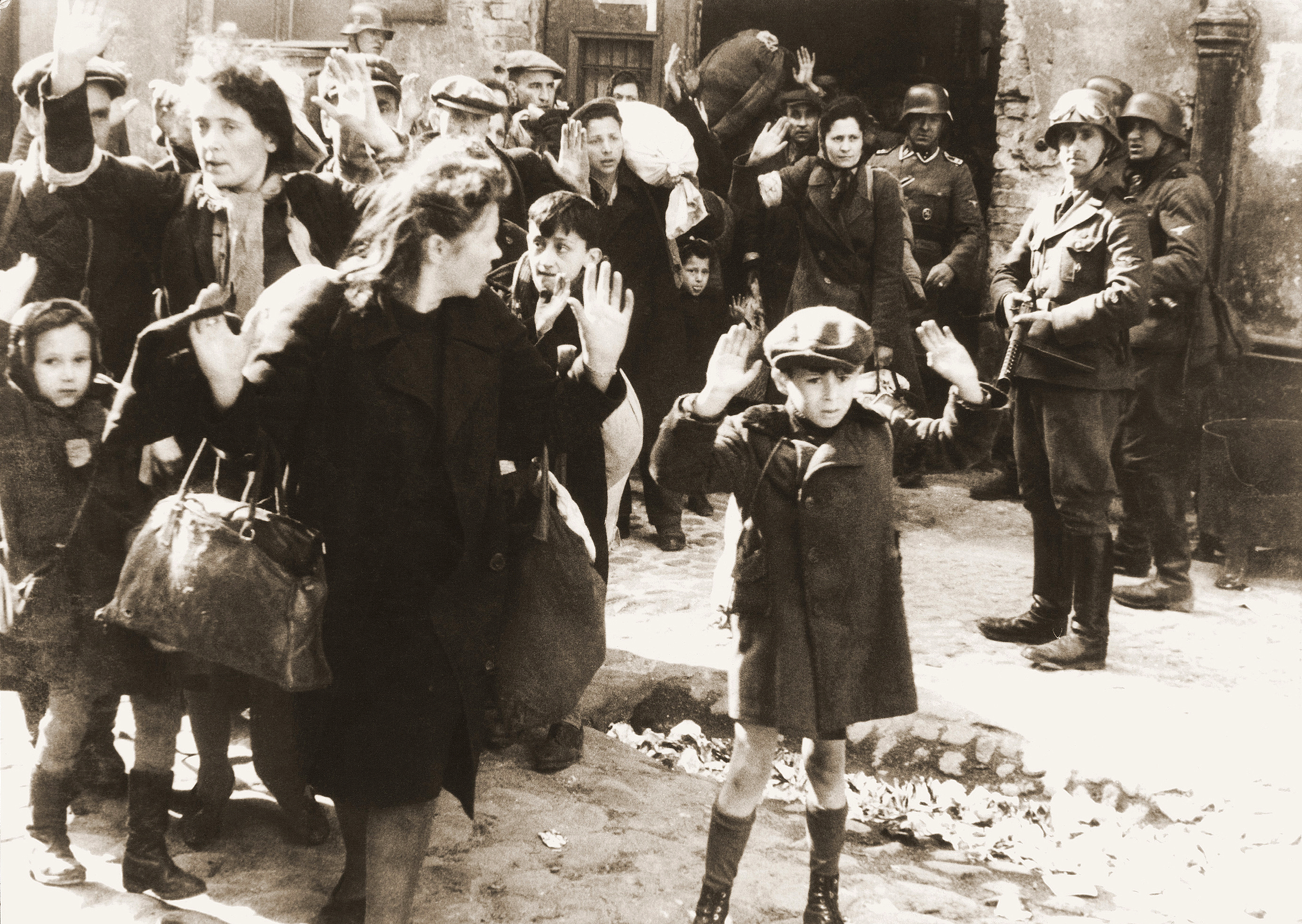

I find it awesome that Commons is evolving and doing these great things that we do not hear much about. What else is happening at Commons that we do not know about ??
Thanks,
GerardM
Friday, May 02, 2008
Beta release of the SignWriting Image Server
On the list of requested new languages, American Sign Language has been featuring for a long time. It is still on the discussion stage. The reason is that MediaWiki cannot show the necessary SignWriting script. So when we can use SignWriting in MediaWiki we can really start the process of starting our first Wikipedia in a sign language.
Today I received the announcement that the SignWriting Image Server (SWIS) has been given its beta release. It comes with the International SignWriting Alphabet (ISWA) 2008 set of symbols that currently defines 30 SymbolGroups, 600 BaseSymbols, and 33563 symbols.
One of the absolutely wonderful things to notice is how much the people from the SignWriting foundation picked up on the need of standards and licenses. The software is GPL3, the documentation is CC-by-sa and, the fonts are licensed under the Open Font License. To top it off, the plan is to write an Internet draft for the ISWA 2008 and make it an official character set.
The next phase is to update SignPuddle, the software to create content in SignWriting, for use of the ISWA 2008 and then an open source SignText plugin and finally a MediaWiki extension at the end of the Summer.
I am amazed about the volume of work that Valerie Sutton and Steve Slevinski put in to make their dream come true. Sign languages written for real human beings. I am so happy seeing that it is comming together ..
Thanks,
GerardM
Today I received the announcement that the SignWriting Image Server (SWIS) has been given its beta release. It comes with the International SignWriting Alphabet (ISWA) 2008 set of symbols that currently defines 30 SymbolGroups, 600 BaseSymbols, and 33563 symbols.
One of the absolutely wonderful things to notice is how much the people from the SignWriting foundation picked up on the need of standards and licenses. The software is GPL3, the documentation is CC-by-sa and, the fonts are licensed under the Open Font License. To top it off, the plan is to write an Internet draft for the ISWA 2008 and make it an official character set.
The next phase is to update SignPuddle, the software to create content in SignWriting, for use of the ISWA 2008 and then an open source SignText plugin and finally a MediaWiki extension at the end of the Summer.
I am amazed about the volume of work that Valerie Sutton and Steve Slevinski put in to make their dream come true. Sign languages written for real human beings. I am so happy seeing that it is comming together ..
Thanks,
GerardM
The importance of relevance
The board of the Wikimedia Foundation decided that their composition will be changed. There will be seats for chapters and there will be seats for experts. The number of people that are directly chosen by people of the many communities will decrease as a result. This decision was taken without consultation of either the advisory board or the community. Many people are pissed off. A consequence is that the influence on the board by people from the USA will be much less; there is no US chapter.
In separate mails both Erik Moeller and Anthere indicated that they would welcome it when the projects, the communities organise themselves. When a body of people takes care of the issues that come up in the projects, the organisation and the board do not have to do this. They cannot do it in the first place becaue they do not scale and do not have the skills to deal with multiple projects in over 250 languages.
When the board, the organisation cannot deal with the issues and when the communities take care of these same issues, two important things are established
What is missing is a coordinating body, a council that deals with what the projects have in common. That deal with the conflicts between projects, that helps the smaller projects evolve in fully functional projects with all the trimmings. Such a body will consist of the many people who already do this type of work. In this way we can provide the perfect partner for the board and the organisation to work with. With such a body the composition of the board is a lot less relevant.
Thanks,
GerardM
In separate mails both Erik Moeller and Anthere indicated that they would welcome it when the projects, the communities organise themselves. When a body of people takes care of the issues that come up in the projects, the organisation and the board do not have to do this. They cannot do it in the first place becaue they do not scale and do not have the skills to deal with multiple projects in over 250 languages.
When the board, the organisation cannot deal with the issues and when the communities take care of these same issues, two important things are established
- The board, the organisation can concentrate on their enabling function
- The relevance of the board is of a lessened relevance to the projects
What is missing is a coordinating body, a council that deals with what the projects have in common. That deal with the conflicts between projects, that helps the smaller projects evolve in fully functional projects with all the trimmings. Such a body will consist of the many people who already do this type of work. In this way we can provide the perfect partner for the board and the organisation to work with. With such a body the composition of the board is a lot less relevant.
Thanks,
GerardM
Thursday, May 01, 2008
On the monthly Betawiki info
April has been another good month at Betawiki. This month we started to support two more languages. Eleven more languages now have basic support; as a consequence, a third of the languages MediaWiki supports, are usable when you do not know another language.
When you look at all MediaWiki messages, the increase is not that big. To understand this, you have to appreciate that there were many changed and new messages due to the ongoing MediaWiki development. When you look at the extensions, you find that both the WMF used extensions and the other extensions show a healthy growth.
The major event this month was the first "language pack", it allows people who run the 1.12 stable version of MediaWiki to update the localisations. I only recently realised how different our software development is; typically localisers get into the act once the coding of all the new functionality is done. MediaWiki is different; the WMF projects always run the "bleeding edge" software and consequently there is a constant need to maintain the localisation. This makes localising MediaWiki much more of a challenge. The release of a new version is typically a major event, for MediaWiki it is something that is done as well ...
Some factoids:
GerardM
When you look at all MediaWiki messages, the increase is not that big. To understand this, you have to appreciate that there were many changed and new messages due to the ongoing MediaWiki development. When you look at the extensions, you find that both the WMF used extensions and the other extensions show a healthy growth.
The major event this month was the first "language pack", it allows people who run the 1.12 stable version of MediaWiki to update the localisations. I only recently realised how different our software development is; typically localisers get into the act once the coding of all the new functionality is done. MediaWiki is different; the WMF projects always run the "bleeding edge" software and consequently there is a constant need to maintain the localisation. This makes localising MediaWiki much more of a challenge. The release of a new version is typically a major event, for MediaWiki it is something that is done as well ...
Some factoids:
- New projects are once again created; sadly a new version of the GFDL has not yet been released
- There are currently 1908 messages in MediaWiki. Release 1.12 has 1768 messages - an 8% increase
- Siebrand's insane goals for 2008 are starting to look more realistic, even achievable....
GerardM
Wednesday, April 30, 2008
Fighting the fight
I care deeply about languages. I want all our projects to do well. Occasionaly I do things to help these projects on their way.
Today I was spreading the word about localisation on the Kikongo Wikipedia. Their main page said BALLZ! and I changed it to its previous and proper state. When you check the history, you find more vandalism. Small projects without much of a community suffer a lot of this kind of nonsense.
I find myself a lot on many projects and I realised that if I had the admin flag I would be able to do more. I could apply for the Steward setting, but I am not eager or willing to do all the things that many stewards do; I want to do the odd job that come along on my way. The only reason why I want it is because it makes it easy when I find something that needs doing.
I do not think that I want to stand in a steward election, for me it is too much hassle, too bureacratic. I am afraid that that I do not have the stomach for all the politicking. Asking for admin for all the small projects is a non-starter. With some exceptions, there are no viable communities in any of the 100 some Wikipedias that have less then 1000 articles.. There is nobody there. I still try to get support / interest in helping out in Betawiki. I am an optimist :)
Thanks,
GerardM
Today I was spreading the word about localisation on the Kikongo Wikipedia. Their main page said BALLZ! and I changed it to its previous and proper state. When you check the history, you find more vandalism. Small projects without much of a community suffer a lot of this kind of nonsense.
I find myself a lot on many projects and I realised that if I had the admin flag I would be able to do more. I could apply for the Steward setting, but I am not eager or willing to do all the things that many stewards do; I want to do the odd job that come along on my way. The only reason why I want it is because it makes it easy when I find something that needs doing.
I do not think that I want to stand in a steward election, for me it is too much hassle, too bureacratic. I am afraid that that I do not have the stomach for all the politicking. Asking for admin for all the small projects is a non-starter. With some exceptions, there are no viable communities in any of the 100 some Wikipedias that have less then 1000 articles.. There is nobody there. I still try to get support / interest in helping out in Betawiki. I am an optimist :)
Thanks,
GerardM
Extension of the week: Global blocking
Global blocking is the extension of the week at Betawiki. According to its technical documentation it has a beta status and according to the info on Meta it is life on all the WMF projects.
According to the Meta documentation, I should be one of the lucky few that can use this tool. However it is not clear to me at all how to use it; I have not yet found any documentation. What I understand is, that it only works for IP-numbers and that is really useful to prevent a lot of vandalisation. I think Werdna has done a fine job by creating "Global blocking".
What I find interesting is that the discussion about who will be able to use this tool and how it affects the autonomy of projects is still ongoing. There have been postings on the Foundation mailing list and there is a lot that can be found on Meta.
Sadly we do not have a project or volunteer council, IMHO it would be the obvious place where these things should be discussed / determined.
Some nice factoids:
Gerard
According to the Meta documentation, I should be one of the lucky few that can use this tool. However it is not clear to me at all how to use it; I have not yet found any documentation. What I understand is, that it only works for IP-numbers and that is really useful to prevent a lot of vandalisation. I think Werdna has done a fine job by creating "Global blocking".
What I find interesting is that the discussion about who will be able to use this tool and how it affects the autonomy of projects is still ongoing. There have been postings on the Foundation mailing list and there is a lot that can be found on Meta.
Sadly we do not have a project or volunteer council, IMHO it would be the obvious place where these things should be discussed / determined.
Some nice factoids:
- In a conference in Beijing Denny reported that Semantic MediaWiki has been successfully localised in Betawiki.
- We are deleting the Babel templates and use the Babel extension in stead
Gerard
How to get the message out?
When I talk about MediaWiki, I typically think of my audience as people who are editing in a wiki. They need to know that localising is good, that you do it at Betawiki, they are the ones that may help push the WMF into using Semantic MediaWiki in its projects or share my interest in things to do with languages.
When you consider who you are doing it for, this localising, I find there are two groups. The people who localise help themselves because by collaborating at Betawiki, they get better tooling and their work will have an effect in all the WMF projects. These are the easy ones to reach. The second group, the people the organisations that have their own MediaWiki Wikis are much harder to reach.
Today I informed Tactical Tech about our "language pack" and how we provide support for the 1.12 stable release. To me it is important that the MediaWiki that is released in the NGO in a box provides the best that we can do. When NGOs use MediaWiki, more people will know our tool and this may stimulate them to write in the Wikipedia in their language too.
By reaching out to Tactical Tech, I hope to reach many more organisations but I do not reach the NGOs that got MediaWiki from the box already. Messaging in this way does not scale either.
What is the best way to inform the MediaWiki users, the people organisations that have their own wiki?
Thanks,
GerardM
When you consider who you are doing it for, this localising, I find there are two groups. The people who localise help themselves because by collaborating at Betawiki, they get better tooling and their work will have an effect in all the WMF projects. These are the easy ones to reach. The second group, the people the organisations that have their own MediaWiki Wikis are much harder to reach.
Today I informed Tactical Tech about our "language pack" and how we provide support for the 1.12 stable release. To me it is important that the MediaWiki that is released in the NGO in a box provides the best that we can do. When NGOs use MediaWiki, more people will know our tool and this may stimulate them to write in the Wikipedia in their language too.
By reaching out to Tactical Tech, I hope to reach many more organisations but I do not reach the NGOs that got MediaWiki from the box already. Messaging in this way does not scale either.
What is the best way to inform the MediaWiki users, the people organisations that have their own wiki?
Thanks,
GerardM
Saturday, April 26, 2008
Babel templates
 I love Babel templates. They are great to express what languages you are familiar with and what level of confidence you have when using a language.
Babel templates are used on many projects. On OmegaWiki, my home wiki, it is required of the people who want to edit. There is one nuisance with Babel templates, there are a lot of them and, it is hard to get all the texts that make up the templates.
MinuteElectron is changing all that. He made it an extension. Given that it is being developed first at Betawiki, adding the messages is easy and obvious. The messages are stable, so while the software is being finetuned, the localisation has already started.
One of the clever things in the code is that data of different standards is used to make up the total number of languages. Both ISO-639-1 and ISO-639-3 codes are used, information from the CLDR is also considered. It is now a matter of finetuning the code and selecting the languages it supports.
All in all, a great new extension is being developed.
Thanks,
GerardM
Thursday, April 24, 2008
WALS, The World Atlas of Language Structures
In 2005, Oxford University Press published "The World Atlas of Language Structures" it is a 712 page hard-cover book and is available for £425,00. It comes with a CD that allows you to get a visual grasp where languages are spoken. It is filled to the brim with all kinds of information and it is considered an important work for people studying linguistics.
In a joint project several of the Max Planck Gesellschaft Institutes, published WALS online. It provides a rich resource and uses Google maps to indicate where what languages are spoken. The data is on the Internet and in order to be of value in a world where Open Access is increasingly considered to be essential, the data is available under a Creative Commons license.
For Wikipedians, the license will be disappointing; the CC-by-sa-nc does prevent the use of this data. WALS is considered a standard work and there are many references to the ISO-639-3 standard; check out Finnish for an example. However, many of the languages recognised in this Standard are missing, Stellingwerfs stl, Abau aau to name just two. I hope that this will be resolved as it will increase the value of WALS a lot.
Even when the use of this data is limited, there is a lot to learn from WALS. It integrates many of the facts known about many languages, it presents them in maps, and makes the best use of what Google maps has to offer. With this much information available it is fun to see what languages are spoken where. Wals on line is truly of interest and I heartily recommend it to people who share my interest in languages.
Thanks,
GerardM
In a joint project several of the Max Planck Gesellschaft Institutes, published WALS online. It provides a rich resource and uses Google maps to indicate where what languages are spoken. The data is on the Internet and in order to be of value in a world where Open Access is increasingly considered to be essential, the data is available under a Creative Commons license.
For Wikipedians, the license will be disappointing; the CC-by-sa-nc does prevent the use of this data. WALS is considered a standard work and there are many references to the ISO-639-3 standard; check out Finnish for an example. However, many of the languages recognised in this Standard are missing, Stellingwerfs stl, Abau aau to name just two. I hope that this will be resolved as it will increase the value of WALS a lot.
Even when the use of this data is limited, there is a lot to learn from WALS. It integrates many of the facts known about many languages, it presents them in maps, and makes the best use of what Google maps has to offer. With this much information available it is fun to see what languages are spoken where. Wals on line is truly of interest and I heartily recommend it to people who share my interest in languages.
Thanks,
GerardM
Youtube ... but which one?
YouTube is a video sharing website. It is probably the most widely used, it has a wide variety of stuff including pop songs, comedy or TV shows from my youth. There is also a large amount of useful stuff, like a howto do the Rubik cube ... The real cool thing of the YouTube videos is that you can embed them in a website. It is for this reason that many people want to include YouTube into MediaWiki and, it shows. There are currently seven extensions known at MediaWiki and I have been reliably informed that there are more.
So what extension to choose? What makes a YouTube extension the best? It is a bewildering choice; do you want YouTube only, what other video sharing sites are supported, is it localised, is it supported and most importantly will it work for me ???
The answer to these questions take time to answer, and then the apparently best choice may still leave things to be desired. A friend of mine has to answer these questions. How to YouTube is not the only functionality that he has to decide on. He will like many others, have the extensions tested, maybe fixed for documentation and function.
As we are certain that this is an often repeated excercise, we want to do it in a way that provides more benefits; a way that helps people to understand what extension, what version for what MediaWiki release and how to install and use it.
Our current thinking is to test it on a virtual server and publish the results. We have not decided on the precise details. Suggestions are welcome.
Thanks,
GerardM
So what extension to choose? What makes a YouTube extension the best? It is a bewildering choice; do you want YouTube only, what other video sharing sites are supported, is it localised, is it supported and most importantly will it work for me ???
The answer to these questions take time to answer, and then the apparently best choice may still leave things to be desired. A friend of mine has to answer these questions. How to YouTube is not the only functionality that he has to decide on. He will like many others, have the extensions tested, maybe fixed for documentation and function.
As we are certain that this is an often repeated excercise, we want to do it in a way that provides more benefits; a way that helps people to understand what extension, what version for what MediaWiki release and how to install and use it.
Our current thinking is to test it on a virtual server and publish the results. We have not decided on the precise details. Suggestions are welcome.
Thanks,
GerardM
Wednesday, April 23, 2008
Word2MediaWikiPlus
Word2MediaWikiPlus is an extension for Microsoft Word. It's function is to convert a Microsoft Word document to MediaWiki. There are many people that are really excited with this new functionality.
What makes this software different from all the other MediaWiki extensions, is that it is not written in PHP, it is written to work with Word. This is why it is rather special that it is now also supported in Betawiki. It required a new approach to exporting the messages.
MediaWiki is not only used within the Wikimedia Foundation but also outside its projects. What interests me is if new people will come to Betawiki to help support this extension. I hope it will help us in getting more people cooperating on functionality that serves our shared needs.
Thanks,
GerardM
What makes this software different from all the other MediaWiki extensions, is that it is not written in PHP, it is written to work with Word. This is why it is rather special that it is now also supported in Betawiki. It required a new approach to exporting the messages.
MediaWiki is not only used within the Wikimedia Foundation but also outside its projects. What interests me is if new people will come to Betawiki to help support this extension. I hope it will help us in getting more people cooperating on functionality that serves our shared needs.
Thanks,
GerardM
Tuesday, April 22, 2008
Works for me ... the BBC
I am a big fan of the BBC news. I used to listen to it in my car 648 Mhz, the BBC world service, news, no adverts, no nonsense. At the moment it is my primary source of news.
The BBC has a new skin. As always some like it, some hate it. It is functional. It is functional except for the embedded video; when I choose to see one, I get a black screen with a few dots moving in a circle.
 As I want to have it work for me, I contacted the BBC, I informed them about my browser and the problem I had. I got as a reply that they had tested Firefox in their Quality Assurance process. I was even informed that "In fact I use it on Firefox every day."
I would love to repeat after this fine person; it works for me...
Thank,
GerardM
The BBC has a new skin. As always some like it, some hate it. It is functional. It is functional except for the embedded video; when I choose to see one, I get a black screen with a few dots moving in a circle.
 As I want to have it work for me, I contacted the BBC, I informed them about my browser and the problem I had. I got as a reply that they had tested Firefox in their Quality Assurance process. I was even informed that "In fact I use it on Firefox every day."
I would love to repeat after this fine person; it works for me...
Thank,
GerardM
Monday, April 21, 2008
From Little Things Big Things Grow
I talked with Brianna, and as always it was fun. One of the things we discussed was "From Little Things Big Things Grow". It is not only a really nice song, it is about Australia busy turning over one of its darkest pages.
I was wondering what Australians could do in Wikipedia to create more awareness of the Aboriginal heritage. I would like to see an article for all the Australian languages. When some of these articles would even be of "featured article" quality, I am sure this would have meaning.
Thanks,
GerardM
I was wondering what Australians could do in Wikipedia to create more awareness of the Aboriginal heritage. I would like to see an article for all the Australian languages. When some of these articles would even be of "featured article" quality, I am sure this would have meaning.
Thanks,
GerardM
Interim MediaWiki releases or MediaWiki language packs
When the latest stable release of MediaWiki was prepared by Brion, Betawiki was going to continue to support MediaWiki by keeping track of the messages that are valid for the new stable release. 13947 new localisations have been added to the 202201 messages, this is an increase of 6,90%.
As the many localisers at Betawiki continue to do their great work, we can provide better support for the new stable release. The first thing that needed doing was identifying the messages involved and then it was necessary to export the messages. This last part was buggy until now.
The improved localisation is currently available here. When Brion finds a need to issue an interim release for 1.12, we expect that the localisation will become part of the package
What we have to figure out is how to inform all the people and organisations that will benefit from this new feature.
Thanks,
GerardM
As the many localisers at Betawiki continue to do their great work, we can provide better support for the new stable release. The first thing that needed doing was identifying the messages involved and then it was necessary to export the messages. This last part was buggy until now.
The improved localisation is currently available here. When Brion finds a need to issue an interim release for 1.12, we expect that the localisation will become part of the package
What we have to figure out is how to inform all the people and organisations that will benefit from this new feature.
Thanks,
GerardM
Sunday, April 20, 2008
Semantic MediaWiki update
Yesterday I posted that Semantic MediaWiki is now supported by Betawiki. Today already five languages have been completely localised. They are:
I will agree that I would LOVE to see an experiment with SMW on a Wikipedia...
Thanks,
GerardM
- French
- Dutch
- Norwegian (bokmål)
- Occitan
- Slovak
I will agree that I would LOVE to see an experiment with SMW on a Wikipedia...
Thanks,
GerardM
Car glass
I have a car. It is parked outside of my apartment. Next to the parking place is a building that has been squatted. For whatever reason, people find a need to kick in the windows of this building. This week I rang the police because another window was kicked in. The police came, the boys, age 15 something were gone. Yesterday I came to my car to find that the front window of my car was kicked in, I reported it to the police. Today, another window of the building was kicked in. Again I called the police.
As the building is squatted, nobody seems to care if the windows are whole. Some people want the squatters out and this may be a reason why they throw in the windows.. With a vandalised building, it is easy for people to think that nobody cares. The problem is, that when people think like that, some think nothing of damaging other things as well, like my car.
I know the police had a talk today with the boys. I am grateful that they did. I do not know what has been said, but it may help get the message out that you should not damage other peoples property.
Thanks,
GerardM
As the building is squatted, nobody seems to care if the windows are whole. Some people want the squatters out and this may be a reason why they throw in the windows.. With a vandalised building, it is easy for people to think that nobody cares. The problem is, that when people think like that, some think nothing of damaging other things as well, like my car.
I know the police had a talk today with the boys. I am grateful that they did. I do not know what has been said, but it may help get the message out that you should not damage other peoples property.
Thanks,
GerardM
Saturday, April 19, 2008
Semantic MediaWiki meets Betawiki
 The picture says it all; Semantic MediaWiki is now supported by Betawiki. For you who do not know Semantic MediaWiki, it is one of the more brilliant pieces of software to extend MediaWiki. With Semantic MediaWiki enabled, you get one new instruction :: and it is provides really powerful possibilities to your wiki. What Semantic MediaWiki offers is the ability to provide structure to the information in a page. When you write on the Queen Beatrix article somewhere in the text [[mother::Queen Juliana]], it will allow you to query the information on the Queen Juliana page. This is the basis for the many cool things that Semantic MediaWiki can bring to Wikipedia.
The one thing that makes me really happy how quickly all this was done; Markus Krötzsch replied to a message on the Wikitech-l and stated that localisation was indeed something that has a high priority for him. Siebrand provided him with some pointers about Betawiki, and the same evening these two fine gentlemen had made the necessary changes to the SMW software and its messages and had it imported in Betawiki.
With the localisation issue dealt with, I think that Semantic MediaWiki has done most if not all the major work that was needed when it was last presented at Wikimania. Its performance has been dramatically improved, the number of instructions has been reduced to one, it provides loads of extensions of its own and last but not least many of the functionalities of SMW can be turned on or off.
It does not make sense to write new software when software exists that has been developed over a long time that WORKS.. I hope the Wikimedia Foundation will enable Semantic MediaWiki soon in one project to learn that it can be trusted in all its projects.
Thanks,
GerardM
Friday, April 18, 2008
Paypal and safe browsers
According to the BBC, Paypal will restrict the use to its website to safe browsers. When you browse the Paypal website, it is clear, IE7 is the preferred and only choice. It has all these must have safety features blah, blah, blah.
I must say that I am surprised that the "other" browsers are not good enough. Not only would Paypal lose a big share of its customers, I just don't believe it. Their "safer browser faq" gives some information that is missing .. it allows for the fact that Firefox 2 or later and Opera 9.1 or later have anti phishing features.
What Paypal is talking about it a technique called "extended validation secure socket layer certificates". A company called Comodo holds the evsslcertificate website. On its mainpage they provide information about three browsers.. Mozilla, Opera and .... Conqueror. No info about Internet Explorer. When I read what they have to say, I get the distinct impression that these "other" browsers have been part of this project from the start.
I really have the impression that I am being manipulated / misinformed. This makes me feel cross. When Paypal's customers find that 25+% of their customers will not be able to use Paypal, or more correctly are manipulated in this way they will rightly be upset as well.
Really from a public relations point of view it sucks for Paypal.
Thanks,
GerardM
I must say that I am surprised that the "other" browsers are not good enough. Not only would Paypal lose a big share of its customers, I just don't believe it. Their "safer browser faq" gives some information that is missing .. it allows for the fact that Firefox 2 or later and Opera 9.1 or later have anti phishing features.
What Paypal is talking about it a technique called "extended validation secure socket layer certificates". A company called Comodo holds the evsslcertificate website. On its mainpage they provide information about three browsers.. Mozilla, Opera and .... Conqueror. No info about Internet Explorer. When I read what they have to say, I get the distinct impression that these "other" browsers have been part of this project from the start.
I really have the impression that I am being manipulated / misinformed. This makes me feel cross. When Paypal's customers find that 25+% of their customers will not be able to use Paypal, or more correctly are manipulated in this way they will rightly be upset as well.
Really from a public relations point of view it sucks for Paypal.
Thanks,
GerardM
Thursday, April 17, 2008
Dogfood
The Finnish Wikipedia is the 14th Wikipedia in size. Its localisation is not as good as we would expect of a Wikipedia with more then 150.000 articles. Nikerabbit, the main developer at Betawiki is Finnish and he was challenged on IRC to eat his own dog food.
Nike has now started to work on the localisation and we hope/expect that in the true spirit of Open Source, he will start to scratch his own itch. When you are translating string after string, a lot of time is wasted clicking on buttons. Ajax is a technology that improves the responsiveness of programs. It would be cool if we would find that fewer clicks are needed to do the work...
Thanks,
Gerard
Nike has now started to work on the localisation and we hope/expect that in the true spirit of Open Source, he will start to scratch his own itch. When you are translating string after string, a lot of time is wasted clicking on buttons. Ajax is a technology that improves the responsiveness of programs. It would be cool if we would find that fewer clicks are needed to do the work...
Thanks,
Gerard
Wednesday, April 16, 2008
Now with daily quality checks ..
The word advertise means "call attention to" or "make publicity for". Announce has very much a similar meaning but with an advertisement you want people to DO something.
This is an advertisement...
Betawiki now reports on its daily quality checks. Every day a script checks the messages that are problematic and updates a page with the current issues. This helps our localisers to find what messages are problematic. There are several categories like "variables" - the number of variables used is not the same as in the original English message, "plural" - for these messages the plural is not implemented in the message for the language etcetera.
With this new function we hope that we help our localisers to be more efficient. As their time spend is the most valuable resource that we have, we are mindfull about how we can make this time as fun and well spend as possible. Every day the localised messages are submitted to SVN and once the codebase of the WMF servers is updated, the updates will be life.
GerardM
This is an advertisement...
Betawiki now reports on its daily quality checks. Every day a script checks the messages that are problematic and updates a page with the current issues. This helps our localisers to find what messages are problematic. There are several categories like "variables" - the number of variables used is not the same as in the original English message, "plural" - for these messages the plural is not implemented in the message for the language etcetera.
With this new function we hope that we help our localisers to be more efficient. As their time spend is the most valuable resource that we have, we are mindfull about how we can make this time as fun and well spend as possible. Every day the localised messages are submitted to SVN and once the codebase of the WMF servers is updated, the updates will be life.
Nice factoids
- The localisation for Manx got started recently and is doing nicely (55% of the most used messages)
- Egyptian Arab completed the localisation for the most used messages
- The bounty program is still open for more languages ... see Betawiki for details....
- Twenty nine new core messages were added in the last week
GerardM
Tuesday, April 15, 2008
Beeld en Geluid
Beeld en Geluid is a Dutch organisation tasked with the maintenance, the safe guarding and the exploitation and exploration of the audiovisual heritage of Dutch radio and television. In Hilversum the centre of Dutch radio and television, they have a magnificent building that allows the public to experience this history, a big archive with room for people who want to research and an office with people tasked with opening up their data as much as possible.
Preservation of so much material is a big task, much effort is put into the digitisation of material. Not only the really old material but also much of the digital age needs care in order to preserve it for the future. As Beeld en Geluid is paid by the Dutch taxpayers, one of its tasks is to give this material a wider availability. They provide specialised tools for the broadcasting organisations, the researchers. Much of the material cannot be made available to the public because of copyright issues. It is reassuring to know that this material will still be there when it becomes public domain..
Beeld en Geluid is exploring MediaWiki functionality. Their need is quite different; much of the material that they want to include exists in all kinds of databases and it is a lot of hard work to make it into a Wiki. We discussed MediaWiki and its uses, we talked about technology, extensions like Semantic MediaWiki, the OmegaWiki mark II project..
As happens so often, we found that there are many organisations that use MediaWiki and with more collaboration MediaWiki would gain more utility. We discussed how such a thing could be done. One thing was clear before we can cooperate, we need to know our shared needs.
Thanks,
GerardM
Preservation of so much material is a big task, much effort is put into the digitisation of material. Not only the really old material but also much of the digital age needs care in order to preserve it for the future. As Beeld en Geluid is paid by the Dutch taxpayers, one of its tasks is to give this material a wider availability. They provide specialised tools for the broadcasting organisations, the researchers. Much of the material cannot be made available to the public because of copyright issues. It is reassuring to know that this material will still be there when it becomes public domain..
Beeld en Geluid is exploring MediaWiki functionality. Their need is quite different; much of the material that they want to include exists in all kinds of databases and it is a lot of hard work to make it into a Wiki. We discussed MediaWiki and its uses, we talked about technology, extensions like Semantic MediaWiki, the OmegaWiki mark II project..
As happens so often, we found that there are many organisations that use MediaWiki and with more collaboration MediaWiki would gain more utility. We discussed how such a thing could be done. One thing was clear before we can cooperate, we need to know our shared needs.
Thanks,
GerardM
Monday, April 14, 2008
When is a Wikipedia not a Wikipedia ?
When you go from one Wikipedia to the next, you always expect an encyclopaedia. You expect things to be largely the same but in a different language. According to Bugzilla bug 13578, this is something that will change. The Alemannic community have found that having a Wikipedia, a Wikibooks, a Wiktionary and a Wikiquote is more then they can chew off.
What the Alemannic community has decided is to fold all the projects into their Wikipedia and have separate name spaces for the content of their old projects. Their communities seem to have decided on this, they want their name spaces now or they will move all their content into the Wikipedia name space.
What I wonder is if this is something that the wider community is aware off and, if this is considered to be acceptable. When such major changes are going to happen, it makes sense to include the change to the more appropriate gsw language tag.
Thanks,
GerardM
What the Alemannic community has decided is to fold all the projects into their Wikipedia and have separate name spaces for the content of their old projects. Their communities seem to have decided on this, they want their name spaces now or they will move all their content into the Wikipedia name space.
What I wonder is if this is something that the wider community is aware off and, if this is considered to be acceptable. When such major changes are going to happen, it makes sense to include the change to the more appropriate gsw language tag.
Thanks,
GerardM
Saturday, April 12, 2008
Statistics that get a life of their own ...
One of the metrics I use to explain why there is still so much localisation to do is quote the percentage of languages that have less then 50% of the most used messages localised. For me it demonstrates really well how much work still needs to be done. Currently 42% of the linguistic entities do not even have these messages localised. This is already a big improvement :)
Today I noticed Siebrand inform people working on a new language that only when 50% is done of the most used messages, he will commit a new language to MediaWiki. I love the idea that things can only improve.
Some great factoids
GerardM
Some great factoids
- Kaustubh has been made an honourable member of Betawiki for his work on Marathi and Hindi.
- One of the participants of the bounty program is giving his bounty to the Wikimedia Foundation :)
- The Asian languages are doing REALLY well in Betawiki
GerardM
Friday, April 11, 2008
Getting the message out
The success of Betawiki is in its community; a group of people who maintain the localisation of MediaWiki for their language. There is always work to do at Betawiki because the MediaWiki developers constantly modify the MediaWiki functionality and the functionality of the extensions.
When a localisation is largely done, it is best to regularly return to Betawiki and do some maintenance on the localisation. In this way the amount of work needed is not so bad. Then again, it is easy to forget and time flies...
It is with pleasure that I can announce that Siebrand has written his first extension. An extension that allows us to send an e-mail to the users that have a confirmed e-mail address. When people do not want to receive an e-mail, they can opt out and read the information on the wiki.
We intent to send a message once a month informing about the latest developments at Betawiki. By keeping our community informed about the latest developments, we hope to maintain the interest in Betawiki and the quality of the MediaWiki localisations.
Thanks,
GerardM
When a localisation is largely done, it is best to regularly return to Betawiki and do some maintenance on the localisation. In this way the amount of work needed is not so bad. Then again, it is easy to forget and time flies...
It is with pleasure that I can announce that Siebrand has written his first extension. An extension that allows us to send an e-mail to the users that have a confirmed e-mail address. When people do not want to receive an e-mail, they can opt out and read the information on the wiki.
We intent to send a message once a month informing about the latest developments at Betawiki. By keeping our community informed about the latest developments, we hope to maintain the interest in Betawiki and the quality of the MediaWiki localisations.
Thanks,
GerardM
Thursday, April 10, 2008
Criteria for the closure of projects
For quite some time, we have had people arguing for the closure of projects. I have seen many arguments pro and against closures. What has been missing in all these projects are objective criteria why it makes sense to find fault with a project.
I have come up with three objective arguments.
For the second and third I would argue for closure when both conditions are not met. When there is activity in either it may be reason for giving an ultimatum. The ultimatum would be that both conditions need to be met within three months.
The most important reason why we need viable projects is because it is sad to see so much time wasted by good people on projects that have little or no objective value. No value because nobody actively cares. Yes, people may come along and get an interest and eventually they will, but time of valuable people is wasted now and that is in my opinion a really strong argument.
Thanks,
GerardM
I have come up with three objective arguments.
- A project is not what it is advertised to be. For instance when a language is always written in a particular script, a project in any other script is problematic.
- A project does not have at least 90% of the most relevant messages localised. For your information there are only 498 messages in this category at the moment.
- A project should have at least 1000 articles. When there is nothing to see what is the point ?
For the second and third I would argue for closure when both conditions are not met. When there is activity in either it may be reason for giving an ultimatum. The ultimatum would be that both conditions need to be met within three months.
The most important reason why we need viable projects is because it is sad to see so much time wasted by good people on projects that have little or no objective value. No value because nobody actively cares. Yes, people may come along and get an interest and eventually they will, but time of valuable people is wasted now and that is in my opinion a really strong argument.
Thanks,
GerardM
Tuesday, April 08, 2008
Draft blogger
It is nice when software gets new functionality. Blogger, the software environment that I use to blog has a "Draft" version. This is where new features are exposed to the people who dare to live dangerously.
On this blog you will now find a "blog list" it shows a link to the latest entry of a specific blog. I have them sorted by blog with the most recent blog entry first ...
This blog entry I will post tonight at 11:00 PM. It is really cool that it is now possible to post at a specified date and time. This is particularly good when you have news that is under embargo until a specified moment...
There are more features pending a general release. These are the ones I like best.
Thanks,
GerardM
On this blog you will now find a "blog list" it shows a link to the latest entry of a specific blog. I have them sorted by blog with the most recent blog entry first ...
This blog entry I will post tonight at 11:00 PM. It is really cool that it is now possible to post at a specified date and time. This is particularly good when you have news that is under embargo until a specified moment...
There are more features pending a general release. These are the ones I like best.
Thanks,
GerardM
Monday, April 07, 2008
I want a PC not a VC
Effeietsanders has proposed the setup of a council that is to complement the staff, the advisory board and the board of trustees. The name proposed is the "Volunteer Council" or VC. To make this all happen a PVC or a provisional VC is to be created that is to get a mandate to specify what the VC is going to be. A group of good people are selected for this, people that I trust can do a good job.
I find myself opposing something that I think is sorely needed. The reason for this is very much one of focus. This council will particularly deal with the projects, the issues of the projects and thereby be complementary. The staff and both boards are about the organisation that enables the projects to function. This council will be about the projects and will deal what makes the projects function better.
The council will deal mostly with issues of the projects, not about issues of the volunteers. The fact that this council will consist of volunteers is incidental what is relevant is that this council will be there for the projects and consequently it will represent the projects and not so much the volunteers. When you consider the English Wikipedia for instance, it is well able to do all the things needed; it has the attention of the organisation, the world. There are many capable people beavering away and does within reason its own thing. It does not really need a council.
For most of the other projects things are starkly different. A recurring theme from Wikinews is that it does not get the necessary attention. You can however exchange Wikinews for most other projects including most Wikipedias. With the ever increasing number of wikis, it becomes ever more impossible for projects to be heard.
It is for all these reasons that I propose to name the council the "Project council" PC and for it to represent the interest and needs of the projects. The first thing it should do is ensure that the policies that exist are actually implemented and functioning. Then it should look into what make the projects be better represented within the limits of what is possible. Limits because the WMF functions very much as an ISP and this distinction prevents liability. In this way the projects and by inference the volunteers get a better representation and help the WMF fulfill as an enabler for the projects.
Practically, I would have the same group of people prepare for a Project Council. I would not give them a blank check, I would have them prepare a draft proposal. While working on this paper, I would have them consult with members of the staff particualrly Sue and Mike and consult with members of the board of trustees as well. I am sure that it will be good because there IS a need for a council in any way you slice it.
Thanks,
GerardM
I find myself opposing something that I think is sorely needed. The reason for this is very much one of focus. This council will particularly deal with the projects, the issues of the projects and thereby be complementary. The staff and both boards are about the organisation that enables the projects to function. This council will be about the projects and will deal what makes the projects function better.
The council will deal mostly with issues of the projects, not about issues of the volunteers. The fact that this council will consist of volunteers is incidental what is relevant is that this council will be there for the projects and consequently it will represent the projects and not so much the volunteers. When you consider the English Wikipedia for instance, it is well able to do all the things needed; it has the attention of the organisation, the world. There are many capable people beavering away and does within reason its own thing. It does not really need a council.
For most of the other projects things are starkly different. A recurring theme from Wikinews is that it does not get the necessary attention. You can however exchange Wikinews for most other projects including most Wikipedias. With the ever increasing number of wikis, it becomes ever more impossible for projects to be heard.
It is for all these reasons that I propose to name the council the "Project council" PC and for it to represent the interest and needs of the projects. The first thing it should do is ensure that the policies that exist are actually implemented and functioning. Then it should look into what make the projects be better represented within the limits of what is possible. Limits because the WMF functions very much as an ISP and this distinction prevents liability. In this way the projects and by inference the volunteers get a better representation and help the WMF fulfill as an enabler for the projects.
Practically, I would have the same group of people prepare for a Project Council. I would not give them a blank check, I would have them prepare a draft proposal. While working on this paper, I would have them consult with members of the staff particualrly Sue and Mike and consult with members of the board of trustees as well. I am sure that it will be good because there IS a need for a council in any way you slice it.
Thanks,
GerardM
hundred languages have basic support
The Venetian language has the honour of being the 100th language that has better then 98% of the most often used messages localised. There were two languages that reached this state today, the other was Furlan.
At this moment we support in Betawiki 313 distinct linguistic entities. This makes it 31.95% that have basic support. Since December 2007 52 languages have reached this status.
Congratulations to all the people that make Betawiki a do-ocracy. :)
Thanks,
GerardM
At this moment we support in Betawiki 313 distinct linguistic entities. This makes it 31.95% that have basic support. Since December 2007 52 languages have reached this status.
Congratulations to all the people that make Betawiki a do-ocracy. :)
Thanks,
GerardM
Sunday, April 06, 2008
Ndonga and Dzongkha
Ndonga and Dzongkha are two languages. One is from Africa the other from Asia. Both still have a Wikipedia, one is officially closed the other is in the process of being closed. The dz.wikipedia is officially closed but has not been closed. The localisation effort is well under way and currently 78.12% of the most used messages have been localised. The ng.wikipedia has eight articles has no localisation and the usual people object to the closure of this project. On the talk page of Drini I found an anonymous coward indicating that something may be done soon ....
When projects are voted to be closed, they are not closed. This means that people like Drini have to continue their fight against spammers. There are two parts to the problem as I see it.
Thanks,
GerardM
PS I do not think it wise to close the Dzongkha wikipedia at this time.
When projects are voted to be closed, they are not closed. This means that people like Drini have to continue their fight against spammers. There are two parts to the problem as I see it.
- When the time of stewards like Drini is free and infinite and when they do not object to doing this work there seems to be no problem. We should however value the time of people like him and make sure that it is used sparingly and well
- When policies lead to resolutions and these resolutions have no effect, what is the point of having these policies, these resolutions and all the time spend?
Thanks,
GerardM
PS I do not think it wise to close the Dzongkha wikipedia at this time.
Friday, April 04, 2008
Egyptian Arab
Egyptian Arab is a language recognised with the arz code in the ISO-639-3. For this language a Wikipedia was requested. A lot of work needs to be done before it is ready to have its own Wikipedia. There is the Incubator project, finding a group of people interested in becoming a community and the localisation of the most used MediaWiki messages.
It would be cool if we could have this project go live in Alexandria.. maybe have a talk or a lightning talk about the experience ?
Thanks,
GerardM
It would be cool if we could have this project go live in Alexandria.. maybe have a talk or a lightning talk about the experience ?
Thanks,
GerardM
Tuesday, April 01, 2008
Nikerabbit
Nikerabbit has a blog. As his pearls of wisdom are not heard on aggregators, I find this entry interesting enough to point it out to a wider public.
Thanks,
GerardM
Thanks,
GerardM
On the monthly Betawiki info
In March we had contributions in 186 languages in Betawiki. This is an increase of 30 languages over last month! The statistics for this month show a continued increase in all the relevant metrics; more languages support the most often used MediaWiki messages, more languages support the extensions.
The number of languages has increased by only one. This is also because for the first time two languages are no longer supported in BetaWiki. Middle Dutch and Old Norse are no longer supported in Betawiki. The decision to withdraw support was done by the Betawiki management :)
When you follow the project on a daily basis, the one thing that stands out is the support for the languages from India. I am impressed with the speed in which these languages have made their mark. With Hindi finally starting to move, we are slowly getting to the stage where we support most of the official languages of India.
The one thing that I will be watching closely is a request from the Greek localisers to have an approval process for new and changed localisations. The argument is that in this way it is possible to ensure consistent terminology and, to prevent dubious localisations to go life. The initial reply has been that Betawiki is a wiki too and that the process is an iterative process. Everyone can do the inital localisation and everyone can proof read and improve. "we are basically a do-ocracy. You do the work, you decide how it works." I read on IRC ...
What was agreed on is that features will be created to allow for an improved proof reading functionality, Nikerabbit has a Summer of Code project (not Google) to improve on the Betawiki functionality so I am sure that we will see loads of interesting changes in the future.
Thanks,
GerardM
The number of languages has increased by only one. This is also because for the first time two languages are no longer supported in BetaWiki. Middle Dutch and Old Norse are no longer supported in Betawiki. The decision to withdraw support was done by the Betawiki management :)
When you follow the project on a daily basis, the one thing that stands out is the support for the languages from India. I am impressed with the speed in which these languages have made their mark. With Hindi finally starting to move, we are slowly getting to the stage where we support most of the official languages of India.
The one thing that I will be watching closely is a request from the Greek localisers to have an approval process for new and changed localisations. The argument is that in this way it is possible to ensure consistent terminology and, to prevent dubious localisations to go life. The initial reply has been that Betawiki is a wiki too and that the process is an iterative process. Everyone can do the inital localisation and everyone can proof read and improve. "we are basically a do-ocracy. You do the work, you decide how it works." I read on IRC ...
What was agreed on is that features will be created to allow for an improved proof reading functionality, Nikerabbit has a Summer of Code project (not Google) to improve on the Betawiki functionality so I am sure that we will see loads of interesting changes in the future.
Thanks,
GerardM
Subscribe to:
Posts (Atom)